
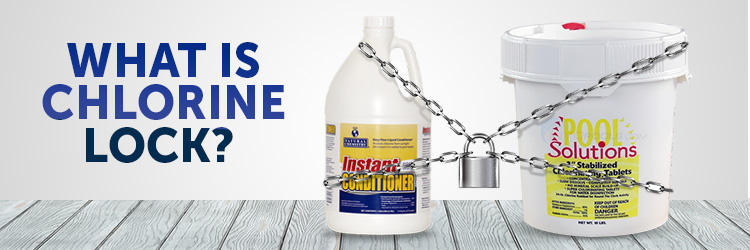
Chlorine is your pool’s immune system, without it, your pool would become ill, wretched and die. OK, that was a little overdramatic, but without chlorine, your pool would turn green, scummy, and become your very own backyard mosquito hatchery. And for this reason, we must keep our chlorine in check.
But what happens if your chlorine is “too” in check? By that, I mean too much cyanuric acid (CYA), and not enough chlorine.
What Is Chlorine Lock?
The phenomenon of “Chlorine Lock” occurs when a pool’s free chlorine (FC) is overpowered by its cyanuric acid (also known as CYA or Stabilizer). Though CYA is vital in stabilizing (hence the name) chlorine for sanitation, too much of it decreases the effectiveness of chlorine. The sudden drop in your chlorine’s ability to kill bacteria, allows bacteria and algae to take over your pool quickly. Chlorine Lock can put your pool in a sort of limbo, where there is not enough chlorine to sanitize your pool properly, but not too little where a carnival of mosquitoes and algae come to party.
There are some pool boffins, and chemical whizzes that say Chlorine Lock does not exist their reasoning is that “Chlorine Lock” is more of an is an umbrella term that overstates an issue.
Why Does My Pool Need Cyanuric Acid?
Chlorine hates sunlight, because sunlight can burn off chlorine almost as fast as an algal bloom. Let’s look at it from a human perspective, what do you do to prevent sunburn? You use sunscreen. And that is where the cyanuric acid comes in, because CYA is chlorine’s sunscreen. The cyanuric acid shields chlorine from sunlight allowing it to seek and destroy any bacteria or virus in your pool. This relationship keeps everyone healthy.
Side note: If you want a really in-depth look at the relationship between chlorine and cyanuric acid, read our man Charlie’s article: The Relationship Between Chlorine and Cyanuric Acid
But When Does a Healthy Amount of Stabilizer Become Too Much Stabilizer?
Traditional Chlorine
| CYA Level | Minimum FC | Target FC | Shock FC |
|---|---|---|---|
| 20* | 2 | 3 – 5 | 10 |
| 30 | 2 | 4 – 6 | 12 |
| 40 | 3 | 5 – 7 | 16 |
| 50 | 4 | 6 – 8 | 20 |
| 60 | 5 | 7 – 9 | 24 |
| 70* | 5 | 8 – 10 | 28 |
| 80* | 6 | 9 – 11 | 31 |
| 90* | 7 | 10 – 12 | 35 |
| 100* | 8 | 11 – 13 | 39 |
| *Outside of recommended level |
Saltwater
| CYA Level | Minimum FC | Target FC | Shock FC |
|---|---|---|---|
| 60 | 3 | 4 | 24 |
| 70 | 3 | 5 | 28 |
| 80 | 4 | 6 | 31 |
| *Outside of recommended level |
Because CYA protects chlorine, if there is too much of it in your pool it blocks the chlorine from working. Unlike chlorine, CYA does not dissipate, the only way to lower your stabilizer levels is to drain and refill a portion of your pool water. Chlorine Lock generally happens in older pools that use dichlor or trichlor tabs. These tabs can contain up to 50-60 percent CYA. Eventually, this CYA builds up to levels that must be compensated for.
And thanks again to Trouble Free Pool (TFP) and their pool chemistry experts for creating this handy-dandy Free chlorine to CYA use chart. The first columns show your CYA level, the following columns list Minimum FC and Target FC level needed to maintain proper levels. And the last column denotes the level of FC needed to shock your pool.
How Do You Fight Chlorine Lock?
An easy way to fight Chlorine Lock is to add more non-stabilized chlorine or cal-hypo to up your FC levels. This can be done by adding high percentage pool shock or bleach (yes, the kind you find at those big box stores). But not the splashless bleach, because additives within the formula foul your water.
For you skim readers out there, here is a quick and easy process to break Chlorine Lock:
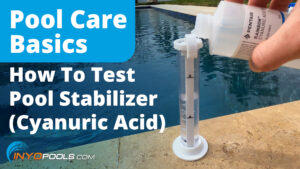
1) Test your water’s CYA Levels.
2) a) If CYA is low, use the TFP calculator chart to add the correct CYA dosage to pool.
b) If high, drain 10 percent of your water, then SLAM (Shock, Level and Maintain).
3) Retest your water and repeat step 2 if necessary.
If you have another way on how to avoid or break chlorine lock, please leave a comment down below.








Leave a Reply