Home / Articles / Can I Install an Above Ground Pool Pump on an Inground Pool?

Can I Install an Above Ground Pool Pump on an Inground Pool?

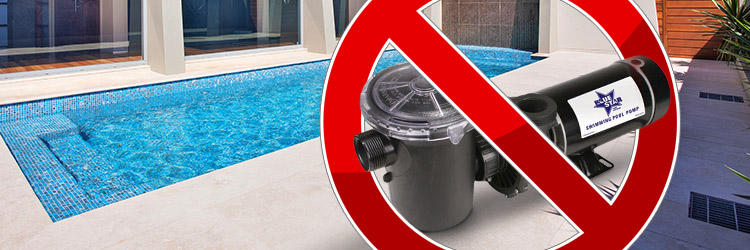
We have been asked this question quite often lately so we decided to squelch the uproar and answer it simply. The long and short of it is a solid “No you can’t” but for the curious, we will do a quick rundown of the major reason why it is not to be done.

Location, Location, Location!

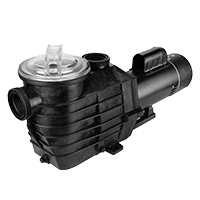
The main difference between the two is the pump’s likely position relative to the body of water. The placement of the pump defines the pump’s role in what it needs to do to properly circulate the water.DSCF2668
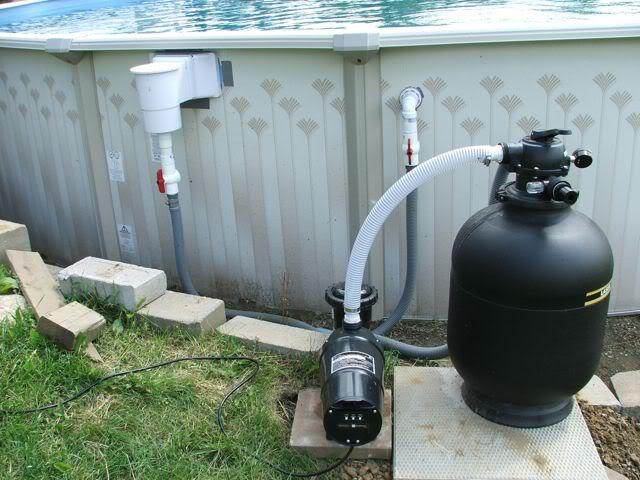
Inground pool pumps have a natural enemy named Gravity as well as air pressure working against them at all times. Water’s tendency to sink to the lowest available point is the result of gravity’s constant push on water. That phenomena is also the cause for your pipes going bone dry when you lose prime.  Losing prime is comparable to when you suck on a straw to take a drink and then when you stop it goes away back into the cup. Gravity and air rush in to the straw, replacing liquid.

The ability to regain that “prime” aka water draw is what separates inground (IG) pool pumps from their above ground counterparts. IG pumps are aided in this endeavor by this dandy device called the Diffuser, pictured to the right. The diffuser is a shroud that sits over the pump’s impeller. The impeller is a vented disk screwed to the motor’s shaft tip to transform the spinning of the motor into water pulling force. The diffuser’s cone shaped shroud focuses that pulling vacuum force towards the inlet pipe, drawing the water to the pump. The addition of the diffuser is what makes inground pumps “Self-Priming,” and what keeps the pool owner from needing to fill the pump with water before every use.

On the other hand, Above Ground (AG) pool pumps are installed in the opposite manner to their counterpart, at the foot of the pool, well below the waterline. The pump should be constantly primed and ready to go because of the pump’s location. This placement permits gravity fed flow that allows for less powerful motors and the omittance of a diffuser.

But What If I Really Want to Do It?

mean-old-lady
Dont Be Difficult

Ok, if you want to be really difficult, there is only one way I could see it working for you but the circumstances are unlikely and highly speculative. Your “inground pool” would either need to be on a hill or have the pool equipment down hill from the pool.  The sloping gradient allows for a more gravity driven priming situation which lets us use the smaller pump. Or you can find one of the few self-priming above ground pool pumps.

Now, the only issue I see with that is the return water needing to be sent back up that gradient to a return. Above ground pool pump are smaller in horsepower output and impeller size which reduces pressure greatly. When we add the back pressure of an up sloping gradient, the weight of the water may push back against the pump creating an unwanted stalemate.

My suggestion is to get the right pump for the pool and do not try to rig up something from mismatched parts; if you own an inground pool get an inground pump and if there is an above ground pool use an above ground pump. If you wish to discuss further on this topic, drop a line in the comments or feel free to give us a call at 877-372-6038.

author avatar
Matthew Simmons Technical Writer & Pool Product Expert
Swimming pool expert at InyoPools and host of Poolside Chat, brings over a decade of experience in the pool industry.

Related Videos

54 responses to “Can I Install an Above Ground Pool Pump on an Inground Pool?”

  1. Rasol Avatar

    Is there a problem with installing a pump at an altitude of one meter above the pool floor? The total height of the pool is 1.5 meters. The longitudinal distance from the pool is 12 meters.

    1. Matthew Simmons Avatar

      It depends on the pump model, pumps like the Pentair Dynamo and Hayward Matrix can actually prime themselves. This type of installation is suitable for self-priming pumps. if you have a lower-end pump, being installed above the waterline may not work. Refer to the owner’s manual or literature to find reference of the pump being self-priming.

  2. ice Avatar

    i have an above ground pool with 5000 gallons in it…
    i can not have inground pool for the moment… but i enjoy hightech and gadgets and i’m trying hard to make our above ground look good.
    i would like to install a pentair variable 1.5HP pool pump because you can program it, auto it and play with the rpm/ gpm ofmthe pump so it could match the minimum pool heater pump requirement gpm and at the same time lower the electric bill..
    but all variable speed pumps are designed for inground pool only. With so many above ground pool owner out there, how come there is no variable speed pump for us?
    second question, i was told that putting an inground variable speed pump on an above ground pool can break several equipment due to the suction created by inground pump.
    The thickness of the skimmer of an above ground pool is too thin to sustain the suction force, flexible pipes will also collapse, a syphon will be created in the pool, and in the skimmer.. could make the skimmer of the above ground pool noisy..
    even if you set the variable speed pump to the lowest rpm, there is still a prime mode upon turning on the pump and there is still a constant suction force…
    in case of a shutdown or a power outage, the variable pump could reset the setting and when the power return it will run at default 3000 rpm and full prime and full suction.. and that can destroy your above ground pool while you’re absent from home.

    is there a way to mod an inground variable speed pump to disable the diffuser?

    1. Matthew Simmons Avatar

      My honest question, why install a pump that can cost almost much as your pool frame? I would bite the bullet, and not have a gadgety pool pump, so you can save faster for an inground pool which would warrant a variable speed pump.

  3. john shilander Avatar

    I have a 12k gal in ground pool …. in addition to my main pump I was thinking of using a wind turbine and running a continuous small pump …I was hoping for a low power pump for above ground pools… that’s cheap … also hope to use any extra power on heating elements with extra heater I have… do you have a suggestion? thanks

    1. Matthew Simmons Avatar

      Unfortunately, I do not have any suggestions on wind turbines. But I do suggest heading over to TroubleFreePool.com they have a bunch of experts and DIY-ers that may be able to help you.

  4. Domingo Avatar

    Really appreciate you sharing this post.Much thanks again. Fantastic.

  5. Tim Avatar

    HI

    Is it a good idea to have the pump underground next to the pool at the same level of the inground pool water ?

    In that case I can have an aboveground pump instead of an inground one !?

    1. Matthew Simmons Avatar

      If you use an inground pool pump on an inground pool then you can have above or below the water line.

      If you have one of the few applications that have a pool equipment pad below the pool then you may be able to use an above ground pool pump on an inground pool. My suggestion is to just use a pump for its intended purpose; whether it be inground or above ground.

  6. Josh Spivey Avatar

    I am a homeowner and I am building a small 3,000 gallon mini pool in my back yard. Going to basically be a glorified spa with no heater. I have built the concrete structure monolithically. I’m having a hard time finding an inground pump small enough for this application. All of the pumps small enough to run a 3,000 gallon pool are for above ground use. Any thoughts? The placement of the pump and filter area is approx 1 foot below water level due to the slope of the yard. I’m doing this project over the next few months.

  7. Roy Llamas Avatar

    My very small inground pool had a 48y frame above ground pump.
    It worked for years and years; am i making a huge mistake replacing it with the same thing?

    1. Matthew Simmons Avatar

      Roy you would have to provide more info on your installation. What model pump do you have? How big is the body of water? What is your filter’s size? What is the feet of head of your pool? And is the pump above or below water level?

      1. Azamine Avatar

        The contractor got an underground pool installed with an aboveground optiflo pantair . Of course I did not know about it … I just found out 2 years later

  8. Tom Stephenson Avatar

    Hi I am in the middle of installing my first pool. Its a bit crazy in as much is 1/2 and 1/2 AG and BG. So it’s a meter high structure from ground level to top and excavated down to 1 meter at the deep end.
    Ideally for me the pump house would be built at ground level, at the shallow end, so i would have a 1 meter head of water and a 1 meter distance to the deep end.
    Which type of pump should I use AG or BG, and if I was to go for a AG pump would this pump be more economical to buy and run??

    1.  Avatar

      BG , better go big or go home

  9. Free Games Avatar

    Many people in the market for a new home shy away from backyard swimming pools, not wanting the extra maintenance costs and upkeep. It s still generally thought that homes with inground pools are worth more. However, this may not be true at all if the inground pool is really an above ground pool in disguise. At the very least, you can expect prospective buyers to have a lot of questions.

    1. Patrick Paroline Avatar

      I have heard in the past that you can expect to get half of the value of an inground pool when you sell your house. For example if your house was $200K and you paid $50K for a new pool you could expect when selling your home to get and additional $25K on your home (1/2 of the $50K pool), so you would be selling for $225K. That’s why many say not to add a pool purely for investment reasons, also you can narrow the buying pool as not all buyers want a pool. With that being said I added a pool to our house and my family uses it everyday in the summer, so it has been a great investment for us!

  10. George Stanley Avatar

    My question, can the diffuser be bought separate and change it out from the above ground pump to convert it to a inground pump and using the same housing/pump housing? I guess I am saying is this the only difference to make it a self priming pump.

    1. Matthew Simmons Avatar

      Good question, George. A diffuser can not be added to an above ground pool pump to increase its water flow. The design of a pool pump is partly based on efficiency of space which means there is no extra room to accommodate an extra piece. Also a diffuser is secured into the seal plate by screws or notches; if an above ground pump’s seal plate is altered to add on a diffuser it would compromise the pump’s watertight seal.

      Another difference between these pumps are the impeller sizes. A one horsepower inground pump impeller will be larger than a one horspeower above ground pump’s because of their distinct water dynamics i.e. feet of head, rise above water level, and required water flow.

    2. john Avatar

      Depends on the inground pool setup.
      I am running a Hayward turbo flo ii (Above ground)
      13amp
      1 HP
      on a 14×28 50KL pool
      No main drain
      so circulation is purely skimmer driven which is about 10 feet away from pump ( sitting on the ground )

      so really it depends on your inground setup

Leave a Reply

Your email address will not be published. Required fields are marked *