
Home / Articles / Finding a Leak in an Above Ground Pool

Finding a Leak in an Above Ground Pool

I have really good news and really bad news when it comes to having a leak in an above ground swimming pool. The really good news is that once you find the leak, it’s usually super easy to repair. The bad news is (yeah, you probably guessed it) finding the leak is difficult. Locating a leak in an above ground is so difficult that I don’t offer it as part of my services. Even if it’s the off-season and I’m broke, I’ll turn down a job to detect a leak. There are many cases where the leak is never found in an above ground and the only solution is to replace the entire liner. So now that I’ve scared you and lowered your expectations, let me give you some instruction on how to find a leak.

Check the Pool’s Equipment First

To check the pool’s equipment first is the easiest. When looking for a leak in an above ground pool, the hardest place to find it is somewhere in the vinyl liner. To avoid any frustration, inspect the equipment first (even if you have a feeling that the leak is inside the pool). Follow this checklist first. The leak may be outside the pool.

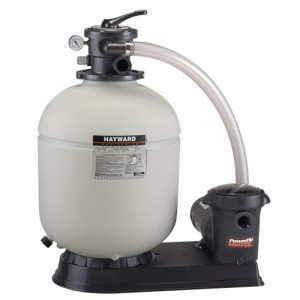
  1. Clean the equipment areaHayward Pro & VL Series
    If the pump/filter area is cluttered or overgrown, clean it first. Pull out all the weeds and store the pool toys, outdoor items and rocks/mulch away from the equipment. If there is an ant pile that formed under the pump, kill the ants and clean area.
  2. Turn on the pump
    Some leaks will leak more when the pump is on. Since it is easier to see a bigger leak, you’ll want the pump on.
  3. Inspect the general area for signs of wetness
    Water is wet. Duh! So it stands to reason that any signs of wetness are your best signs for a leak.
  4. Look closely at everything
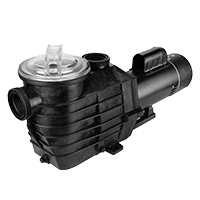
    When I say closely, I mean get down on your hands and knees and look at all the components, hoses, fittings, and lids for drips. Sneaky leak alert: Pay close attention to the area directly underneath the pool’s pump. Pumps have shaft seals that can leak straight down into the ground and sometimes there will be no visible ground moisture.Have a dry towel handy in case something is questionable. Wipe the area dry and inspect for any new signs of wetness to appear.
  5. Inspect the skimmer and return at the wall
    The pool’s skimmer box and return are two common spots for leaks. Water travels downward due to gravity. Duh #2! Because of this, look directly under the skimmer box and return as that is where the leaking water will travel. If you are not sure, again use the towel to dry the pool’s wall and reinspect for any signs of newly formed moisture.Don’t be in a hurry; take your time. Some leaks are deceiving and require patience to find. If you’ve checked out all these spots and have come up dry, it’s time for the real fun.

Tips for Finding a Leak Somewhere in the Vinyl Liner

This may not be an easy task. The best piece of advice I can give here is to be patient.  A leak can be anywhere inside the pool and there is not one soul on the planet that can find some of these so don’t be too hard on yourself if you don’t find it quickly. Here’s what I do listed from first to last:

  1. Turn off the pool pump and let the water get completely stillYou’ll need to be able to see the bottom of the pool as clearly as possible while you are standing outside of the pool.
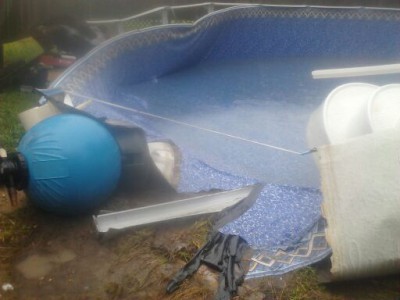
    torn above ground pool liner
    I Think I Found the Leak
  1. While you are standing outside the pool, inspect the pool’s bottom all the way around
    Most above ground pools have sand or earth based bottoms and coving. When there is a leak in the vinyl, the water usually leaks out in the ground somewhere underneath the pool. In most cases (but certainly not all) the leaked water travels through the sand/earth bottom and causes the earth to wash away leaving small valleys or divots or holes in the pool’s bottom that was once flat. Some of these washed away areas under the pool are visible and will tell you where the leak is in the liner. If you see something like this, it’s time to get in the pool (SEE STEP 5).
  1. Check the outside of the pool
    Didn’t see anything while you were following the previous step? OK, then while you are still outside the pool, you better check the outside bottom of the pool. If it’s covered, dig around the wall at the bottom and expose the bottom track. This is the tracking that the pool wall fits into at the bottom. Clear away any mulch or rocks or dirt so you can easily see if there are any signs of excessive wetness next to the track.What makes this tricky is that your ground may hold moisture naturally so just because you find some wet ground doesn’t mean it’s a sign that there is a leak in that area. Look for signs of excessive wetness close to the pool as a sign for a leak.
  2. Time to get in, but first clean the pool
    Before you consider getting in the pool to find a leak, clean and vacuum it. You are looking for a small hole in the liner so dirt and leaves sitting on the bottom will make it tougher to find. Make sure the water quailty is good too. Swimming in a slimy, cloudy pool sucks. Have a good dive mask or goggles and some kind of applicator that is filled with a food coloring or dye. Also, it would be really nice if you have a diver’s weight belt to keep you down in the water. Again, before you get in make sure the pool pump is off.
  3. Get up-close and personal
    A hole can be anywhere in the liner, but most of the time the hole is at the bottom close to the pool’s wall. Put on your mask, take a breath, and swim to the bottom getting up-close and personal with the liner. Closely inspect any of those small valleys or divots you saw earlier for small holes. If you see what may be a hole, shoot some of the dye you have from your applicator around the area and see if the dyed water draws into the hole. If it does, voila, you have found a leak.

So you checked at the bottom of the pool all the questionable areas of the pool liner and found no hole. The next place to check is all the way around the pool where the wall meets the pool’s bottom in the same up-close, methodical manner. Still no leak? Now in the same way check the pool wall starting at the bottom and moving towards the top.  Most wall leaks are lower so spend most of the time at the foot at the bottom of the wall.

If you still haven’t found the leak, it’s time to play manta ray. Very slowly swim very close along the bottom (like a manta ray) inspecting every square inch of the pool liner. If at any time you see something that may be a hole, shoot some dye in the area and see if the dyed water draws into it in order to verify the leak.

Now you’re over this. You’ve searched the pool’s bottom like a sand shark for a couple of hours and you look like a prune and didn’t find anything. Well, that sucks! I really feel your pain. The last thing you can do is allow the pool to drain without adding water. It will stop at the point of the leak and make it easier to find, but not always. At this point it may be time to get a new liner. I’d say if your liner is five-years-old or older, then go ahead and get a new liner. When liners age, they may start leaking in several spots as they become brittle.

The last thing I can offer you is good luck finding the leak. Sometimes that’s what it takes.

author avatar
Dan Dougher

Related Videos

77 responses to “Finding a Leak in an Above Ground Pool”

  1. Becky Gardner Avatar

    We just installed our new pool after many days of preparation. After getting about a foot and a half of water in it we discovered a leak. Water was seaping out over the pool ground cover. After trying the food color with no luck I attached a plastic drinking straw to the end of a nozzle with a on the air compressor and worked it Between the liner and ground cover. Guess what? Bubbles came up from under the pool. May not work for all depending on where the leak is it it’s worth a shot!

    1. Sheri Avatar

      I love this!!! Thank you!! We just set up the pool and same thing, a little water leaking out. I’m going to tell my husband about this!

  2. GP Avatar

    I have the same problem and now it is Spring and the pool is gross. Getting in it is not an option.

    My leak is presumed to be about 3 inches of below the skimmer as that is where the water has drained down to. Heavy rainfall brought it above a line I marked and then it came back down again after a day or two. I am thinking of removing the top rails one by one and using a compressor to blow air carefully between the lining and the wall of the pool. I am thinking if there is a small leak that it will presumably blow bubbles out a tiny hole that is somewhere. Thoughts? Crazy?

    1. Scubaman7 Avatar

      any luck with the air compressor leak detection ? I also thought this might work but haven’t tried it yet

      1. Mandy K Avatar

        Did you try the air compressor idea? We are thinking of trying it to. Just wondering if anone had luck with it.

    2. Mandy K Avatar

      I would also like to know if 5he air compressor idea worked. We were thinking of trying that too.

      1. Dan Dougher Avatar

        I haven’t tried that yet but I’ll bet it works most of the time.

        1. Laura C. Avatar

          You seem very knowledgeable. So my leak is coming from under the pool and there is a constant flow of water coming out. What could that be? What should I do to see where it is leaking from?

  3. knightrider365 Avatar

    Get the liner out and shine some light behind it, may be you find some tiny holes.

    1. KnightRider Is A Dolt Avatar

      Do you even own a pool?!?!?

      1. LookingForLeak2 Avatar

        LOL!! Get the liner out?!? Um yeah… cos the pool is a 40000 litre pool….easy as, bro!!!

  4. Kazz Kelly Avatar

    Love the humor… it’s been weeks and we’re still looking..Maybe a new liner is in order. Thanks

  5. Vann Gibson Avatar

    Very well written advice…I do have a couple base divits…will inspect them closer…Thanks !

  6. Bruno Avatar

    Is it possible to have a leak between the skimmer box gaskets? The guy that did the plumbing was absolutely hopeless and came back 5 times.. I noticed that the gasket on the outside under the skimmer is pinched and can’t be seen in the centre .. I can’t find any holes as it’s a new pool but I’m seeing wet soil 1 meter kind beside the skimmer box on the ground and not near the pipes underground .. hope that makes sense

    1. Matthew Simmons Avatar

      Yes that gasket can be pinched which can then cause a leak. Can you see bubbling behind the liner or is the ground wet in the area around the skimmer?

  7. Hank Avatar

    Thanks for the article, Dan. What if the leak is on the drain itself?

    1. Dan Dougher Avatar

      If you have a leak from a bottom drain, that’s usually a tough fix. Take off the cover and see how tight the screws are that hold the ring. If loose, tighten and recheck for a leak. If tight, you’ll have to change the gaskets which won’t be easy.

      My advice is if you are changing main drain gaskets, drain the pool down to about a 6″ depth first. There are two gaskets. Replace them both. Main drains usually leak because there is dirt in some of the screw holes which are preventing the screws from tightening the ring. Check for this by making sure each screw tightens all the way down. If you have some dirt in the holes, clean them out. It won’t be easy!!

      Once you know all holes are clean and the surface of the main drain is clean, replace the two gaskets and tighten the ring and refill the pool immediately.

      Thanks
      Dan

      1.  Avatar

        Dan it is in the middle of winter Ice and snow …we closed the pool in fall everything was good. We noticed water under cover was getting lower, looked all around pool , no water anywhere so we put water back in pool (at this time 30* out) a couple days later it was down again. Called a pool place and they suggested to keep water in it, at least 2 feet Well we did this. It is now 2 months later and we looked out and the pool is empty, cover has fallen to the bottom on top of the ice and snow. No water hose , frozen in pool. Will the pool fall in?? Please any suggestions? We decided before this happened we were getting new liner so that’s that just affraid will fall in.
        Please help
        Peggie

        1. Dan Dougher Avatar

          Your pool should stay up and in place while it is empty with no issues. The only thing that would hurt it is an extreme wind storm so be mindful of that.

  8. Kim Avatar

    Well the first paragraph brought me to tears and laughter. I’ve checked my equipment and truly believe it’s my 20 years old liner. Yes I said 20 years. So after all I’ve read at least I got my money out of it.

    1. carl Avatar

      Did you replace liner, any issues with the old pool? I’m in the same situation

      Carl

  9. Tiffany Avatar

    Ha! Well, at least you’ve made me smile a bit as I am beginning to understand the challenge ahead. Good to have some clear expectations, albeit, even if it isn’t good news. Thanks for the advice! Wishing me lots of luck as I go on the hunt. If I’m not too annoyed, I’ll try and remember to give an update! thx!

  10. J Avatar

    What I love most about this article is your sense of humor bc after 3 hours searching, it’s still leaking so I came back to reread your info. (All great) I am still determined!!!

    1.  Avatar

      I got lucky and followed the steps first finding the concave washed out divot then after about 3 hours of looking found holes that could have been punched by the tip of a pencil but which allowed about an inch of water out a day. The holes were so small that they could have easily been mistaken for a grain of sand or dirt because they looked dark. Without weights it was difficult to keep my legs from flipping up over my head and getting the water out of my ear after so long under water was a challenge; but the pool is now holding water. Thank you for good advice.

    2. Shaun Holland Avatar

      Is it better to fill the pool back up before looking for the leak. This way you can get the water clean?

Leave a Reply

Your email address will not be published. Required fields are marked *