Home / Articles / Pool Pump Running Costs: How to Save Money

Pool Pump Running Costs: How to Save Money

How Much Does a Pool Pump Cost to Run

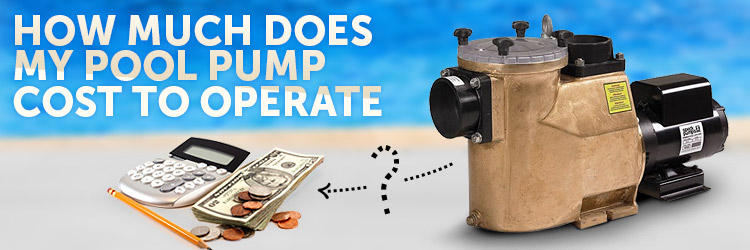
Did you know that your pool pump running costs are one of the largest contributors to your skyrocketing electricity bill? In this articl,e we discuss how to make your pool pump schedule more efficient. Here is a simple 4 step process to help you determine how much your pool pump costs to operate. Check out the second section we added, showing the savings which can be obtained by upgrading to a variable speed pool pump.

Step 1 – Energy Consumption

First, you will need to determine the energy consumption of your pool pump. Here are the kWh consumptions for the most common pool pumps.

¾ HP = 1.26 kWh
1 HP = 1.72 kWh
1-½ HP = 2.14 kWh
2 HP = 2.25 kWh
2-½ HP = 2.62 kWh
3 HP = 3.17 kWh

The equation used above to determine kWh is Multiply the pool pumps volts x amps to get watts then divide by 1000.
Pool Pump Running Costs: How Much You’ll Pay
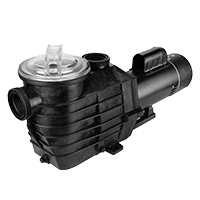
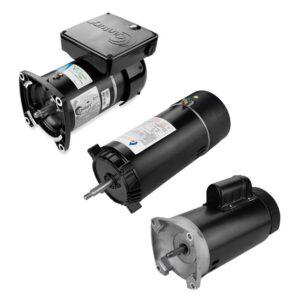
Variable Speed Dual Speed Single Speed Pool Pump Motors

Step 2 – Daily Energy Consumption

Multiply your pumps kWh by the number of hours per day you run your pump. Here is an example using a 1-½ HP Pool Pump running 8 hrs. per day (Use kWh from step 1)

2.14 kWh x 8 hrs = 17.12 kWh per day

Step 3 – Energy cost?

View The Cost of Electricity for All 50 States to determine your cost of electricity. In the example below, we are using California. FYI the national average is 12.29 cents per kWh.

17.12 kWh x .17 cents (cost of energy in California) = Daily pool pump running costs of $2.91

Step 4 – Determine annual cost

Take daily cost and multiply by how many days per year you operate your pump.

$2.91 cost per day x 365 days = $1,062.15 per year to operate your 1-½ HP pool pump.

How to Reduce cost from $1,062 to $496

A variable speed pump is a pump that can run at a full range of horse power’s. This means you can dial the pump in to run at 1-½ HP or dial it all the way down to a ¼ of HP. When dialing the pump down to the lower HP the cost of operation can drop by as much as 80%. Using the process above let’s see how much it will cost to operate a 1-½ HP variable speed pump vs. the 1-½ HP single speed pump.

Step 1 – Energy Consumption

On average Variable Speed Pool Pumps draw about 4.35 amps this means the pump consumes 1.0 kWh

Step 2 – Daily Energy Consumption

1.0 kWh x 8 hrs = 8.0 kWh per day

Step 3 – Pool Pump Running Costs

View The Cost of Electricity for All 50 States to determine what you are paying for electricity. In the example below, we are using California.

8.0 kWh x .17 cents (cost of energy in California) = Daily pool pump running costs $1.36

Step 4 – Determine annual cost

$1.36 per day x 365 days = $496 per year to Operate a 1-½ HP Variable Speed Pump.

Cost to Operate 1-½ HP Single Speed Pool Pump $1,062 / yr Vs. Cost of Variable Speed Pump $496 / year.

Variable Speed Pool Pump Resources

If you think a variable speed pool pump makes sense for you then check out our Variable Speed Pool Pumps or our Variable Speed Pool Pump Buying Guide. If you have any questions on determining the correct pump for your pool then leave a comment below or give us a call at 1-877-372-6038

author avatar
Patrick Paroline

Related Videos

56 responses to “Pool Pump Running Costs: How to Save Money”

  1. Richard Avatar

    Your motor guy is thinking of a fixed displacement pump. tell him that pool pumps are centrifugal

    1. Matthew Simmons Avatar

      We’ve known him for years and he knows we only deal in pool pumps, e.g., “Inyo Pools.” He is basically an encyclopedia of motor knowledge I reach out to just to verify one thing or another.

      I’m going to take his word on this, and not just because he came down on my side. Trust me, I’ve had to eat crow once or twice after having him review other work.

  2. Stuart Avatar

    When comparing a variable speed pump to non variable you have to take into account the actual amount of water being filtered. A lower flow will take a longer time to get the same amount of water filtered. The comparison needs to be on the total amount of water filtered, not on time.

    1. Matthew Simmons Avatar

      This is true. But, the lower flow rate is coupled with a much lower amp draw to provide the savings. To give an easy example, a single speed running at 3450 RPMs is drawing 15 amps. A dual speed of the same HP will pull 15 amps on the 3450 RPM (hi speed0 but will only pull 3 amps or less at 1725 RPMs (low speed.)

      1. Richard Avatar

        Stewart is right. Just because it is drawing lower amps does not make it better. If you need 4O gpm at 20 psi, and low speed produces 20 Gpm at 20 psi, it is not a savings.

        1. Matthew Simmons Avatar

          I’ll post this here, and leave a reference to this post to your post above as well.

          Just to make sure I was playing on the right side of facts I asked the motor guru over at Century for help. I copy and pasted screenshots of your comments and mine.

          Matthew, What you say is correct. Some of the other comments are not correct. The nameplate amps on an alternating current motor do not tell you the amount of current you will be paying for. You also need the Power Factor. In some PSC designs, it is very close to 1. All this is too much for a consumer.

          Best to state the three basic pump laws.
          1) Flow is directly proportional to speed. A motor on a pump will pump half the water at 1740 RPM as it does at 3450 RPM.
          2) Head varies a the square of the change in speed. A motor running at 1750 RPM versus 3450 RPM would only have 1/4th the head. The lowest speeds, such as 600 RPM are worthless from a filtering standpoint. There will be very little agitation of the water.
          3) Power required varies at the cube of the change in speed. It only takes 1/8th the HP to run at 1750 versus 3450.

          A single speed motor of course has no options for other speeds. Two speed motors generally are 2-Pole (3450 RPM)/ 4-Pole (1725 RPM) designs, so again options are limited.

          Every pool is different with respect to the amount of flow required to keep it clean. Experimentation will enable the user to come up with a suitable program for speeds.

  3. Richard Avatar

    I’m an engineer, so I’ll add my 2 cents.

    Motors are rated in horsepower output. To get 1 horsepower out (746 watts), you have to put more than 1 horsepower in. If the motor has an efficiency of 75%, then the input horsepower is 1.33 So you multiply the 746 by 1.33 to get the input watts, or 995 watts.

    So a motor putting out 1 HP will draw about 1 kilowatt.

    The pump efficiency only comes into play if you are interested in the horsepower of the pump.

    1. Richard Avatar

      To add another bit of information, to make an accurate estimate of the horsepower input (which is what you pay for) you would have to measure the actual amperage going into the motor.

      What is on the nameplate of the motor is accurate if the pump is drawing the full 1 horsepower.

      Normally the pump is sized for the pool, and the motor is the minimum HP that will operate the pump as required, so the nameplate amps are a pretty accurate guide as to what the input power is.

      The pump input horsepower requirement will vary as the pressure at the pump discharge port varies. In other words, it will be less with a clean filter than with a dirty filter.

    2. Matthew Simmons Avatar

      Thank you for the input.

      BTW, I’m not sure why but I am pretty sure every engineer I have met has started the conversation with “I’m an engineer.”

      1. Matthew Simmons Avatar

        For anyone reading this comment, please refer to my longer comment down below for an engineer at century’s take.

        1. Richard Avatar

          Yes, and please see my comment on the motor guy’s take. He is talking about a fixed displacement pump. Centrifugal pumps (like all pool pumps) are totally different WRT performance.

  4. Poolshopper Avatar

    Ok, while I appreciate the time and energy it must have taken for people to break down all of these “kilowatts per hour” calculations, can someone please just say how much actual $$ having a heated pool has added to the monthly electric bill? (Avg)
    Thx.

    1. Matthew Simmons Avatar

      Because there isn’t a set amount of money that is going to be tacked onto the power bill because you are heating your pool. The cost it takes to heat your pool would have to factor in, size of pool, pump model, pump hp, feet of head, starting pool temp, desired pool temp, time of year, area of the country, whether the pool is shaded or not shaded, size of pool heater, if it is a heat pump or a heater.

      But all that is why we have these calculations, so you can figure it out for your specific calculation.

    2. Richard Avatar

      All of the above calculations have to do with the cost of running the pool pump. Heating is another matter entirely.

      There are some estimates for heating s pool, but it depends on the environment, and the type of heater. In Pensacola, in the spring months, it costs about $30 per day , using natural gas.

    3.  Avatar

      To calculate the cost to keep a pool heated, you need the pool surface area, and the temperature difference (pool temperature – ambient temperature).

      The heat loss is approximately 10 BTU per hour per square foot of pool area per degree of temperature difference.

      For example , a pool that is 20′ x 25′ (which has a surface area = 500 SF), and a temperature difference of 20 degrees. would have the following heat loss:

      BTU Loss = Pool Area x Temperature Difference x 10

      = 500 x 20 x 10 = 100,000 BTU per hour

      The heating value for natural gas is 1000 BTU per cubic foot, and for an electric heater (not a heat pump), 3413 BTU per kW-hr

      Natural Gas Required at 80% heater efficiency = 100,000 / 1000 / .80 = 125 CF gas per hour. (Gas is ususally billed in 100 cubic foot increments or CCF, so this equals 1.25 CCF)

      Electric energy required at 100% heater efficiency = 100,000 / 3413 = 29.3 kW-hr (Assumes a standard electric heater, not a heat pump)

  5.  Avatar

    Volts times amps times time will give you kWh

    The horse power is the pump rating. Not the cost.

    The efficiency of the pump will make the difference

  6. Bobby Avatar

    Good times!

  7. Jack Hopman Avatar

    Above saving is incorrect. It assumes that a variable speed pump delivers same amount in 3 hrs as 1.5 hrs.

    1. Matthew Simmons Avatar

      In which explanation are you seeing this claim?

  8. Avinash Ranka Avatar

    Patrick : How did you even arrive at 1hp = 1.72kWh ? this is absurd.
    It is a well know fact that 1hp = 746W and in straight forward calculation to get the kWh is by the below formula for a single phase motor (as generally 1hp motors are single phase)
    kWh consumed = (HP rating of the motor /(1000 x Efficiency of the motor in %)) x 100 x H hours that you are running it
    For example, for a 1hp motor, you can take efficiency of a water pump to be about 90% for general calculations and if you are running it for 8 hours then = (746 /(1000 x 90)) x 100 x 8 = 6.63 kWh

    1. Matthew Simmons Avatar

      Hello Avinash,
      I had to bring out the big guns on this just to make sure who was right. I contacted Regal-Beloit (aka A.O. Smith-Century) and their main tech got back to me with a lengthy but useful explanation. It goes as such:

      “If you are trying to answer the blog comment, it would be necessary to know the actual motor part number. 1.72 kw is not out of line for a specific 1 HP motor. By definition, 746 watts output is 1 HP. Pump motors have service factors varying from “SPL” (for special – usually less than 1) to 1.95 (the highest I know of). This all relates back to a time when this type of motor was used on home water systems. People with wells usually lived outside the city, and seventy or so years ago, the power supply often was not the 110 or 115 volts it was supposed to be. As a result, motors were assigned “service factors” or “safety factors” by the National Electrical Manufacturers Association. Service factor is defined as a multiplier, which applied to the horsepower, indicates the total horsepower load the motor can carry at rated voltage and frequency. Years ago, this factor was used to allow the motor to operate with under voltage conditions. As time passed, these motors were applied to swimming pool pumps, and the power grid was upgraded, so the under voltage conditions did not exist. Rather than reduce the motor total horsepower, pump manufacturers applied impellers which used more of the total available horsepower. In some cases, a pump manufacturer would raise the nameplate horsepower and lower the service factor (motor was not changed, and had the same total horsepower) which gave the impression that a buyer was getting a stronger pump than that offered by a competing pump company. This was called an “uprated” motor. Needless to say, this created a lot of confusion in the industry, and for people trying to replace an existing motor, and only going by the HP rating.

      In an inductive circuit (squirrel cage induction motor) Power Factor must be used. It is the relation of the Input Watts, divided by Volts x Amps.

      I have no idea where the idea of a 90% efficient pump comes from. The pump manufacturers may be able to provide estimates for the wet ends. Induction motors will vary from the low 60% to low 80% range, so the system efficiency will the product of the motor efficiency times the pump efficiency. It is probably best to just look at the tables we have for cost to operate at various costs per KWH. The only way to be really accurate on the cost to operate a specific pump/motor is to test it in the application.”

      1. kolo Avatar
          1.  Avatar

            LOL

      2. Rob Nash Avatar

        Greetings!
        I am NOT an Engineer, nor do I play one on the internet, and my question concerns the initial startup power that a pool pump requires when it kicks on, as well as watts per hour the pump will mandate. My ex-father-in-law is determined to make the pump solar powered here in California. I have seen that a generator is preferred, but does NOT want that. He enjoys a challenge and has done so much for his family and friends even when the odds make him the underdog.
        The Pump is Pentair “Whisperflow” WFE-3 3/4 HP Self- primed pump. Also it is a Century E-Plus (P/N:177449), (Uprated) NFS Service Factor 1.67, Amps 6.0-5.6 / 11.2, Volts 208-230 /115, Amb 40°.
        If I read correctly from this site, 1288 watts per hour, but what wattage does that calculate…. peak, average, running, or minimum?
        Also, should the pump be shut off when it hits 104° outside?
        Since the pump sounds nothing like a whisper, is the pump about to die?
        At that point I would think a DC pump might make switching to solar a little less cumbersome.

        Any help is greatly appreciated,
        – Rob

        1. Matthew Simmons Avatar

          Calculate wattage by multiplying amps and voltage together. That would give you the normal running wattage. Give the pump a little cover, and you can keep it running throughout the day. If the motor is making a loud screeching noise, then it is likely a bearing issue. You can replace the bearings or just the motor. Replacement motor: 3/4 HP Motor EE – Full Rate (B661, B2661) Replacement: bearings: Two, 203

  9. Andreas Avatar

    hi 1HP = 1.72KWh,, shouldn it be more like 0.746 ?? when 1 KW electric motor usually is close to 1.34HP ?

    1. Matthew Simmons Avatar

      Andreas,

      How are you coming to the calculation .746?

      The way you calculate watts is Voltage x Amps. For example, the UST1102 the most common motor out there would be calculated in this manner, 115 volts x 15 amps = 1,725 kW

      1. John Avatar

        I would say that the pump documentation is max draw at power on (which is why it’s labelled max power). If your system can’t supply 11.3 amps for a 2.5hp motor, then the motor can’t start. Mummy 2.5 hp motor – which is rated at 11.1 amps – typically uses around 2kw / hour, rather than the predicted 2.6kw

        Hth

    2. Gary Avatar

      You’re not wrong. There’s enough wrong on this page that I wouldn’t trust it for your calculations

      1. Gary Avatar

        Andreas, you’re not wrong. There’s enough wrong on this page that I wouldn’t trust it for your calculations. The volts times amps works if you know the amperage of your motor and efficiency. 1 hp = 0.746kW is correct. You just need to add the time factor to get to kWh (multiply the kWh number by the number of hours you run your pump).

        1. Patrick Paroline Avatar

          Gary, thanks for the post, could you let us know the specific items that you feel are wrong. If we have any items which are inaccurate we definitely need to fix them. Any details you can give would be much appreciated.

          1.  Avatar

            In step one you equate a unit of power (HP) to a unit of energy (kWh). Which leads to errors later like in step two:

            “Multiply your pumps kWh by the number of hours per day you run your pump. Here is an example using a 1-½ HP Pool Pump running 8 hrs. per day (Use kWh from step 1)

            2.14 kWh x 8 hrs = 17.12 kWh per day”

            Looking at just the dimensional analysis for the units:
            kWh x hrs = kWhh, which is incorrect. See?

  10. Stjepan Avatar

    I have a sux 1000 pump from summer vaves it saying on it 1.4 amper I want to know how much is costs on that if I run it about 10 hours a day

    1. Liz Avatar

      We have to same pool and am wondering the same thing. I noticed it best to keep the pump running as not to get algae.

      1. Matthew Simmons Avatar

        I found this guide on how to calculate electricity usage: Estimating Electricity Usage

    2.  Avatar

      Om om

Leave a Reply

Your email address will not be published. Required fields are marked *