Home / Articles / Leaking Pool Pump

Leaking Pool Pump

Leaking Pool Pump

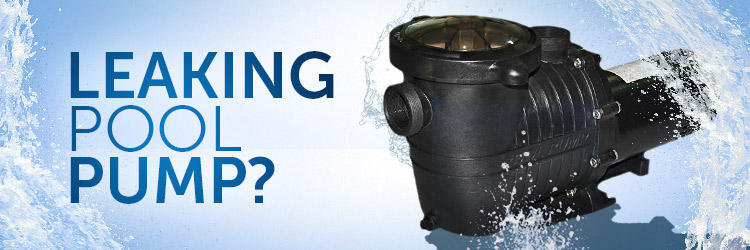
The first manufacturer to guarantee a leak-free pool pump is definitely going to corner the market.  Until that happens though, pumps will leak and pool owners will probably utter some choice words as they attempt to locate and troubleshoot the source.  Let’s review some of the most common leaks and how to address them.

Suction Side LeaksBlog Image - Pump Leaks (200 x 200)
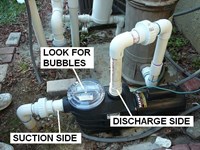
On the suction side of the pump, any leaks will be air leaks.  This means air is being sucked into the system from some point between the skimmer and the impeller.  With this type of leak, you will commonly see air bubbles in the pump strainer basket and at the returns in the pool wall.

You might feel daunted by the task of troubleshooting the entire suction side but there are several likely problem areas to check first:

Pump Strainer LidBlog Image - Pump Lid and O-ring (200 x 200)
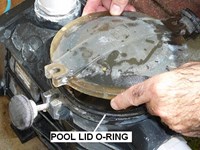
If not completely sealed, the strainer cover will allow air in.  With the pump on, slowly pour water over the lid.  If that decreases or eliminates air within the basket, you have found at least one leak.  You might be able to get by with just cleaning and lubricating the lid o-ring but if it looks worn or misshapen, it is best to replace it.  Also, be sure to check the lid for any cracks.

Cracked PVC and Valves

Cracks in plumbing connections and valves are common sources of air leaks.  To test, you can try pouring water over these also.  Even if a valve is intact, it might still need a replacement seal.

Low Water LevelBlog Image - Water Level at Skimmer (200 x 200)
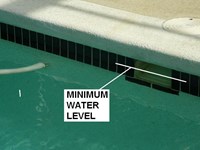
Probably the happiest cause of an air leak; this allows air to enter the skimmer but is easily addressed by adding water to the pool.  Also, check for a stuck skimmer weir.

Strainer Basket Drain Plug

It’s small but this plug can let air in if the o-ring is bad.  Inspect it for wear and tear and replace it if needed.

For visuals on troubleshooting suction side leaks, see our How to Identify & Correct Air Leaks guide and video.

Pressure Side Leaks

Any leaks on the pressure, or discharge, side of things will be water.  Since this part of the system is under pressure, water will be forced out of any compromised area.  The pressure side is anything located after the pump strainer.  Signs of a problem are dripping or spraying at the discharge pipe fittings, water collecting underneath the pump, and reduced pool water level.

ImpellerBlog Image - Pump Cross Section (200 x 200)
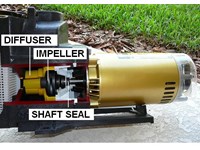
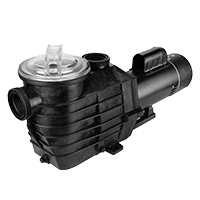
The impeller spins on the motor shaft and creates water pressure.  If it gets damaged by lodged debris or simply worn from long use, the impeller can become the source of a water leak.  You will need to remove the motor from the wet end of the pump in order to inspect and replace the impeller.

Housing O-ring or Gasket

If water is leaking from where the pump housing and motor meet, check for a worn seal here.  Should it need to be replaced, it’s a good idea to replace the diffuser o-ring at the same time.

Discharge Pipe

You can have a poorly sealed fitting on this pipe, or possibly PVC shrunken from heat.  If your schedule 40 pipe shrinks, a leak can form.  To repair this and prevent it from happening again, try using schedule 80 pipe nipples on the suction and discharge.  Schedule 80 is heavier duty and will stand up to heat better.

Pump HousingBlog Image - Pump Housing (200 x 200)
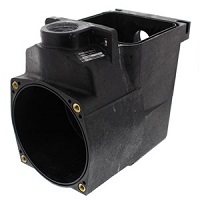
Cracks can develop in the pump strainer housing.  Some try to repair hairline cracks but I have not heard of too many success stories over the years.  It might be time to replace the housing, if the pump is fairly new, or consider a whole new pump.

Shaft Seal Leak

Between the pump motor and impeller is the all-important shaft seal that keeps water out of the motor.  A leak here is a common cause of motor failure so it’s crucial to address quickly.  Some signs are water coming from behind the seal plate and collecting underneath the pump where the motor and wet end meet.  You might also hear some abnormal pump noises; this comes from the bearings as the water gets inside the motor.Blog Image - Shaft Seal in Motor (200 x 200)
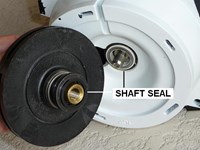
A common cause of this leak is replacing the motor but failing to replace the shaft seal at the same time.  Reusing the old seal is a bad idea, as seals warp over time and will likely not mate properly with the new motor.

The advice here is simple – replace the shaft seal.  If a tune-up kit is available for your particular pump make and model, it is the perfect time to also replace o-rings and gaskets while you have the whole pump apart.

If checking all of the above fails to locate and troubleshoot your pool leak, it could be in the underground plumbing.  Checking this will depend upon your level of proficiency and how accessible those lines are.  As much as I hate to say it to any and all with DIY hearts, it might require the help of a pool professional and a dip into your pool bankroll.

author avatar
Matthew Simmons Technical Writer & Pool Product Expert
Swimming pool expert at InyoPools and host of Poolside Chat, brings over a decade of experience in the pool industry.

Related Videos

64 responses to “Leaking Pool Pump”

  1. Andrea devito Avatar

    Matthew, I just received new motor and a go kit for my pump. When I replaced the shaft seal on the impeller side, it did not fit snuggly on. Now matter how hard I pushed and turned, the seal would not seat properly. After putting the pump back together, after pressure builds, water spills out into the motor. I obviously turned it off right away! What is the problem?? Help! It has to be the shaft seal. It did not even look like the one I took off. I sent a picture of my pump to you and this was the kit I got. Guy said it is a Hayward superpump. Andrea

    1. Matthew Simmons Avatar

      It sounds like you still have a piece of the old shaft seal on the stem of the impeller. When you removed the old shaft seal, did the impeller stem look like the picture below? If so, the shiny metal at the base needs to be removed for the new shaft seal to be properly set.

      shaft seal on impeller stem

      1. Mike H Avatar

        I put 3 in 1 oil on the impeller shaft before Installing my new shaft seal. It worked for a week and I started to see a leak between housing and plate. Did I compromise the new shaft seal? I didn’t replace the housing or diffuser gaskets yet.

        1. Matthew Simmons Avatar

          I answered your question on chat or some support ticket, but I will restate it here for any future readers. Do not grease, lube, or oil your impeller or shaft seal. Any additives will corrupt the seal causing the leak you have now. The shaft seal is so sensitive, even fingerprints (and the oil left behind) can cause the seal to fail quicker than expected.

    2. Rob Avatar

      A ps 201 is for all hayward super pumps

  2. Taylor Avatar

    I just replaced the shaft seal, and have checked the housing for cracks with nothing noticeable. However I still notice my pad is wet under the pump. I can’t figure out what else would be leaking. Any suggestions?

  3. Lana Avatar

    Hello we just purchased a refurbished pool pump. Is there anyway to test it for leaks before installing it?
    Thank You

    1. Matthew Simmons Avatar

      I guess you could open the strainer lid, then pour in some water to see if there are any leaks in the housing. But you won’t know for sure that the pump is watertight until the pump is running and has water pressure.

  4. CMCV Avatar

    Hi Inyo Pools,
    It seems that this seems to be a common question and I am sorry if I am repeating something that has been answered before. We have a Hayward Super II SPX 3000 in a home we just purchased and it leaked. From the paperwork I found, this was installed 1995. We read on your site about doing the kit to replace seals and gaskets. We purchased the SPXHKIT2. We also replaced worn parts on the motor and filter housing parts. After all was said and done, the pump leaks still between the pump housing and the seal plate. Before we did the kit, it leaked at the top of the pump housing and seal plate, and after the kit it now has minor leak at the center side bolt on one side. (if that makes sense, sorry) Maybe every 30 seconds about 4 to 5 drops. On one of your instruction pages it stated that the housing gasket should be a tight fit.
    Step 16
    Insert the new housing gasket in its groove. These new gaskets are tight. You may have to have someone hold half of the gasket in the groove while you are inserting the other half. Put a thin coat of lubrication on the gasket. Use a good pool parts lubrication.
    This was not the case with the housing gasket that we had with our kit. It fit loosely in the groove for the gasket. We used the lubricant provided and put assembly back together. We now have this little leak left. Is the housing gasket not right? Any help would be appreciated. Thank you.

    1. Matthew Simmons Avatar

      Thank you for the question. I would take apart the pump just to make sure the gasket wasn’t pinched or some other mishap found a way to mess with the seal during installation. if the housing gasket looks to be ok, I would look for any warping or cracks in the seal plate or housing that is allowing the water through. If the parts check out, I would reinstall everything carefully then start up the pump. If could be a faulty gasket or just a loose nut; but with either of those, you need to take it apart again.

      1. CMCV Avatar

        Thank you for the prompt reply! We really appreciate your input. Obviously you have had to deal with this issue over and over. We will try the gasket and make sure that there are no cracks. We will give you an update to our progress. Thanks again!

  5.  Avatar

    Hello,
    We have a DE Filter and a Hayward pump. When we first turn the pump on, the pressure gauge reads 10 psi, which is the normal operation pressure. But after some time passes, the PSI increases to 20. Sometimes this happens within minutes, and sometimes it takes an hour or so. We do notice that the concrete under the pump itself is sometimes wet, like there is a leak in the pump somewhere. Could a leak at the pump cause the pressure to slowly increase like it does?

    1. Rob Avatar

      Whens the last time you took your grid assembly apart, rinsed off then let soak grids in TSP with water. Also check grids for any holes and replace the grid

  6. Jason Avatar

    I have a intex salt water pump just got in a month ago and there is water leaking between the skimmer and pump when the pump isn’t running. It just started doing this about a week ago. Any idea what could be the issue?

    1. Alison Avatar

      Did you figure this out? We have same issue

      1. Matthew Simmons Avatar

        The part between the skimmer and the pump would usually be a section of hose. If it is only leaking when the pump is off, then there may be a pinhole leak. When the pump is running, the leak may be drawing in air instead of leaking water. But when the suction of the pump is shut off, gravity takes over, so water begins to leak.

  7.  Avatar

    I have just replaced the lateral assembly and put in new sand, is it normal to have some residual sand for a few days after ?

    1. Matthew Simmons Avatar

      If the filter was backwashed and rinsed like you should after adding new sand was added, then there shouldn’t be any sand flowing into the pool. If the filter was not backwashed then you may have some sand blowback, but the issue should last a few minutes, not a few days.

  8.  Avatar

    I have water spraying out of the top of my hayward pump (pressure side) between the fitting and the housing. I also have a gurgling water noise in the top of my hayward sand filter. It seems like there is so much pressure built up that it is is wanting to leak at this location. I wrapped the threaded fitting 4-6 times with teflon tape but still spraying water out of it. Any ideas?

    I should also state I had sand coming into my pool so I changed my lateral assembly and put new sand back in 300 Lbs. I still have a little sand coming in its been two days running.

    1. Matthew Simmons Avatar

      It does not sound like the Teflon tape is the issue. have you checked for a crack on the discharge port of the pump? Is there an o-ring that is warped or missing from that union joint? You may have air in your system from the leak in your pump. If the pump loses prime after it shuts off, it is likely in part due to the pressure side leak. If you fix the leak, you may fix the air issue.

  9. Hebert K Avatar

    We just got a new Under ground pool. The soil is wet at the equipment going back towards the pool. The pool company has tested the pressure of the equipment and says it’s good. Asked if they’re now going to test all the lines to see if there is a leak and I am told there is no need since the pool equipment has pressure . Who was leaking somewhere the equipment would not have pressure . Based on reading all of your other answers to people I call BS . If your equipment holds the right pressure then your pool is not leaking somewhere else ?

    1. Matthew Simmons Avatar

      There could still be a leak but not a major one if the leak is on the suction side of the pump. Are you noticing that your water levels are dropping quicker than normal?

  10. Kris Avatar

    Matthew,
    I just replaced my shaft seal on my Hayward SP1510 pump and noticed the housing gasket is kinda bad shape. I know I need to replace it but is ok to run my pump for a day until I can get a new one?

    1. Matthew Simmons Avatar

      Yes it is ok to let your pump limp through a day or two if you are there to keep an eye on it; but you’ll want to repair it asap. If you have to be away from the pump, then it is best to not let it run. Those housing seals can go quickly, and when they do, the water just gushes out.

      1. Kris Avatar

        Thank you Matthew. Replacing the housing seal tomorrow.

Leave a Reply

Your email address will not be published. Required fields are marked *