
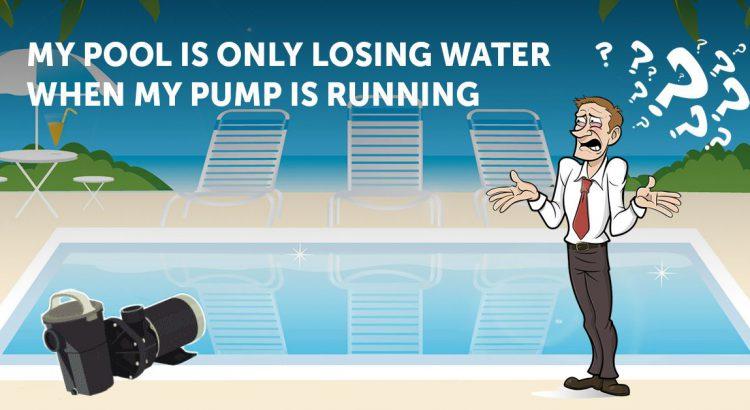
If your pool is only losing water when the pump is running, the leak is usually somewhere on the pressure side of the system. That means water is most likely escaping after it leaves the pump and is being pushed back to the pool.
This is different from a suction-side leak. Suction-side leaks often pull air into the system, but they usually do not cause the pool to lose water only while the pump is on.
The good news is that this type of leak can often be narrowed down by checking a few common areas first.
Check These First
Before assuming the leak is underground, inspect the most likely trouble spots:
- Pump, filter, heater, and chlorinator connections
- Unions, elbows, valves, and fittings on the equipment pad
- Pump-to-filter hoses on above ground pools
- Multiport valve and waste line
- Return fittings or return jets
- Wet spots around the pool or along the plumbing path
If the pool only loses water while the system is running, start with anything that is under pressure when the pump is on.

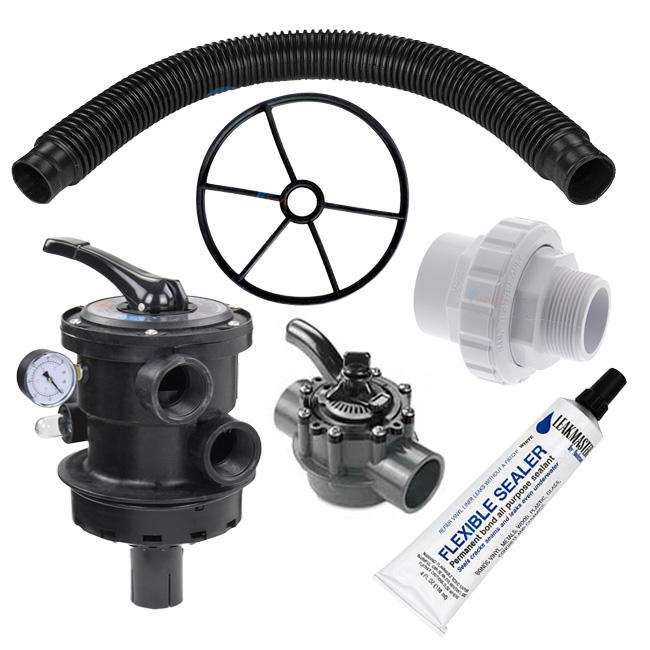
Leak Repair Parts
Need parts to repair your pool leak?
- Pump and Filter Parts
- Leak Detection Dye
- Spider Gaskets, Plumbing and more…
What This Usually Means
When the pump is running, water is being pushed through the filter system and back to the pool through the return side plumbing. If the pool only loses water during that time, the leak is usually somewhere along that path.
Common causes include:
- A loose fitting
- A cracked union
- A bad O-ring or gasket
- A split hose
- A leaking multiport valve
- A leaking return fitting
- A break in the return line underground
Many of these leaks can be found visually if you inspect the system carefully while it is running.
1. Check All the Connections at the Equipment Pad
Start by looking over all of the visible plumbing and equipment connections where the pump, filter, heater, chlorinator, or salt system connect together.
Pay close attention to:
- Threaded fittings
- Unions
- Elbows
- Valves
- Hose connections
- Heater connections
- Chlorinator connections
Once the system is running, look for signs like:
- Dripping water
- A fine spray or mist
- Water pooling under the equipment
- White mineral buildup around a fitting
- Cracked fittings or brittle hoses
- Water running down the pipe from a connection above
If you have an above ground pool, inspect the hoses between the pump and filter very carefully. A small split or a loose clamp can leak a lot of water while the pump is running.
If a fitting or connection looks suspicious, turn the system off and inspect the O-ring, clamp, gasket, or fitting more closely.
2. Check the Multiport Valve and Waste Line
If your system uses a multiport valve, that is one of the first places to inspect.
Check the valve body, lid, ports, and surrounding plumbing. Also inspect the backwash or waste line. In some cases, water may be leaking externally from the valve. In other cases, water may be slipping internally past the valve and going out the waste line.
A worn spider gasket inside the valve can sometimes cause this.
Look for:
- Water dripping around the valve
- Water leaking from the waste or backwash port
- Water constantly running out the backwash hose while filtering
- Cracks in the valve housing
- Loose fittings near the valve
If water is going out the waste line while the valve is set to Filter, the multiport valve is a strong suspect.
3. Inspect the Return Fittings
If everything at the equipment pad looks dry, move on to the return side of the pool.
Inspect the return fittings or return jets where the water comes back into the pool. If a fitting is loose or a gasket is damaged, water may leak there only while the pump is pushing water through the line.
This is especially worth checking if:
- A liner was recently installed
- A fitting was recently removed or replaced
- You see moisture around the fitting
- The soil near that area stays wet
Sometimes these leaks are small and easy to miss, so inspect carefully while the system is running.
4. Look for Wet Spots Along the Plumbing Route
If you still do not see a visible leak, walk the area between the equipment and the pool and look for signs of underground water loss.
Watch for:
- Soft or soggy ground
- Muddy spots
- Unusually green grass
- Soil settling
- Wet concrete or decking near return lines
A return line can leak underground and only lose water when the pump is actively pushing water through it.
5. Pressure Test the Return Line
If you cannot find the leak visually, a pressure test can help confirm whether the return line is holding pressure.
A pressure test can tell you whether water is escaping somewhere in that line. What it usually does not do by itself is show the exact location of the leak.
If you are comfortable with pool plumbing, this may be something you can test yourself with the right equipment. Otherwise, this is often the point where it makes sense to call a pool professional or leak detection company.
Quick Symptom Guide
| Symptom | Most Likely Area | What to Check |
|---|---|---|
| Water loss only when pump runs | Pressure side plumbing | Equipment pad fittings and connections |
| Water going out the waste line | Multiport valve / spider gasket | Valve body, waste line, and spider gasket |
| Wet area near return side of pool | Return fitting or return line | Return fittings, gaskets, and nearby plumbing |
| No visible leak but water still drops with pump on | Underground return line | Pressure test the return side |
Above Ground Pool Notes
On above ground pools, these leaks are often easier to find because more of the plumbing is visible.
Check:
- Flex hoses
- Hose clamps
- Return fittings
- Pump unions
- Filter connections
Older hoses can split or seep only when pressure builds while the system is operating.
Inground Pool Notes
On inground pools, pressure-side leaks can be harder to find because some of the plumbing is underground.
Start with the visible equipment and fittings first. If everything above ground looks dry, the return line itself becomes more likely.
When to Call a Professional
You may want to call a professional if:
- You cannot find a visible leak
- The water loss is significant
- The leak seems to be underground
- You suspect a break under concrete or decking
- You want a pressure test or formal leak detection
A professional can help confirm whether the return plumbing is the issue before major repairs begin.
Leak Repair Parts
Need parts to repair your pool leak?
- Pump and Filter Parts
- Leak Detection Dye
- Spider Gaskets, Plumbing and more…
Final Thoughts
If your pool is only losing water when the pump is running, focus on the pressure side first.
Start with the easiest areas to inspect:
- Equipment pad connections
- Multiport valve and waste line
- Return fittings
- Wet spots along the plumbing route
- Pressure testing if needed
Many of these problems come down to a leaking fitting, hose, gasket, union, or valve component. A step-by-step inspection can help you narrow it down and avoid replacing the wrong part.






Leave a Reply