Home / Articles / Phosphates In Your Swimming Pool

Phosphates In Your Swimming Pool

It’s funny that we never hear customers complain about phosphates being in their pool until their pool is green. Did you know that phosphates are always in your swimming pool, even when there are no algal blooms? That’s because it doesn’t cross your mind when your pool is nice and blue. After reading through various articles and customers’ questions on removing phosphates, I’ve come to one conclusion, there’s a lot of misconstrued and misconceptions regarding phosphates in your swimming pool. What exactly are phosphates? Where do they come from and how do phosphates get into your swimming pool? What is the threshold for phosphates before it becomes harmful to the swimmer?

Let’s explore phosphates a little more.

What Are Phosphates?
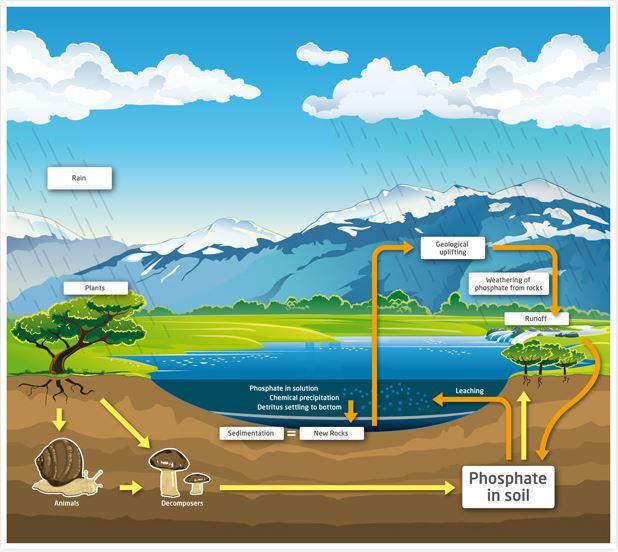
Phosphates are nutrients that help increase plant growth. Naturally, you can find phosphorus material all around. That is why it is common for phosphates to be in your swimming pool. But how exactly do phosphates enter your pool? There have been many debates suggesting how phosphates enter your swimming pool. Some argue that excess rainwater or fertilizer can affect your phosphate levels. Which is true, sort of.

How Do Phosphates Enter Your Swimming Pool?

Phosphates might enter your pool one of several ways, but rainwater is not one of them. Rainwater itself isn’t phosphorous. In fact, it’s impossible as phosphates do not atomize in the atmosphere. However, once the rainwater runs off into the soil, then it becomes phosphorous. Usually, swimmers bring the majority of the phosphates into the pool with them. Contaminants like makeup, lotions, shampoos, dirt, leaves, and other pool chemicals like scale and stain products account for the majority of the phosphates in your pool.

When and How You Remove Phosphates From Your Pool
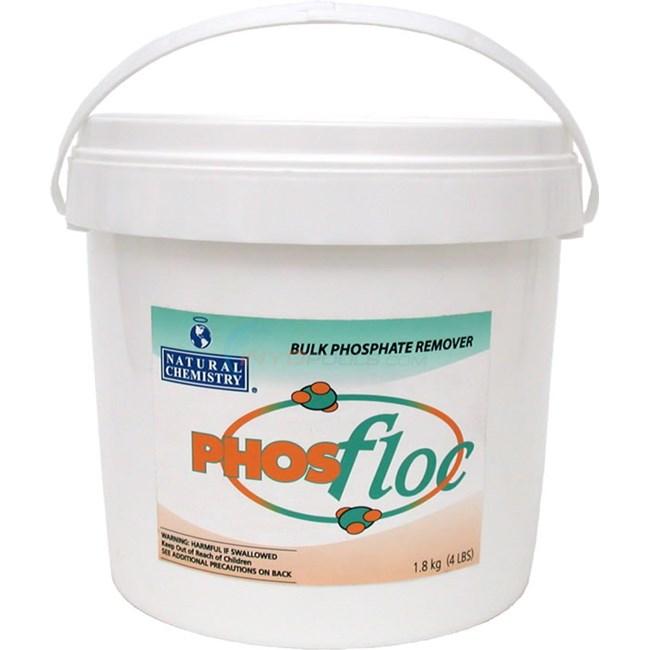
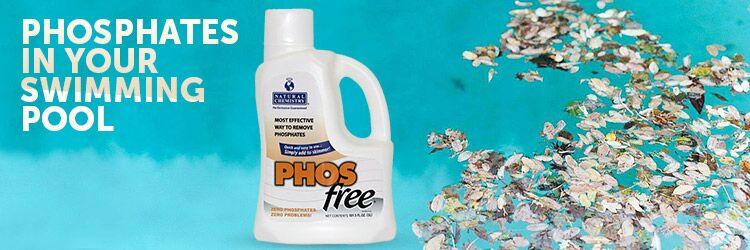
Whenever you have an imbalanced pool, one of the first things you should do is test your water. Before you can remedy the issue, you first need to determine what the issue is, right? So what happens when the store clerk tells you your water has a high amount of phosphates? Naturally, the first thing pool owners do is go out and purchase a phosphate remover and add it into their pool.

If you’ve already experienced this, you already know that this won’t solve your green pool. Now, you have a green pool AND white sediment at the bottom of your pool. The first thing pool owners should focus on is removing the algae. In this particular case, once the pH and alkalinity levels were correct, the water was clear. To be honest, there probably wasn’t a need to purchase the phosphate remover. In most cases, you won’t have a need for phosphate remover.

In fact, there is no scientific evidence that even proves that phosphates actually increase algal growth rates when phosphate levels are below 1000 parts per billion (ppb). McGrayel Water Technologies completed a study and it was determined that algal growth rates are unaffected at each phosphate level. They also determined that phosphates are not likely to be a problem until after levels are above 1000 ppb.

Before adding phosphate remover into your pool, make sure you actually need it. We do not recommend adding unnecessary chemicals into your pool. Remove phosphates from your pool when levels exceed 1000 ppb. Once your phosphate levels exceed 1000 ppb, I would consider purchasing a phosphate remover. Keep in mind though, phosphate remover will not rid your green pool.

Reduce the high cost of removing phosphates by being proactive. Keep in mind, phosphate remover is preventative, not a remedy. Test and treat phosphates annually. There isn’t a need to worry about them constantly. Instead, focus more on keeping your pool properly balances.

author avatar
Charlie Ramirez
Writer at InyoPools.com, brings a wealth of knowledge and expertise in pool care and equipment, helping pool owners make informed decisions for over a decade.

Related Videos

107 responses to “Phosphates In Your Swimming Pool”

  1. Shannon Davis Avatar

    My phosphates are around 5600 and that’s after a bottle of remover. The pool is a clear mint green color.

    1. Matthew Simmons Avatar

      From the article:

      Remove phosphates from your pool when levels exceed 1000 ppb. Once your phosphate levels exceed 1000 ppb, I would consider purchasing a phosphate remover. Keep in mind though, phosphate remover will not rid your green pool.

      Also, you have no chlorine in the pool, which is another major factor in why your pool is green. Algae can’t go in a properly chlorinated pool.

  2. Lisa G. Avatar

    Hi Matthew. I’m a new pool owner, I’ve been caring for my 9800 gallon pool for just over 2 years. There’s so much to learn and I dread the consequences of any mistakes. I’m very thankful for someone like you to help.

    The pool store told me that my phosphates may be high since my chlorine is depleted. As far as I know, that’s the only reason he said that. Their free test doesn’t include phosphates, from what I can see. So they want me to do a treatment. Of course, I’d rather not do that if I don’t need it. My pool is crystal clear, a beautiful blue and the water is very soft and nice.

    I thoroughly brush the pool and skim and sweep 7 days a week. I clean my filter cartridge every 4 weeks and if we’ve had people in the pool (which isn’t often), I special clean it the next day. I usually keep a cover on the pool and it’s also screened in. There are no trees around it, so aside from some fine pollen and a few bugs, there’s little to no debris floating or sunk in my pool. For the most part, I’m the only swimmer and I use little to no grooming products. My daughter swims but also uses next to nothing in hair stuff etc.

    To get to the point, should I do a phosphate remover just because the pool store kid says I have no chlorine? There could be a few reasons that my chlorine is low, I’m thinking. The previous week, my water test said add nothing, so no chlorine was added for 2 weeks except a half gallon I added 5 days before the test. Also, since it’s summer (in FL), my pool is uncovered more the last 2 weeks. It spent the winter covered 90% of the time.

    Anyhow, sorry for the long post. But I wanted you to get an idea of my poll’s current state. I thank you for your help.

  3. Abby Avatar

    We have been struggling to keep chlorine in the pool. Every time I test it the strip is white. On days it is purple in the morning the color strip is white again after just an hour of the pool being opened. Our local pool store has been helping. We have added algaecide, and shock, and also phos free stuff. They said our phosphates are high. I never asked at what level they are.
    I have backwashed several times and superchlorinated several times.
    This last time we used a stronger phosphate remover and now there is white stuff on the bottom of the pool. It is not a gel. It is powdery. When I tried to vacuum it up it just swirls around. Do I need to worry about cleaning those out?

    1. David Avatar

      Vacuum your pool bottom with the filter set to “waste” so that everything you pull off the bottom goes directly to the sewer and not back into your filter and your pool. It will work. Wastes some water, however.

  4. Nikki Avatar

    I had a clear pool until had water tested and was told needed to add no phos. We did that and now water is cloudy. How to get rid of the cloudiness??? Pump has been running for 48 hours and still cloudy.

    1. Frank's pool service Avatar

      Super Blue. Clarifier/floculant. Inables the filter to capture those microscopic particles that are making your water cloudy. Dead alge is very fine, and sometimes gets past the filter.

  5. David Avatar

    wish I had read this before my pool supply guy sold me a bunch of phosphate remover.My reading was only about 650. My water is crystal clear with a 7.2 pH and good chlorine levels. Am not going to add anything just yet.

  6. Robert Avatar

    i have been treating yellow algae for two weeks, using yellow out and the slam method on above ground pool algae still there. no trees around pool area. should I drain the pool and restart? its also equipped with salt water, Hayward equipment

  7. Steve Avatar

    After using a phosphate starver my cell shut down as the cartridge was clogged with a white gluey substance. Is this normal that the phosphate converts to a white glue that you can just hose out of the cartridge?

    1. Matthew Simmons Avatar

      I have not heard of a white gluey substance in the filter stemming from the use of phosphate remover. It may be specific to the brand of chemical you used. If it is easily washed off the cartridge, then it shouldn’t be much of an issue. Did the instructions of your phosphate remover state to remove the cartridge or bypass the filter?

    2. G.W. Avatar

      Informative article, even for a professional such as myself! The study you cited got my attention and prompted me to comment, since I had only ever heard ‘phosphates are always bad.’
      Thanks for your contribution, and Hapoy New Year!

  8. Alison Avatar

    Great article!
    We have a salt generator. This past spring I noticed that we could not hold chlorine in this pool for anything. I was shocking it every 2 days and the chlorine would be gone withim 24 hrs. I couldn’t understand what was going on. I thought the salt cell had gone bad in less than a year. Thankfully my husband does service and repair work for a pool company, and we were able to get a new cell without using our warranty. He does repair work and installation and does not have much experience with pool chemistry otherwise I probably would have figured this out sooner LOL! Anyways, new cell in place, and we blasted the pool with trichlor because we were treating for black algae too. Everything seemed to be pretty good for a few months.
    Last week the same thing started happening. The pool was loaded with algae. I couldn’t keep chlorine in it. I would shock it and run a boost and 24 hours later there be nothing in it. I wasn’t going to go through this again. There was no way we had two bad cells.
    I took the water down to have it tested. I told him what was going on. All of our chemicals were in perfect check. We had plenty of cyanuric acid. Our pH was 7.4. No chlorine though. They said this is probably a phosphate issue. They ran the tests and our phosphate levels were 1500. Way over the normal recommended limit. I bought the phosphate remover which was a little pricey. We spent the next 48 hours filtering out all the phosphates and residue. I think we washed the filter five or six times. That’s how much it was filtering out to the point it was so clogged that it would stop spilling over from the spa running at 2700 RPM. That is a severely clogged filter.
    4 days into this, the pool looks fantastic. The algae is gone the chlorine levels are holding between 5 and 7. I’ve got the salt generator running back at 35%. After this experience, it would be my guess that the other cell was never bad and this was the problem. I have read articles stating that high phosphate levels will compromise the performance of a salt generator. There was one site that would not acknowledge that. They said there was no scientific data to prove it. Well I don’t need scientific data because I just went through it and that’s exactly what was going on. Summing it up, based on our experience, if your phosphate levels are high it definitely affects the way your salt generator performs.
    Thank you for posting this article because you seem to be more willing to acknowledge that this is a real problem for people who owns salt generators.

    1. Dan in LA Avatar

      We had a similar scenario this summer. It’s not that your salt cell went bad, necessary, it’s that after your filter clogs to a certain point, it inhibits the proper water flow (gpm) necessary to generate chlorine.
      Our water wasn’t quite clear so I had the water tested. Our phosphates were around 2500 ppb. We treated it with Phosphate Remover and after 24-48 hours I noticed that the PSI had increased a fair amount and the SWG “no flow” light was on (which had never previously been a problem). I upped the RPMs on my VS pump until the “no flow” light turned off. The next day I backwashed and readjusted my RPMs back down.
      In short, the phosphates themselves aren’t compromising SWG performance, it’s the low flow caused by a clogged filter (caused by adding phosphate remover in my case) that reduced the flow to a point where chlorine wasn’t being generated. No problems since.

  9. Dave Avatar

    They say my Phosphate level 1000, my pool is clear not green could this be a bad test or should i use phosphate remover. Also isn’t PH plus and Aklalinty Increaser baking soda, if i raise one of them will it take care of both problems.

    1. Matthew Simmons Avatar

      Just because your phosphates are at 1000 it does not mean your pool is going to start turning green. If your pool is clear, then I wouldn’t worry too much about it. As long as you keep the chlorine levels in range, you will be fine.

      1. Kris Avatar

        Hello- soooo hoping you can help me. My phosphate levels aren’t 1100, they were 1600 but I used no phos and went down a bit but it’s still cloudy. Bought some pho’s Phix from another store and pool is still cloudy with billows of white particulate at bottom however I have a sand filter and have seen some of the particulate come back in through the jet. If I backwash and vacuum to backwash because I have to waste setting can I remove all this from my pool? If I can get it clear and below what phosphate level if I SUPER shock like I was told at one pool store to do with 10 lbs of shock to break a chlorine lock will this help restore my pool or am I better off draining and Getting a different type of filter

        1. Kris Avatar

          Phosphate levels are at 100 sorry

          1. Kris Avatar

            1100

        2. Matthew Simmons Avatar

          If the white particulates are dead algae or some other materials, use a clarifier or better yet a flocculant to capture it and send it to waste. If sand or debris is coming through your return jets, it seems like you have a sand filter issue, like a broken lateral.

          As the article says, remove phosphates from your pool when levels exceed 1000 ppb. But I believe you are focusing too much on the phosphates. If your chlorine levels are right, algae can’t grow, but this does not mean you need to scorch your water with a mountain of shock. Whatever place to throw in 10 pounds of shock to clear up some cloudiness, stop going there.

  10.  Avatar

    Got mine down to a count of 100, down from almost 4000 count. Used phosphate remover took 5 bottles. Restocked the pool. Gonna wait two days then have retest done.

Leave a Reply

Your email address will not be published. Required fields are marked *