Home / Articles / Phosphates In Your Swimming Pool

Phosphates In Your Swimming Pool

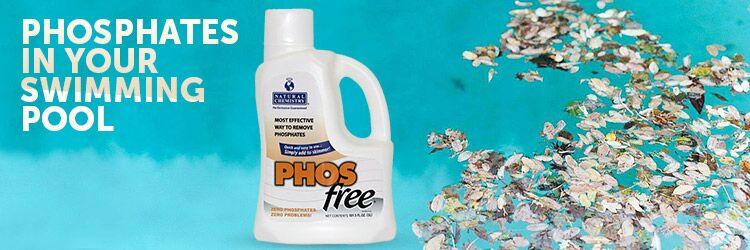
It’s funny that we never hear customers complain about phosphates being in their pool until their pool is green. Did you know that phosphates are always in your swimming pool, even when there are no algal blooms? That’s because it doesn’t cross your mind when your pool is nice and blue. After reading through various articles and customers’ questions on removing phosphates, I’ve come to one conclusion, there’s a lot of misconstrued and misconceptions regarding phosphates in your swimming pool. What exactly are phosphates? Where do they come from and how do phosphates get into your swimming pool? What is the threshold for phosphates before it becomes harmful to the swimmer?

Let’s explore phosphates a little more.

What Are Phosphates?
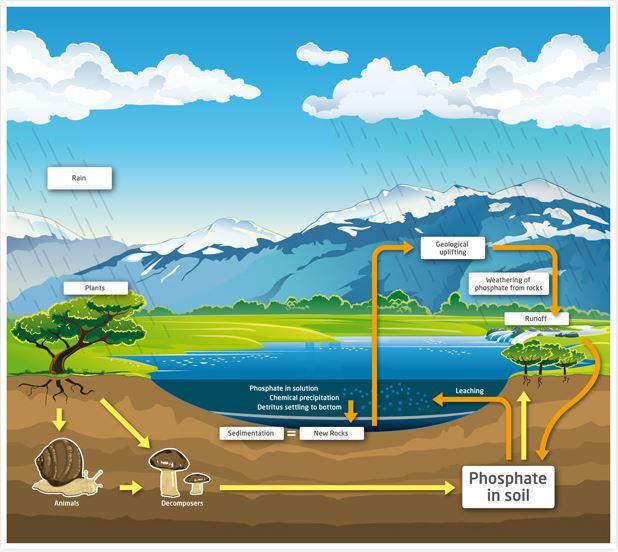
Phosphates are nutrients that help increase plant growth. Naturally, you can find phosphorus material all around. That is why it is common for phosphates to be in your swimming pool. But how exactly do phosphates enter your pool? There have been many debates suggesting how phosphates enter your swimming pool. Some argue that excess rainwater or fertilizer can affect your phosphate levels. Which is true, sort of.

How Do Phosphates Enter Your Swimming Pool?

Phosphates might enter your pool one of several ways, but rainwater is not one of them. Rainwater itself isn’t phosphorous. In fact, it’s impossible as phosphates do not atomize in the atmosphere. However, once the rainwater runs off into the soil, then it becomes phosphorous. Usually, swimmers bring the majority of the phosphates into the pool with them. Contaminants like makeup, lotions, shampoos, dirt, leaves, and other pool chemicals like scale and stain products account for the majority of the phosphates in your pool.

When and How You Remove Phosphates From Your Pool
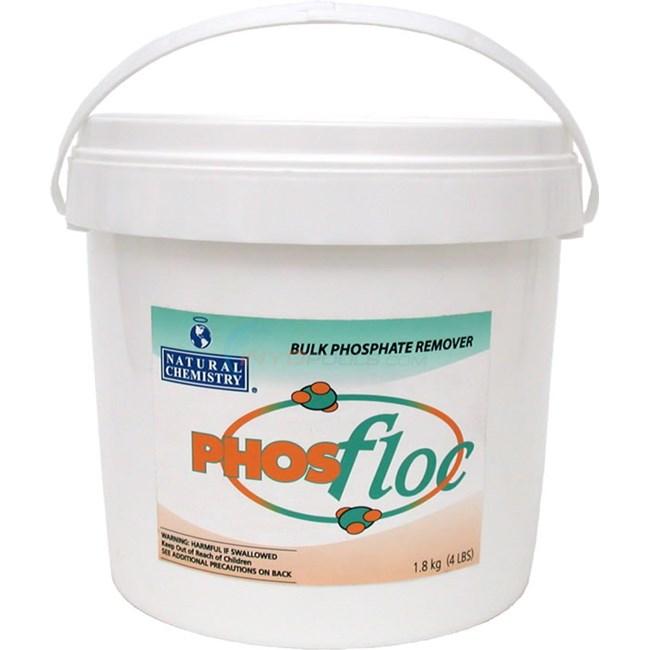
Whenever you have an imbalanced pool, one of the first things you should do is test your water. Before you can remedy the issue, you first need to determine what the issue is, right? So what happens when the store clerk tells you your water has a high amount of phosphates? Naturally, the first thing pool owners do is go out and purchase a phosphate remover and add it into their pool.

If you’ve already experienced this, you already know that this won’t solve your green pool. Now, you have a green pool AND white sediment at the bottom of your pool. The first thing pool owners should focus on is removing the algae. In this particular case, once the pH and alkalinity levels were correct, the water was clear. To be honest, there probably wasn’t a need to purchase the phosphate remover. In most cases, you won’t have a need for phosphate remover.

In fact, there is no scientific evidence that even proves that phosphates actually increase algal growth rates when phosphate levels are below 1000 parts per billion (ppb). McGrayel Water Technologies completed a study and it was determined that algal growth rates are unaffected at each phosphate level. They also determined that phosphates are not likely to be a problem until after levels are above 1000 ppb.

Before adding phosphate remover into your pool, make sure you actually need it. We do not recommend adding unnecessary chemicals into your pool. Remove phosphates from your pool when levels exceed 1000 ppb. Once your phosphate levels exceed 1000 ppb, I would consider purchasing a phosphate remover. Keep in mind though, phosphate remover will not rid your green pool.

Reduce the high cost of removing phosphates by being proactive. Keep in mind, phosphate remover is preventative, not a remedy. Test and treat phosphates annually. There isn’t a need to worry about them constantly. Instead, focus more on keeping your pool properly balances.

author avatar
Charlie Ramirez
Writer at InyoPools.com, brings a wealth of knowledge and expertise in pool care and equipment, helping pool owners make informed decisions for over a decade.

Related Videos

107 responses to “Phosphates In Your Swimming Pool”

  1. Yvette Avatar

    This is my reading from Leslie’s checking my water. I have a 19,000 gallon pool.
    Free Chlorine 3.22 – ok
    Total Chlorine 3.33 – ok
    pH – 8.1 – add 44 fl. oz of muriatic acid
    Total Alkalinity 116 – ok
    Calcium Hardness 241 – ok
    Cyanuric Acid 35 – ok
    Iron 0.1 – ok
    Cooper 0 – ok
    Phosphates 1458 – add 1 gallon 19 fl oz of NoPhos
    TDS 600 – ok
    Pool water is clear. I added 48 oz of Phosphate Remover and am running the filter for 48 hours on slow speed 1150 rpm. Will then clean filter. Should I continue to add the Phosphate Remover adding 48 oz till I reach the 1 gallon 19 fl oz it asks for?
    The water appears clear.
    Should I be concerned about the Phosphate or not?

    1. Cindy Jolley Avatar

      I had the same problem. Phosphates 1023. They said I had to empty half the pool water and refill, said nothing about a “chemical remover”

    2. Deb Bex Avatar

      Wow, my phosphate level is 3000. It sounds like our pools are similar in size…mine is about 1,000 gallons less than your. I was instructed to use 29 oz of phosphate remover…that is a huge difference and my pool had double the amount that yours did. I don’t think I would worry too much about it until its closer to 2000, and I would research the amounts they are calling for. Maybe my phosphate remover is just stronger, not sure.
      I’m curious what you did and how it turned out, since its been awhile.

  2. David Landy Avatar

    my pool pump pressure went 20 points higher that when I put in a fresh set of filter cartridges.
    This occurred after I put in Phosphate free….
    Should I be concerned about the extra pressure ?

    Thank you

    1. Pam DeCesaris Avatar

      When I use PhosFree In my pool, my cartridges develop a very thick, light green slime over them. This slime plugs up my cartridges, and causes my pump pressure to increase. I use this pressure increase, to determine when my cartridges need cleaned. When I empty my skimmer basket, I check my pump pressure reading. If the pressure gets over 10, I know that it is time to clean my cartridges. I assume that the slime in my cartridges cause my pump to work harder to move water through them. My pool sits directly under trees, so my phosphate level is always high. I am always treating phosphates in my pool water. I also run my pump 24/7 and have never had an algae issue. I am a nurse not a pool specialist. 😆

  3. Tom Avatar

    Does INYO pool sell a phosphorus free stain and metal control? The biggest source of phosphates in pools are the chemicals pool stores sell to winterize the pool. The the following Spring they get to sell Phos-Free to remove it. Give me Phosphate free scale control!

    1. Matthew Simmons Avatar

      Natural Chemistry’s Stain & Scale Control 1 Gal. – NC20701 is a metal and stain control product that does not add phosphates your pool.

  4. Lisa k Avatar

    I cannot keep chlorine in my pool. Water is balanced. It looks crystal clear. We were told to pu whole bottle of phosfree in. We did. Backflushed 48 hours later. Still no chlorine. I can shock and 12 hours later it is all gone. Help?

    1. Matthew Simmons Avatar

      PhosFree is not going to add chlorine; and shock dissipates quickly as it is non-stabilized version of chlorine. It would help to have a set of the latest water test results to better understand the situation. You say everything is good, but then you say a pool tech told you to add phosFree. Why did they say that? Did they have any specific information that made them jump to that conclusion?

    2. Larry F Avatar

      Chlorine stabalizer perhaps

    3. Craig Avatar

      If your FAC is gone in 12 hours, you likely have little to no cyuranic acid (stabilizer) present. Add liquid stabilizer to correct, typically added before each season to 35–50ppm levels once a year.

  5. Dan Avatar

    I’ve added PhosFree to my pool. How soon after can I safely add additional chlorine to the pool?

    1. Matthew Simmons Avatar

      PhosFree is non-toxic, so you should be able to get in after a few minutes. I wouldn’t jump in right away because you want the chemicals time to mix with the water

  6. Frédérique Avatar

    Hello by mistake I poured 32 ounces of phosphate remover in my 10,000 gallon pool instead of 8. Is it dangerous?is it bad?what do I do? Thanks!!

    1. Dan Avatar

      For a pool that size, 32 oz should not be an issue. Its recommended that i not exceed 48oz for my 17,000 pool, so your 32oz dose shouldn’t do any harm.

    2. Matthew Simmons Avatar

      Read the bottle. Does it say to wait for a certain period of time before allowing swimmers in the pool? if so, times it by four to be on the safe side.

  7. Kim Chang Avatar

    My home pool 23,000 Gl Paster Pool /
    Now PH 7.8 (H) Need to lower to 7.4 or 7.6 /
    Now TA 50 ppm ( L) Need upto 80 or 100 ppm/
    I’m try use Liquid chlorine (ph13 ?) , it will couse TA & PH both to higher?/& I will add some TA/up Chemistry to reach TA Value 80-120ppm first./
    Then adject the PH by Muriatic Acid, lower PH in to 7.2-7.6
    It’s a right way to control the PH & TA vauel to pool water in good conditioner ?
    Tks!!! Kim LA

  8. virginia Avatar

    Hello! I am reading no chlorine after treating for phosphates. There is alot of sediment on the bottom, how do iget that out without it spreading into the water??

    1. Matthew Simmons Avatar

      Use a flocculant to get all the sediment to drop to the pool floor, and then vacuum the sediment to waste.

  9. Mac Avatar

    how do you clear a a cloudy pool after you add phosphate remover. I have a cartridge filter. The green is gone but the really cloudy water is still there. Its been 3 days.

    1. Matthew Simmons Avatar

      When you kill green algae, it turns white giving your water a hazy color. The only way to get rid of that haziness is to run your pump and filter and clean your cartridge. You can use a flocculant or a clarifier to hasten the process.

  10. Pam Booth Avatar

    Having trouble holding chlorine for weeks in our 28,000-gallon, inground saltwater pool. Had water professionally tested and responded as directed on a weekly basis. Eventually, I called the pool company for a service call to check the salt cell. They tested the water and said phosphates were >1000 so they treated. Of note, the phosphates were <300 only 2 weeks prior when professionally tested. We have an auto cover that is closed at all times when no one is swimming and we have no problem with leaves and other organic matter in our pool ever. Water was crystal clear and no algae build-up at all. The technician warned of "woodstove ash" looking sediment that would result from this phosphate remover treatment. We experienced none of that. We backwashed the filter anyway (pressure did not increase as we were told it would) and added shock as chlorine level was nil. Within 24 hours we took the water for a professional test and chlorine was gone. Pool store said add 1 pound of stabilizer as it was a little low, which we did. Next day chlorine level is actually holding. It sounds as if we never needed the phosphate remover at all and that the test was inaccurate. From my research, it appears that phosphates take some time to build up and it seems unlikely that they would increase 3-4x in only 2 weeks time without any source of phosphate introduced to the water. I do not mind to pay for a service call that actually fixes our problem, but this seems like it was unnecessary. Any thoughts would be most appreciated.

Leave a Reply

Your email address will not be published. Required fields are marked *