Home / Articles / Pump or Motor: To Replace or Not to Replace… That Is the Question

Pump or Motor: To Replace or Not to Replace… That Is the Question

Pool Pump or Motor

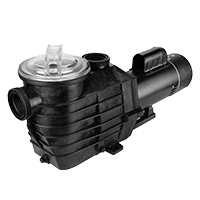
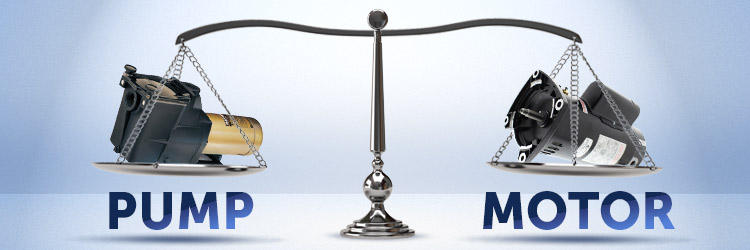
If you’re reading this then there is a good chance that your pool pump is down, the anxiety is up and the algae monster is ready to pounce on your pool. After years in the pool industry, I can tell you many a homeowner has contacted us in a panic with a dead pump. The scenario usually goes as such: they or their tech has the pump apart and they are pondering the options that lay before them. They may know what they need but want to know if it’s worth the work to get the pump up and running. One of their major questions is, “Is it worth it to get a whole new pump or should I just get a motor?” The cost between a simple motor replacement and a pump installation can be sizeable. That difference in price makes it important for you and your wallet to know when to call it quits on an old pump.

Wreck-it or Recover it?

Our first step will be to determine the overall health of your pump. Over the years, this rugged piece of machinery has been subjected to blazing heat, driving rain and even lightning strikes. These conditions can drag down their overall health. The pump’s internal parts, as well as the housing and motor, can go bad and require replacement. When determining the magic number of replacement parts cost versus the cost of the whole pump, we generally suggest 60-75% as the standard. If the cost to repair is within or over this range, it is smarter to replace the pump. This way you have a brand new pump and warranty covering any mishaps down the line. There are a few other things to look out for when checking pump health.  The key points are listed below.

  • Dry Rotted or Cracked Housing – Besides a motor, the housing is the most expensive part of a pump to replace.  If your housing is showing signs of deterioration, take a close look at the other parts of the pump. For example, the pump lid, basket, and impeller could be in need of repair as well. When totaling up the necessary replacement parts, keep in mind the magic number of 60-75%. If you get to that range, it could be time to replace the whole thing.
  • Pumps older than 12-15 years – If it was a car you would have gotten rid of it by now. Sadly, unlike some vehicles, pumps do not appreciate in value as they get older. Pumps approaching this age see frequent breakdowns and repair. The cost of maintenance soon starts to outweigh the value of the old pump.
  • Obsolete Parts – Some pumps for whatever reason are discontinued by their manufacturer. At that time, essential parts can be increasingly hard to find or unavailable. Review our pool parts section for your unit’s parts breakdown to determine their availability.
  • Bronze or Cast Iron Pumps – Metal pumps were the standard for pools decades ago but they have been phased out. High strength composite materials have taken their place in the sun. The metal pump obsolescence has made parts hard to come by. If you are able to find the part, it will be at a premium.

Motors: Listen and Learn

If your pump’s wet end does not have any of the above red flags, a motor maybe your best option. First on the list when determining the status of your motor is to just be quiet and listen.   The sound that follows a flick of the power switch can lend a big clue to what motor issues lie ahead. Motors, for the most part, are simple beasts. Once installed a motor needs little if any maintenance to keep it running. If a properly running motor starts to make any of the following noises, a replacement motor could be your next purchase.

  • Loud Screech or Grinding  – If your pump sounds less like an electrical motor and more like a Boeing Jet then your bearings are bad. Besides the age of the motor, these bearings can rust or freeze from the water inside the casing. The most common causes are a leaky shaft seal, flooding or even errant sprinkler spray. Bearings are the joints that spin the shaft freely or in this case cause you severe ear pain. The good thing is bearings can be replaced on the cheap. If you’re looking to go this route, then view our selection of pool motor bearings. If you do go this route keep in mind you will need a specialized tool called a bearing puller to remove the bearings.
  • Humming Sound – Hmmm, what’s the cause? It’s the capacitor! This little barrel of fun stores an electrical charge to be dispersed to either kick start or keep your motor running. There are two types of capacitors, run (silver) and start (brown.) A blown capacitor is caused by a surge in power or overheating and is an easy fix for a handy homeowner. For the guide on replacing a capacitor, see our guide.
  • Pop and a Click – Once your motor is tripping the breaker, it is on its last legs. When a motor is flipping the breaker, it is a sign of a deeper electrical issue.
  • Silence  – First check your power source. If that is fine then no, your pump is not resting. It’s dead. The silence is a sign that the inner workings of the motor have completely failed, i.e. the shaft has frozen. A motor that has reached this point is beyond repair.

Inspect your Gadgets

Legislators in pool heavy states like Arizona, California, Florida, and Texas have recently put strict regulations on replacement motors and pumps. The new regulations may require homeowners to upgrade their pump to dual or variable speed. The changeover to dual and variable speed pumps is meant to lessen the load on the electrical grid. The effect is also seen in the customer’s pocketbook. Dual speed and variable speed are designed to use less electricity thereby lowering your power bills. To help aid the transition, power companies are providing customer rebates when homeowners install new, qualifying motors. Check with your power company for the specific rebate details.

If you want more information on how these motors can save you money, read the following guides: How to Save Money Using a Variable Speed Motor or How to Replace a Single Speed Motor with a 2Green Motor

author avatar
Matthew Simmons Technical Writer & Pool Product Expert
Swimming pool expert at InyoPools and host of Poolside Chat, brings over a decade of experience in the pool industry.

Related Videos

63 responses to “Pump or Motor: To Replace or Not to Replace… That Is the Question”

  1. Jim H. Avatar

    Great article and comments to questions. I’m a Hayward SP2610X15 Super Pump ($375+/-) owner and what I’ve learned over the last twelve years is to keep an identical spare pump on hand. Lets face it, this is a simple and inexpensive pump thats not designed for a decade of trouble free service. After a few years the pump invariably has problems and when it does its normally in the middle of a hot summer with family scheduled to arrive the next day. I believe I’ve saved more time, money and headaches by simply having a replacement on hand and its an easy 30 minute changeout. [And if you have a pool service company when your pump goes down they’ll probably want full list price ($699-$799) for the replacement pump along with labor costs of at least $200.] Pool ownership really is much easier by having a replacement on hand.

  2. Alvin Avatar

    Pump was clogged and stopped went to check the filter and the filter screen had pulled off and went over by the filter housing by the pump, don’t know if it tripped the breaker or not , flipped off and on an didn’t get any power, it was making a grinding sound from the pump motor, ordered another pump assembly and wanted to know what could be causing it not to be receiving power, maybe a bad breaker, I’ll check that before installing the new pump

  3. Denise Webb Avatar

    Thinking bearings need to be replaced but it’s thw weekend. Can I run my pump for a few days till it’s fixes?

    1. Matthew Simmons Avatar

      As long as you and your neighbors can stand the noise, the motor can be run.

  4. Christina Avatar

    In your experience, how much savings per month do the variable speed pumps yield?
    I don’t think that law is in effect or at least enforced- I just went to a reputable pool store yesterday and they had no issues replacing the motor.

    1. Matthew Simmons Avatar

      With variable speeds, it is all dependent on how you schedule and throttle the pump. Manufacturers will say you can save up to 80-90 percent. Realistically you can get 40-60 percent without having to run the pump on the lowest RPMs all the time.

      And they weren’t enforcing the California law until all of a sudden they were. Installers, dealers, and distributors are seeing fines for selling single speed motors residents in that state. But if you feel comfortable in the local pool company’s assessment, then you can keep that option for yourself.

      1. Christina Avatar

        Thank you for all the info!

  5. Christina Avatar

    My motor sounds like a jet engine (the rest of the pump is in good condition)…I can get it replaced for $261or I can get the Pentair SuperFlo VS 1.5HP Variable Speed Pool Pump with install for $625. What do you recommend? I live in FL and heard the digital console can degrade over time due to our weather. Thanks in advance for any in-site.

    1. Matthew Simmons Avatar

      I believe Florida has laws on the books stating you need to replace single speeds with variable speed. California has begun to enforce their version of the rule; if found in violation of these laws you can be penalized with a hefty fine.

      To play on the safeside I would get the variable speed. If you are concerned about the VS electronics, get a motor cover or build a little shade shelter to protect it from the constant direct sunlight.

  6. John Avatar

    I am attempting to replace my spa motor (BN34) and wet end, but I’ve hit a snag. I can’t get the existing motor unbolted from the floor of the spa enclosure. The four bolts that secure the motor’s base down to the floor are completely rusted. I was able to break free the two bolts closest to the opening of the enclosure, but there is no room to work (or even see what is going on) behind the motor. Any tips on how to proceed with getting my old motor out?

    1. Matthew Simmons Avatar

      Other than letting WD-40 soak on them, I wouldn’t have much a solution. I was going to suggest using an angle grinder before you said space was too tight for tools.

  7. Q Allen Avatar

    How many bearings do I need to get?

    1. Matthew Simmons Avatar

      There are two bearings in pool pump motors.

  8. Jeff Avatar

    Hi – I have a Hayward variable speed pump 3400 model. Wouldn’t you know on the best weekend of the summer I go out open the cover and noticed there’s not a lot of water movement. We keep it at a very low setting (a little over 30% of capacity) which keeps the salt chlorinator and the heater going. We’ve been gone quite a bit this summer but it worked last week. I always turn the motor up to about 90% for a few hours when I open it . Today when I look at it it had an error message saying pump failure and I turn the circuit breaker on and off in fact I left it off for a few hours and tried restarting. When it goes to the priming mode it makes a loud clicking noise as it primes usually within 40 seconds it shuts back off and the error message returns. Can I replace the motor or is it a complete pump replacement? Ours is only five years old.

    1. Matthew Simmons Avatar

      One of those motors and drives would almost be the cost of a whole new SP3400VSP.

      Looking on pages 29 – 30 on the EcoStar manual, I do not see “Pump Failure” code, they list a few others though. Take a look at the codes review the error message on your pump.

  9. Deb Avatar

    Hi I have a sta rite plm 100 and it looks like the pressure got too high as my pressure reader has blown out. Currently it’s silent out by the pool pump do you think I need to look at new motors or is there a chance it tripped a fuse only and? I don’t see any other damage or leaks anywhere… Of course my husband is out of town so I am trying to get what we may need before he gets back to fix this. Thanks in advance for the advice.

    1. Matthew Simmons Avatar

      you can answer whether it has tripped a breaker, by looking at your breaker box. If it hasn’t tripped the breakers and still isn’t working then it is likely time to look at new motors.

      But if you want to make extra sure, you can have an electrician or pool tech come out to inspect the circuit and motor.

  10. Mary Anne Avatar

    I turn my pump on and it was making a loud vibrating sound. I thought my filter wasn’t installed properly since I just cleaned it. I have strong pressure 18 and everything is running great. Better than ever. Is this a sign the bearings are going bad? Would it hurt to run the pump?

    1. Matthew Simmons Avatar

      Bad bearings make a loud screeching noise, rather than a vibrating sound.

      Have you checked the pump stand and motor to see if maybe the vibration is coming from there?

Leave a Reply

Your email address will not be published. Required fields are marked *