
Home / Articles / Sinking an Above Ground Pool in the Ground

Sinking an Above Ground Pool in the Ground

Sinking an Above Ground Pool in the Ground

In-ground swimming pools have become super expensive. Here in Central Florida where concrete type in-grounds are the most popular, their price has gone through the roof. These pools usually start with a price tag of $30 000, but then go way up from there. It’s not at all uncommon to pay more than $50 000 for an average size concrete in-ground and that’s not even a very big or fancy one.

Because of this crazy cost of in-grounds, homeowners are finding a less expensive option by getting an above ground pool and sinking it in the ground. I have seen above grounds in the ground for many years and it’s nothing new, but it has certainly become much more popular in the last 10 years or so. It seems like at least one person asks me about this every day. So, if you are considering sinking an above ground swimming pool in the ground, you’ve found the right blog post.

Sinking an Above Ground Pool 101

Here’s a list of the basics of placing an above ground pool in the ground. Follow these basics and things will probably go well and you’ll be happy. If you don’t follow them, you might still come out happy. Who knows?

I. Only go down about halfway

These pools aren’t called “above grounds” just ’cause it’s catchy. Above ground swimming pools are not designed for inward pressure. So, when you put them in the ground, they can cave in from the weight of the earth, but only when they are empty. By sinking the pool down only halfway (2-2.5 ft), the pool has a much less likelihood of caving in when the time comes to drain the pool while installing a replacement liner.

If your ground is super firm, it won’t matter much how far down you go. In Central Florida it’s mostly sand-based so that’s an issue, but if you have rocky, rooty, or earth with a lot of clay, you may be fine to go down further. Some will go with the extra cost of building a retaining wall all the way around the pool. If you do that then you’re also good, but that adds to the cost of the job and aren’t you wanting a much cheaper alternative to an in-ground?

Also, most who sink their pool will have a wood deck built around it. Wood decks require some height off the ground so its structure can be built and that’s another good reason to go only halfway down.

II. The hole has to be bigger than the size of the pool

Above ground pools are assembled on site. They can’t be “pre-built” somewhere cool and then helicoptered in and set down into a hole perfectly. The thing has to be built in the hole so more room is needed. As a guideline, if the pool is going two or more feet down, make the hole 1.5’ bigger than the size of the pool all the way around. EXAMPLE: A 24’ round pool should have a hole that is at least 27’ in diameter.

Make sure the bottom of the hole is the desired size and not the top. I know that sounds stupid, but it’s not. A lot of times, holes get dug with a starting top dimension of 27’ round and by the time the hole is two feet down, its dimension has tilted in and it ends up being a 26’ hole at the bottom. Additionally, if your earth is really sandy and loose, it may be a good idea to make the hole even bigger. There’s little more frustrating than building one of these pools in a hole and it caves in on you halfway through with loose earth.

III.Leave piles of earth right next to the hole

After the pool is built and full of water, you’ll want to backfill some dirt around the pool. Remember the hole was bigger than the pool? Leaving some earth close to the hole will make backfilling much easier. Warning: Backfilling before the pool is full of water will result in the wall caving in! Don’t start backfilling too early. Let the pool fill with water so the water’s outward pressure will keep the pool wall in place. I know this sounds like a “duh” statement, but believe me it’s happened more often than I want to admit.

IV. Above ground pool pumps have to stay below the waterline

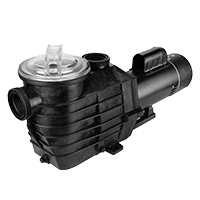
There are a few differences between in-ground pool pumps and above ground pumps. The biggest one is that an above ground pool pump cannot draw water up. This means that the above ground pump has to be at a level lower than the pool’s water level in order to work properly. If you are placing your above ground in the earth, make sure your pump stays below the pool. You can have your equipment well above the pool, but you’ll have to buy the more expensive in-ground pump to do so. Just another reason to go only halfway down (add this to the first guideline).

V. Check for local safety guidelines

For some towns or counties, an above ground swimming pool is considered safe because they are so high off the ground. With a safety ladder, above ground pools can be pretty safe for any small children wandering along the countryside unsupervised. Though, when you sink the pool that changes. If you don’t have a fence around your yard or if wandering two-year-olds are a problem in your area, then consider this safety issue.

Honorable Mention

So many people ask me if an above ground pool will last as long when it is buried in the ground. Some feel that sinking one in the earth will make it rust out faster or something. It makes logical sense to think that is what will happen, but there is one thing that is more accurate than logical sense and that’s long-term observation. In my 30 years of working on these pools, I have seen no evidence that placing them in the ground takes any life out of them. Of course there are instances where that can be true, but I’m talking as a general rule. Now some disagree with me on this and that’s OK. It’s healthy to be wrong sometimes. Most of them haven’t observed above grounds apart from their own or maybe an uncle’s or neighbor’s or something.

Go ahead and install an above ground in the ground. You may enjoy it more as it won’t be located so high up in your yard.

author avatar
Dan Dougher

Related Videos

207 responses to “Sinking an Above Ground Pool in the Ground”

  1. Katie F. Avatar

    I know every scenario is different but I’m wondering what type of price ballpark would it be to do this? If an inground pool is $30-$50k or more, how much cheaper is this? We already have an above ground pool from the previous owners of our house, it’s currently about 2/3 sunk inground as it was installed into a hill. We want to dig it up and relocate it to our side yard and still then sink it again. Any idea on ballpark price range for this type of job?

    1. Dan Dougher Avatar

      Depends on the size and shape of the pool. Since I have no idea what size, the ballpark range is $700 to $4000. Also, you’ll need a new liner. Next time, tell me the shape and size of the pool. I’ll then be able to give you some useful info.

  2. Len Kirkland Avatar

    Can I concave the center to make it deeper when I do my install ,if so how much of a dip can I go down

    1. Dan Dougher Avatar

      Yes. A standard liner should easily be able to accommodate up to a one foot deep center.

  3. Robin Avatar

    We live in central Florida and would like to install a galvanized above ground pool partially in ground. Our neighbors have a above ground fully installed above ground they have a problem with areas in the bottom where there are dips from the ground settling. Would we end up with that same issue due to the type of ground here? TYIA

    1. Dan Dougher Avatar

      The ground doesn’t really settle that much here so chances are your neighbor’s pool has dips for other reasons. Regardless, you would get the same issue maybe even more so with the pool on top of the earth as there is a greater chance higher up for moles or ants.

  4. Jason Avatar

    Thanks for the great tips. Just wanted to mention, I think tip IV should say “Above ground pool pumps have to stay BELOW the waterline”. I think it’s just a typo.

    1. Matthew Simmons Avatar

      Good catch, thank you for the edit.

  5. Nicole Avatar

    Is there a specific type of pool that’s better suited for sinking, such as steel vs resin or aluminum?

    1. Dan Dougher Avatar

      Steel because it is less flimsy.

      1. Tom Avatar

        What about corrosion

      2. Quinney Lane Avatar

        Do you have anyone you would recommend in putting above ground pools all the way in the ground.

        1. Dan Dougher Avatar

          I do not and don’t ever recommend doing that.

        2. Ronda Avatar

          The home I bought had that situation. The above ground pool was only 1′ out of the ground. This winter we had 3 days of terrible rains and the area around the pool acted like a bucket, filling up with water, causing the winterized pool to cave in, in several spots.
          Might I also add, it had the original liner, because the installer used pea gravel to backfill. If the water was removed, the weight of the gravel would’ve caved it in the same way.
          FYI, insurance DOES NOT cover a collapse on such an installation…

  6. Anna Avatar

    Here’s my question I’m buying home that has an above-ground 24-foot pool but I want to sync it halfway down what do I need to do do I have to call a company to pump out the water or what and how is it done or can it be done

    1. Dan Dougher Avatar

      It probably can be done but I’m not sure as I don’t know anything about your yard or where you are. You’ll definitely want to start with talking to some local above ground pool installers if you have some in your area. If you are going to re-use the same pool that is there, keep in mind that you’ll be needing a new liner for it. And you probably won’t need someone to pump the water out. Since you’ll be using a new liner for the re-install, you can poke some holes in the bottom of the pool and let the water slowing drain into the earth.

      1. anthony oconnell Avatar

        doughboy pool installation says to fully sink pool and backfill with slurry type cement not soil.I want to be able to empty the pool at beginning of every season .Is this possible will liner slip.how do i stop pool walls caving in.another thought i had was to go 2 ft down.Then have walls a foot back maybe a bit more.Then bulid it up and pave up to the pool.is this possible would rather not have decking as do not want the decking if possible

        1. Dan Dougher Avatar

          You should not empty the pool because without water, the liner may shrink to the point that it is no good. If you do what Doughboy says and do it right, your pool won’t cave in. I still only recommend going down a maximum of 2.5 feet.

          1. anthony oconnell Avatar

            thanks for reply

      2. anthony oconnell Avatar

        also any thoughts on roots in ground being a problem

  7. KB Avatar

    check to make sure you’re not voiding your warranty by sinking your brand of pool!

  8. Kerry Avatar

    What if only one side of the pool is in ground as in my case because of where I had to put the pool. Can that cuase issues with wall caving or deteriorating quicker.

    1.  Avatar

      I’m putting my pool into bank. So around 1/3 of it will be ground level. Any comments on that thanks.

      1. Nyoka Bryant Avatar

        We sink our pool now the sand is making the liner to have humps at the bottom what can we do the liner is not smooth

        Thank you
        Nyoka Bryant

  9. Lora Avatar

    We’ve had our sunken pool for a couple months now, I noticed within the last week the bottom is getting very uneven. As if the sand is shifting or sinking more, moreso on the sides at the bottom where the walls start. Has anyone had these issues that you know of? Also where the braces/poles, the metal pcs on the side is, between them, the wall is as it’s bowed inward. Our pool was full for at least a week before the backfill started. We did the backfill ourselves because of the weather. We were working around all the spring rain we got here in Texas this year. Do you know what would cause this? It’s as if the poles are too close together. Thanks for any help or advice. Lora Rand

    1. Matthew Simmons Avatar

      From Dan:

      The earth is dynamic for sure but it doesn’t move that much in such a small time frame. More than likely, you are either noticing the unevenness of your pool bottom for the first time OR you did not pack earth under your pressure plates well enough and the voids you left are filling in. I wouldn’t worry about it.

      As far as you pool sides go, this probably tells me that your bottom hasn’t moved because it is almost impossible for the sides to move inward after the pool is filled with water. My guess is that you are noticing that the straight sides of your oval are not straight but scalloped. This is probably just the design of your oval. Even if you have really messed up the buttress assembly, the wall/buttresses wouldn’t be able to move as they are buried on the outside and full of water on the inside. I see this as a perception thing unless you built your pool on a fault line:)

  10. Stephen Toff Avatar

    Dan, Thank you for your comments. One item I was hoping you would cover is the installation of a floor drain or drains. If desired, does the drain have to be placed in a concrete or vermiculite base? What do you recommend?

    Thanks,
    Steve

    1. Matthew Simmons Avatar

      Hello Steven,
      Here is the answer from Dan:

      “Hi Steve. Look for my blog post on main drains. Main drains do not need to have a base. I do use a 6″x6″ block under the ones I install though.”

Leave a Reply

Your email address will not be published. Required fields are marked *