Home / Articles / Sinking an Above Ground Pool in the Ground

Sinking an Above Ground Pool in the Ground

Sinking an Above Ground Pool in the Ground

In-ground swimming pools have become super expensive. Here in Central Florida where concrete type in-grounds are the most popular, their price has gone through the roof. These pools usually start with a price tag of $30 000, but then go way up from there. It’s not at all uncommon to pay more than $50 000 for an average size concrete in-ground and that’s not even a very big or fancy one.

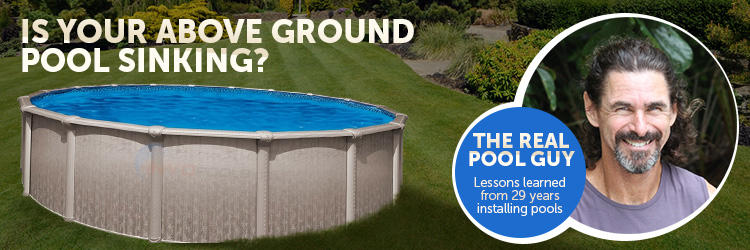
Because of this crazy cost of in-grounds, homeowners are finding a less expensive option by getting an above ground pool and sinking it in the ground. I have seen above grounds in the ground for many years and it’s nothing new, but it has certainly become much more popular in the last 10 years or so. It seems like at least one person asks me about this every day. So, if you are considering sinking an above ground swimming pool in the ground, you’ve found the right blog post.

Sinking an Above Ground Pool 101

Here’s a list of the basics of placing an above ground pool in the ground. Follow these basics and things will probably go well and you’ll be happy. If you don’t follow them, you might still come out happy. Who knows?

I. Only go down about halfway

These pools aren’t called “above grounds” just ’cause it’s catchy. Above ground swimming pools are not designed for inward pressure. So, when you put them in the ground, they can cave in from the weight of the earth, but only when they are empty. By sinking the pool down only halfway (2-2.5 ft), the pool has a much less likelihood of caving in when the time comes to drain the pool while installing a replacement liner.

If your ground is super firm, it won’t matter much how far down you go. In Central Florida it’s mostly sand-based so that’s an issue, but if you have rocky, rooty, or earth with a lot of clay, you may be fine to go down further. Some will go with the extra cost of building a retaining wall all the way around the pool. If you do that then you’re also good, but that adds to the cost of the job and aren’t you wanting a much cheaper alternative to an in-ground?

Also, most who sink their pool will have a wood deck built around it. Wood decks require some height off the ground so its structure can be built and that’s another good reason to go only halfway down.

II. The hole has to be bigger than the size of the pool

Above ground pools are assembled on site. They can’t be “pre-built” somewhere cool and then helicoptered in and set down into a hole perfectly. The thing has to be built in the hole so more room is needed. As a guideline, if the pool is going two or more feet down, make the hole 1.5’ bigger than the size of the pool all the way around. EXAMPLE: A 24’ round pool should have a hole that is at least 27’ in diameter.

Make sure the bottom of the hole is the desired size and not the top. I know that sounds stupid, but it’s not. A lot of times, holes get dug with a starting top dimension of 27’ round and by the time the hole is two feet down, its dimension has tilted in and it ends up being a 26’ hole at the bottom. Additionally, if your earth is really sandy and loose, it may be a good idea to make the hole even bigger. There’s little more frustrating than building one of these pools in a hole and it caves in on you halfway through with loose earth.

III.Leave piles of earth right next to the hole

After the pool is built and full of water, you’ll want to backfill some dirt around the pool. Remember the hole was bigger than the pool? Leaving some earth close to the hole will make backfilling much easier. Warning: Backfilling before the pool is full of water will result in the wall caving in! Don’t start backfilling too early. Let the pool fill with water so the water’s outward pressure will keep the pool wall in place. I know this sounds like a “duh” statement, but believe me it’s happened more often than I want to admit.

IV. Above ground pool pumps have to stay below the waterline

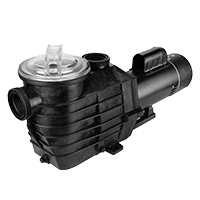
There are a few differences between in-ground pool pumps and above ground pumps. The biggest one is that an above ground pool pump cannot draw water up. This means that the above ground pump has to be at a level lower than the pool’s water level in order to work properly. If you are placing your above ground in the earth, make sure your pump stays below the pool. You can have your equipment well above the pool, but you’ll have to buy the more expensive in-ground pump to do so. Just another reason to go only halfway down (add this to the first guideline).

V. Check for local safety guidelines

For some towns or counties, an above ground swimming pool is considered safe because they are so high off the ground. With a safety ladder, above ground pools can be pretty safe for any small children wandering along the countryside unsupervised. Though, when you sink the pool that changes. If you don’t have a fence around your yard or if wandering two-year-olds are a problem in your area, then consider this safety issue.

Honorable Mention

So many people ask me if an above ground pool will last as long when it is buried in the ground. Some feel that sinking one in the earth will make it rust out faster or something. It makes logical sense to think that is what will happen, but there is one thing that is more accurate than logical sense and that’s long-term observation. In my 30 years of working on these pools, I have seen no evidence that placing them in the ground takes any life out of them. Of course there are instances where that can be true, but I’m talking as a general rule. Now some disagree with me on this and that’s OK. It’s healthy to be wrong sometimes. Most of them haven’t observed above grounds apart from their own or maybe an uncle’s or neighbor’s or something.

Go ahead and install an above ground in the ground. You may enjoy it more as it won’t be located so high up in your yard.

author avatar
Dan Dougher

Related Videos

207 responses to “Sinking an Above Ground Pool in the Ground”

  1. Jenell Avatar

    My dad was a “could build anything “ kind of man, and yes he did in fact sink a nice 18×52 above ground pool he bought used in 1991 and was able to use it for his water storage tank for the new home he was building as long as the pools drain lead to a hydrant…31 years later and some liners and pumps is what we’ve gone through..

    1. Matthew Simmons Avatar

      They don’t make them like they used to.

  2. Reg Cyr Avatar

    My plan is to dig the hole 2-3 feet bigger on all sides. Instead of a retaining wall….stack large rocks around the pool using sand to fill the voids. I’ll bury the 52” pool completely. I dig by hand.
    I’m optimistic that the rocks will minimize soil pressure should I ever need to empty the pool. At my age (75), I’m hoping it never happens.
    Wish me luck.

  3. Donica Robinson Avatar

    That must be cool to live in an area where the ground doesn’t shift seasonally. Up here in the part of NY that borders Canada even people with professionally installed inground pools deal with regular maintenance because of the ground freezing and thawing every year. Even doorways of homes don’t quite open and close the same way in the summer as they do in the winter. I cannot imagine the nightmare this would be to an above ground pool. Not to mention the pipes to and from the pump system that needs to be retired for the winter. This may be feasible for people in the south, but above ground pools were made for people up in the north with frigid winters. 🙂

  4. Pool Guy Avatar

    This is the most ridiculous thing I have ever read. I’m a pool and spa professional with 25 years experience installing above grounds and ingrounds in PA. You CANNOT bury and AG pool. FIrstly, it voids the warranty. Secondly, the steel walls are not designed for direct contact with backfill (Read the installation manual). They will rot so fast your head will spin.
    And lastly, any installer worth anything will either walk away on a liner change, or have you sign a waiver that they are not responsible for the walls caving in if you drain it. There are some manufactures like Strong Pools that are designed for this application, but as far as costs go, they are almost as much as a vinyl lined inground pool. The simple facts are if you do not have at least 25-30k in your budget, you cant afford an inground pool. That’s not to say that abovegrounds arent a good option, but they need to be installed correctly to insure a long life from the product.

    Hope this helps anyone reading this.

    Mike

    1. Julie Avatar

      Yeah, but I’m with 80% of all other Americans that don’t have 30k, im sinking down 2 feet with a retainer wall and enjoying my pool 🙂

      1. Matthew Simmons Avatar

        Makeshift pools can make for some fun times. As long as it is done safely, I have no qualms about it.

      2. D. (Ontario) Avatar

        Im with Dan on this one and…
        Koodos to Julie!👍👌

        Ive just moved to another town. (Ontario – Oshawa area to the country 30 minutes north = colder winter.)
        My pool in town was 20 year old 12×24 w/outriggers, when I installed it 20 years ago. I used a retaining wall outside the outriggers so technically the pool was 2ft in the ground but still ON the ground. The actual pool steel IN ground was only 8 inches. (It had been galvanized paint treated on install) So, when I replaced the liner 20 years after installing this 20 yr old pool (actually 42yr old pool according to the original manual)…I inspected as I pulled everything! I spread the walls (after removing the top caps n retaining ring sections) so it was out beyound the bottom ring, cleaned, relaid and releveled that bottom ring and not one bit of rust….anywhere in these in-ground bottom ring sections or wall. (One top cap was rusted thru from chlorine and water I suspect.)
        Pools today may be made cheaper, who knows, but if you treat the inground metal with something or just have airflow…they just may surprise you and provide decades of enjoyment. Im about to do it again with a 15yr old 21ft round.

        Dan is suggesting 2.5 ft (ish)…and he indicated “in his experience” (30 yrs people, C’mon!) he hasnt seen a rotted pool.
        Hes right in his experience (and I am in mine) and I hope you enjoy your pool Julie.
        D.

      3. Theresa Holland Avatar

        That’s what we did 10 years ago and we live in mn. Best thing we ever did. It’s a 54” deep pool and we dug it down 2 feet. No deck around it needed so no risk of divers it’s an 18x33ft oval. We still have the first liner since we installed the pool. We did not dog by hand our neighbor had a skid loader The frost has pushed it up some but next year when we will more than likely need to replace the liner we will just fix the part that started to heave. Heck it lasted 10 years this way it will last 10 more

    2. Melanie Avatar

      My pool has been 3/4 of the way in the ground for the past 12 years, I just emptied the pool to install a new liner, the walls are in almost perfect condition, there is a quarter sized rust spot on an area where one of the water lines was leaking for the past 2 year, this is very possible and worked great for me

      1. Martin nevis Avatar

        Was yours a soft side or hard metal side pool you put in the ground

        1. Mark Avatar

          Can I see how u placed ur pump

    3. BCH Avatar

      Spoken like a stereotypical “professional pool guy” completely devoid of any factual evidence or science to support the claim. I CAN install an above ground pool inground, underground, in a tree or on the moon. Does it raise potential for collapse and subsequent personal or property damage? “Maybe,” is the correct answer. Warranty issues – yah right, if one is expecting warranty support good luck. Almost no such thing these days. Not every above ground customer relies on or requires “professional pool guys” opinions. You sound like an HVAC installer explaining to the world that no one but a licensed professional should touch an HVAC system, similar to the plumber, roofer, appliance repair man, electrician, it never ends…

      1. Mark Avatar

        Picture of ur pump place ment

    4.  Avatar

      It’s not ridiculous. We have a doughboy pool that was designed to be sunk in the ground. We kept it one foot above so that it would be even with our house and deck. We are on our 3rd year and no problems so far.

  5. Wendy Avatar

    We have an above ground pool sunk 3/4. Clay soil. It now has a leak and we need to change the liner. Any tips on how/when yo do this. Frost line is about 42 inches with winter. Should we wait until ground is solid? Dig out 1/2 all the way around? Any thoughts are appreciated!!

  6. Philip Barrett Avatar

    I had a buttress free oval above ground pool 15×26 and that was installed 18 inches in the ground. A month later I noticed the 2 braces on one side lifting slightly inside the pool. It hasn’t gotten worse and the rest of the pool looks excellent. No bowing of the walls, or anything and the water level looks and measures even. Is this going to create an issue? The installers said it was normal and not to be worried about it. Thanks for your input.

Leave a Reply

Your email address will not be published. Required fields are marked *