
Home / Articles / The 5 Worst Pool Advice We Have Ever Heard

The 5 Worst Pool Advice We Have Ever Heard

Worst pool advice ever

Let’s face it, with access to the internet, a lot of jobs and skills that were once sought out and paid for have become jobs you can do yourself. With a little advice and a Youtube video, you can almost build anything on your own. Still, not all advice given is created equal nor should be treated equally. Unfortunately, in the pool industry, bad advice can sometimes mean hundreds of dollars out of your pocket and a lot of missed time out of your pool. Throughout the years we have encountered a lot of customers who have taken their share of bad advice. We wanted to share the top 5 with you in hopes you won’t make those same mistakes. Caveat Emptor!

“I was told I could just put the chlorine tablets in the skimmer or pump basket.”

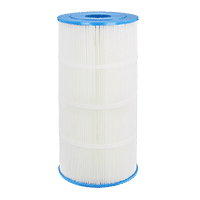
I’m saddened to say that we encounter this issue at least five times every season and our response is always the same, “Please do NOT put your chlorine tablets into your skimmer or pump.” Your pump and filter are the two driving forces that keep your pool clean and healthy. Let’s say you decide to put your chlorine tablets, or “hockey pucks” as a lot of people like to call them, into your skimmer. Once your pump and filter turns off, the tablets keep dissolving in your skimmer, forming highly acidic water. Once the pump is turned back on, this same acidic water goes straight into the filter. This can compromise the internal parts of your filter – cartridges, o-rings, and gaskets – forcing you to replace them earlier than normally necessary.

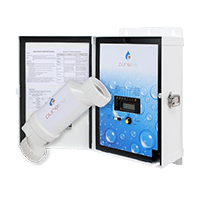
Instead of putting chlorine tablets in your skimmer or pump, we recommend using a chlorinator. A chlorinator will automatically disperse chlorine into your pool according to an adjustable setting on the unit. Chlorinators work with your existing pump and filter and are usually very easy to install. Another option is a floating chlorinator which is just a plastic vessel that holds tablets and floats in the pool. Floating chlorinators are super cheap and can usually be found in local stores like Walmart. Whatever you do, though,  please do not put chlorine tablets into your skimmer or pump!

“My pool guy told me I could run my pump a few hours a day…. but now my pool is green.”

Pool pumps should run on average between 8-10 hours a day. As a basic rule of thumb, you should be able to filter your entire pool within an 8-hour time frame. In other words, your entire pool (in gallons) should pass through the filter in this 8 hour period. If you are not giving your pump and filter enough time to properly clean the pool and keep the chemicals in flow, your pool will turn green. Not to mention, it might be unsafe for even recreational purposes.

As a pool owner, you need to become comfortable with certain pool calculations. If not for yourself, definitely as a means of double checking pool “professionals” who may steer you in the wrong direction. Here’s how you can calculate the minimum time you need to operate your pump

  1. Determine how many gallons of water is in your pool.  (Pool’s length x Pool’s width x Pool’s average depth x 7.5)
  2. Figure out the pump’s gallon per minute (GPM) This information is typically listed on the pump label. Once you find this number, multiply that by 60 to get the gallons per hour.
  3. Divide the gallons per hour into the total gallons in your pool.
  4. This answer gives you the minimum hours needed to run your pump so that your entire pool is filtered properly.

So the next time someone recommends that you run your pump for “insert # of hours”, always refer back to the GPM of your pump. No one likes to swim in a dirty pool and no pool owner likes to spend additional money to fix something that was preventable from the start.

“My pool guy sold me a bigger pump than I had on before because he said the bigger the pump, the less I’ll have to run it.”

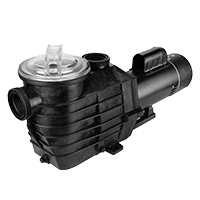
When it comes to pumps, bigger is not always better. A pump is limited by the plumbing size set up at your home and the maximum capacity your pool filter can handle. A higher horsepower (HP) means more power and energy is being used to pump the same amount of water, thus causing your energy bill to skyrocket. A higher horsepower draws more amps but does not move the water faster through your circulation system. Instead of reaping the benefits you thought you were getting by increasing your HP, you end up with a higher energy bill, a burnt-out motor, and an oversized pump you spent more money on than you wish you had.

If you need help trying to properly size your pool pump or want to verify if your current HP is accurate, then please check out our how to guide labeled How To Size A Pool Pump.

If you’re looking to save money, our advice is to switch to a dual speed or variable speed pump. By switching to one of these, you are able to operate your pump using less energy. You can operate your pump at the lower speeds during normal circulation and on high speed whenever you clean your pool. And who doesn’t like saving money, right? In short, bigger is not better when determining the horsepower for your pool pump. Over sizing is very common, but very easy to fix. We are always available to verify if your pump is oversized and if you are overspending.

“You can determine if your pool is clean by the smell of chemicals.”

If someone ever tells you this, take a step back, and go in the opposite direction. The smell of chemicals is not an indication of a clean pool, but just the opposite. A properly disinfected pool has no strong chemical smell. The strong smell common to many pools, especially public, is due to something called chloramines. Chloramines are the byproducts of chlorine’s reaction to contaminants brought into the pool by swimmers. These contaminants include perspiration, urine, body oils, and cosmetics.

Therefore, a strong chemical odor is actually an indication that the chlorine in the pool is working overtime due to the excess amount of contaminants and not an indication of it being clean.

“My pool guy told me I could use Vaseline (petroleum jelly) to lubricate my o-rings.”

You should never, ever use Vaseline or any petroleum-based lubricants for any of your o-rings. Most manufacturers recommend a silicone or a Teflon-based lubricant for all o-rings and gaskets. The oil composites of the petroleum jelly will cause the rubber to break down and will completely eat away your o-ring. Although o-rings range in size from really small to very large, never underestimate their power or the importance of their job. Using the wrong type of lubricant can cause leaks and ruin your system.

author avatar
Charlie Ramirez
Writer at InyoPools.com, brings a wealth of knowledge and expertise in pool care and equipment, helping pool owners make informed decisions for over a decade.

Related Videos

156 responses to “The 5 Worst Pool Advice We Have Ever Heard”

  1. Julie Avatar

    I don’t have a Manuel. I just moved into this house. It did not come with Manuel and my floater was bought from a pool supply without a box or Manuel. Otherwise I would not have taken the time to ask you

    1. Matthew Simmons Avatar

      My apologies for attempting to help you.

      You may want to try contacting the dealer from whom you purchased the chlorinator.

    2. Florida Mom Avatar

      Nice attitude. By the way, Manuel is a Spanish man’s name. The word you’re looking for is, manual.

        1.  Avatar

          lol

  2. Julie Avatar

    I have a 15 x 35 in ground liner pool. How many chlorine tablets to use in a floater? . I was advised by pool company not to put tablets in skimmer and to use a floater. Thanks.

    1. Matthew Simmons Avatar

      Read the manual, it should list the capacity of the floater, and put that many in. Give it a few days, test the water and see how the chemical levels are doing to determine if there needs to be a change in your approach.

  3. Amanda Avatar

    Hi,
    I just bought an above ground ring pool. I would prefer to use salt instead of chemicals. I currently have the pool, a pump and a filter that all came as a package. If I go with salt, what other accessories/equipment will I need to buy (aside from the salt) in order to make this work?
    Thank you 🙂

    1. Matthew Simmons Avatar

      Amanda,
      We have an article that covers what you need for the conversion. Take some time to read through it, here: Converting Your Pool to Saltwater

      1.  Avatar

        Thanks Matt. This is very helpful. In the interest of finances, I am wondering if all the mentioned equipment is really necessary or if it possible to test the pool each water and add salt as needed (instead of buying an actual salt system)?
        If not, I may just go with chemicals since I won’t need to purchase additional equipment…

        1.  Avatar

          You can’t just add salt to the pool instead of chemicals. You need a salt cell that converts the salt water into chlorine. You should just stick to using the basic chlorine setup that the pool cans with…

  4. Cass Avatar

    I have a above ground pool I switched to salt can I use liquid chlorine also so it doesn’t turn green.

    1. Matthew Simmons Avatar

      Yes, you can bolster your salt chlorinator with liquid chlorine. But the more important question, is why is your pool turning green with a new salt system installed?

  5. Leroy Jennings Avatar

    Hello,
    I have a 15 x 52 above ground round pool, I’m using an Intex sand filter. My issue is it keeps putting sand back into my pool. I have emptied, cleaned and check the laterals and main tube no cracks or holes. I backwash for three minutes after vacuuming then rinse for about a minute before switching to filter. But after all that I still get sand. What could possibly causing the sand to return?

    1. Matthew Simmons Avatar

      There is a chance you cannot see the crack or seam because it only presents itself when under pressure from the pump. The best bet would be to replace the set of laterals, unless you want to take it apart one more time.

      1. Stevejillc@comcast Avatar

        Our pool company said that the pucks should not contain copper as they will eat away the heater, also Costco’s chlorine tablets have copper.

        Is this a ploy to buy there products.
        Currently using Leslie’s tablets.

        CONFUSED we are

  6. Leanne Avatar

    I have a 16 x48 pool I have bought a sand filter and salt chlorinated my question is I’m not sure I like the salt, can u remove it and just use the chlorine floater and still use the sand pump?

    1. Matthew Simmons Avatar

      Yes, you can remove the salt system from your plumbing and switch back to a chlorine feeder.

      A sand , as well as cartridge and DE, filters can be used in salt or fresh water pools.

  7. Jennifer Robinson Avatar

    I am buying an above ground pool on Friday, its an Summer wave Elite 16×48 (something cheap because its our first one) my question is what do I need to do far as the tablet cleaner? I am confused lol I don’t want the turning green problem.

    1. Matthew Simmons Avatar

      Tablet feeders are simple; plumb them into the pump system, add tablets, then adjust the flow control knob as necessary. Test your water regularly during the first week so you can maintain levels.

      Read this guide: How To Maintain A Swimming Pool Part 1 (Chemicals)

  8. sonali Avatar

    My chlorinator will not open! My pool guy suggested 1. Buying a new one and 2. Putting the chlorine tabs in the skimmer basket. Now that I have read your post, 8 won’t put them in the skimmer basket but I am wondering if it is OK to not buy a new chlorinator and instead, float them in the pool in floating chlorinator as you mentioned?

    1. Matthew Simmons Avatar

      Yes, that is definitely an option, the chlorine floats are the simplest way of chlorinating your pool, but they are the least efficient.

      1. sonali Avatar

        I do shock the pool weekly – and as needed – is the chlorinator more efficient?

  9. Lisa Avatar

    She just said no chemicals showing . Had me put 2 bags of shock and 12lbs of alkalinity over 12 hours then 2lbs of ph up. Had test redone and everything was ok except the chlorine still too low ( but I had already put 12 3inch blocks in over 24 hour period along with the other chemicals). Had another test done at Leslie’s and all good including the chlorine and it was at 1, they said the only problem was water hardness, took the same water to another company and they said no chlorine again. The water is still cloudy and the pool companies around here have me in a goose chase. The water is still cloudy, I smell no chemicals especially no chlorine . Tonite I put 2 more bags of shock and 3 more tablets of chlorine. Trying to get the chlorine up. Nothing is working on clearing the water from being cloudy .

    1. Lisa Avatar

      Here are the results Leslie’s gave me.
      Free chlorine 1
      Available chlorine 1
      Calcium hardness 100
      Cyanuric acid 50
      Total alkalinity 80
      Ph 7.5
      Copper 0
      Iron 0
      Total dissolved solids 400
      Phosphates 100

      They suggested hardness plus for the calcium level and clarifier for the cloudy pools. Since the calcium isn’t where it needs to be it’s no point in putting the clarifier in. I need help!! Thanks

      1. Lisa Avatar

        I mean the chlorine isn’t where it should be to add the clarifier. Sorry!

      2. Matthew Simmons Avatar

        If the pool is cloudy stop putting in chemicals until it is clear. I’m assuming the cloudiness is from an algae bloom. When you kill, and algae bloom the water is cloudy. I would stay away from adding anything other than chlorine or nonchlorine shock. Super floc will weight down all the suspended material. Then close the skimmer and open the main drain completely and try to brush all that particulant that has dropped to the floor into the filter.

    2. Doris Hammersley Avatar

      Try sticking with one company until the problem is solved. Many times it takes more than one treatment to solve a problem.

  10. Lisa Avatar

    Cloudy water!! Took sample to pool store they said no chemicals showing… they sold me alkalinity and shock. Put 2 shock in and then 3lbs. Alkalinity every 3-4 hours. Did all that and water is still cloudy??? Help please.

    1. Matthew Simmons Avatar

      Can you post results of the latest chemical testing? They said “no chemicals were showing” I need to have a better idea of what that means. Clarifier can also clear cloudy pools. But if you do not have chlorine in the pool, clarifier won’t fix the whole issue.

Leave a Reply

Your email address will not be published. Required fields are marked *