
Home / Articles / Tips for Troubleshooting Your Pool Light

Tips for Troubleshooting Your Pool Light

A glimmering pool light will add dazzling high notes to your poolscape; but a dim or broken light can leave you in the dark as to how to fix it. When your light goes kaput it is time to roll up the shirt sleeves, pull out the test probes and go to work.

But where to start? That is a tough question, as a pool light can have a hundred or so feet of cable, circuit breakers, GFCIs, and junction boxes to contest with. I’ve learned to start with the easy and then work your way up to the hard. We will walk through some simple fixes and some not so simple.

So, sit back, relax and let us enlighten you. I swear that is the last pun in this blog…

What’s the bright idea? (I lied)

The Easy

Loose Fixture

A pool light, despite all its waterproofing and hundred or so volts of electricity, is held into the pool wall by one bolt called the lockscrew. The lockscrew is located at the 12 o’clock position on the light fixture face. If the fixture wobbles when touched or a strong ripple hits it then a loose screw is likely the cause.
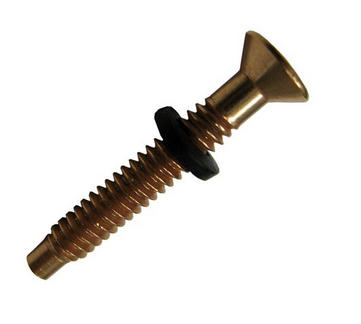
Lockscrew

To fix the issue, dip into your pool with a phillips head screwdriver and tighten the screw. If the screw is stripped or lost, make sure you replace the screw and the gum o-ring.  The o-ring is important to prevent excess water leakage into the niche or housing.

Leaky Pool Light

For the close observing swimmer, you may notice water in the light fixture. Most of the time, this issue is not discovered until the bulb blows. As we all should know, water and light sockets do not mix.

A leaky pool light stems from a bad lens gasket. This part is also called the housing gasket. The heavy gauge rubber ring acts as a clamp seal that waterproofs the joint between the lens and light housing. Chlorine exposure or old age can deteriorate the rubber to warp so that it allows water to reach the light internals. A fixture filled with water can also cause a breaker to trip, so be mindful of that when troubleshooting. Replacing a pools light lens gasket is pretty simple and even the more novice pool owners can do the job.

POOL LIGHT LENS GASKET
Pool Light Lens Gasket

Another less likely cause of a pool light fixture leak is a power cord conduit seal leak. If the conduit seal degrades to that point, the light is likely dead and will require replacement.

Change the Bulb

If your pool light will not turn on and you suspect the bulb, the old shake test is simple enough for  any pool owner to do. The steps on the bulb shake test are simple: remove the light bulb from the fixture and shake it next to your ear. If you hear the ring-a-ting-ting of a broken filament then it’s time for a new bulb.

If the bulb was relatively new before it blew, I would not run out and replace it right away.  A test of the circuitry may be necessary to be certain the new bulb will not be ruined by a power surge or some other electrical issue.  Take a look at our guide on replacing a pool light bulb.

The Not So Easy…

Tripping the Breaker

The dreaded CLICK of a tripped breaker is an annoying and sometimes befuddling event. Annoying because most of the time the reason for the trip is a mystery, unless of course you just plugged in an appliance that overloaded a circuit.

Before we do anything, we want to reset the breaker and also restore the circuit to the point before the trip. To perform the latter, we will unplug any appliance that may have immediately caused the overload.

Next, we will reset the breaker at the box. When a breaker is tripped, it flips to an idle position and will not resume current flow until it is completely reset by hand. To reset the breaker, find the flipped breaker, push it to the complete off position and then flip on. If the switch is not completely reset, it will spring back to idle. If you correctly reset the breaker but it continues to flip to neutral, replacing the breaker may be necessary.
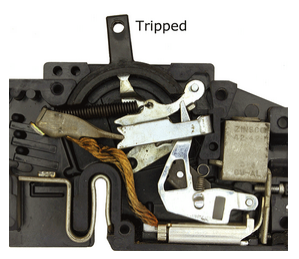
TRIPPED BREAKER
Tripped Breaker

Bad Breaker

The actual task of checking the breaker is not the difficulty, mainly because the task consists of touching a couple probes to terminals. The usual hurdle homeowners have to overcome is getting a multimeter to complete the task. Your run of the mill meter can be found at a local hardware store or borrowed from friendly neighbor.

To test a single pole 120 Volt breaker we will need to remove the front panel of the breaker box to access the terminals. Before removing the panel, make sure to mark the switch that handles the light’s load.

The multimeter will have two leads: one Red lead (positive) and one Black lead  (Negative or Ground.)The black lead is connected to COM port and the red to the mAVΩ port, the latter will be touched to the “hot” wire to measure volt load. Set the multimeter to read 120 Volt AC or higher so it can accurately read your breaker.  Touch the red lead to the single pole terminal and the black lead to the neutral base row. The neutral row is normally labeled, but if it is not look for terminal row with the white wires.

Tripping the GFCI

The ground fault circuit interrupter, better known as the GFCI is a safety device used on installations with a higher than normal risk of electric shock. Most homeowners are familiar with GFCIs from their bathroom electrical sockets. The socket GFCI are also used on construction sites where machinery cords could come into contact with water or sheared.
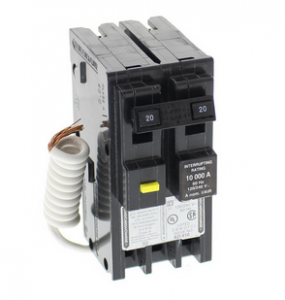
GFCI BREAKER
Gfci Breaker

The GFCI works by reading a circuit’s current for an irregularity that could be a symptom of a shock hazard. A GFCI circuit can be activated by a current change as low as 4 milliamps. Interrupter switches are an absolute necessity for safety at home or work, but that sensitivity can cause a nuisance, quite literally.  A phenomenon known as nuisance tripping occurs when a GFCI trips when it mistakenly reads a current change as a potential shock hazard.

Common triggers of nuisance trips are:

  • Circuits longer than 100 feet
  • Lighting circuits using fluorescent bulbs
  • Permanently installed electric motors, i.e. bathroom exhaust fans

If the above do not apply to your tripping circuit, it may be time to replace your GFCI. Like any electronic component, these interrupter switches have a lifespan and need to be tested monthly to determine their status.

Line Continuity

A pool light may have up to 200 feet of wire running from the power source to the fixture. Within that length of cable, there may be a fault in a junction, the line or the fixture. Checking line continuity is the process of finding the source of a fault in circuit. Again this task can be done with the handy dandy multimeter. We will be starting from a point in which we assume you have already checked the GFCI and breaker as mentioned earlier in this piece.

  • Set the multimeter to read for 120 or 12-volt range for proper readings.
  • Measure line voltage at junction box. A junction box is the point at which multiple electrical device cables can be joined to one main line. Not all applications utilize a junction so this step may not apply.  If the junction reads 0 then the mainline leading to box is malfunctioning. Have an electrician inspect and install a new main line from box to breaker.
  • Remove fixture from niche, then remove bulb from fixture, touch multimeter leads to fixture socket for reading. If the meter reads 0 from the socket, the fixture is dead and needs to be completely replaced.

As you can see the testing of a pool light is straightforward due to the simple nature of its design. One electrical circuit to the fixture allows for a relatively easy troubleshoot without hard labor. As with anything electrical, if you have any questions or reservations, ask a professional before fiddling with live wires. A working pool light is not worth risking electrocution.

author avatar
Matthew Simmons Technical Writer & Pool Product Expert
Swimming pool expert at InyoPools and host of Poolside Chat, brings over a decade of experience in the pool industry.

Related Videos

279 responses to “Tips for Troubleshooting Your Pool Light”

  1. Asaf Rovman Avatar

    My pool light had water in it and stoped working.
    After replacing all fixture with a new one and pulling the 100ft cable back to the junction box where the spa light connects. Can’t get the pool light to turn on. When i swap pool light hot wire connection with the hot wire of spa line the pool light works. Which means first thing that the new pool light is good. In the junction box i do get hot wire power reading on the spa line but no hot wire power on the pool line. All wires from the junction box back into the Intellitouch i5 are connected and nothing looks like its tripped. Gfci reset no problem.

    1. Matthew Simmons Avatar

      Asaf, I am not sure, you may want to try posting this question in the Forum. There are a couple electricians in there that can help you out.

      1. Tony V. Avatar

        Matthew, may I know what was the best thing to do with my problem on the light on my spa not turning off using both the manual and the remote switches. Instead I have to turn off the Gfci breaker off. Thanks.

        1. Matthew Simmons Avatar

          I’m sorry Tony, but I am not able to follow your question. What is happening with the light?

  2. Sergio S. Avatar

    Hello, maybe you can help with your advice on this… I had a light with water inside the housing/bulb (?) about 1/4 full. Hired a pool repairman to come out and replace the entire thing (not just the bulb). Problem solved but the repairman said he was shocked that the GFCI didn’t trip when it detected water (he said it would usually be very sensitive to water/moisture). He said the even poured a little water on the exposed wires at the junction box and that didn’t trip the GFCI. He said it was very dangerous to have the light on, and to keep the breaker off until I could have it looked at by a good electrician. I called another local trusted repairman and he said the opposite…that because it’s grounded, that I don’t have to worry about anything. Of course, i rather be safe than sorry; should I aim to replace the GFCI breaker? or just have an electrician come out to inspect further?

    1. Matthew Simmons Avatar

      Have a true (licensed) electrician come and take a look at the circuit to be on the safe side. A bad light circuit and swimmers can be a dangerous mix.

  3. Tony V. Avatar

    Hi. The lights in the pool and spa turn on but only the light in the pool turns off. The spa light won’t turn off in both manual switch and remote switch. All I know that I did was I replaced the lock screw with another size of screw. Here’s the thing that happened. When I was getting the original screw out I broke it and so as the thread. So I tap bit with the next bigger size. From 10-32 to size 12-24 x 3. Not sure why it is not turning off. Please advise.

  4. Anne Balderson Avatar

    Hi. We have a Jandy 30 ft Led pool light that is tripping the breaker (the spa light works fine). I assume water has gotten in the unit. Is it worth it to try and replace just the gasket and the light bulb (which is affordable and we could probably do ourselves) or do I need to invest in a whole new light and installation? (Which was quoted at 1100.00 and way out of our budget.)
    Thanks so much

    1. Matthew Simmons Avatar

      A light fixture replacement even with installation included for that price, is balderdash, excuse my French. If you are handy, you could complete the installation yourself, see this guide: How To Replace a Pool Light Fixture

      A real simple test to figure out if the light is shot, let the light dry out for a bit and either test the socket for voltage using a multimeter, or screw in a new bulb. If the bulb works, or the multimeter reads the proper voltage, a bulb and new lens gasket should do the trick; if not, you can get a brand new pool light.

  5. Rick R Avatar

    I am able to turn my pool light on manually with a switch located by the pool equipment. My remote switch in the house is able to turn the pool light off but will not turn it back on.
    Any ideas of what my issue might be?
    Thanks in advance.

    1. Matthew Simmons Avatar

      That issue may be as simple as a faulty remote. Have you tried calling the manufacturer on your controller to do a quick troubleshoot?

      1. Rick R Avatar

        I don’t know the manufacturer. Was installed 12 years ago.
        All I can determine is the interior switch is labeled Leviton. Is it more likely the interior switch or the switch located near outside system?
        Thanks again,

  6. Bo Avatar

    I installed a light using a gfci. I also added an outlet on the same line. Now I am not able to power anything from the outlet and my light is not working. I am getting current to the light\outlet but it does not power anything. I can power the pool light of off another line. ??

    1. Matthew Simmons Avatar

      I am not an electrician but I would put the light and outlet on separate breakers and see how that works. The two circuits may be too much for the breaker size.

      Also, is it a breaker new?

  7. Angie Avatar

    I’m having a problem with my pool light as well. Every time the timer tried to switch on the light, the GFCI switch would blow. It’s been doing this for about 2 weeks. Then the pump and salt water generator starting blowing the switch as well. For about 2 days I’d go in and reset the timer and manually switch everything on and it would function fine until the timer shut them all down. Now they run and stop on their own regardless of the timer. Any ideas on what I should do? The pool is just now 1 year old.

    1. Matthew Simmons Avatar

      Most of the issues in the comments mainly come down to ensuring the electrical circuit’s integrity. The best move is to go down the circuit starting from the power source on down the to the light itself.

      The first thing to check are the wire connetions, check all wire connections (including ground wires) are secure and up to code. Secondly, replace the breaker. A lot of electrical issues stem from a breaker that has gone kaput. Third, check your timer’s owner’s manual for any troubleshooting help.

      1. Sajjad Avatar

        My sawiming pool underwater light is triping when it’s start . There installed RCCBO there is transformer also. Light is 12 v . I changed transformer but it’s still triping

        1. Matthew Simmons Avatar

          The obvious first question is: did you complete any of the troubleshooting tips I listed in the article? If you have not, then I suggest you do so and then we can take it from there.

  8. ray Avatar

    I have an in ground pool / 120v light. last year the light would stay on for 15 min. then go off then back on and off and on ………. this year as soon as I turn it on it lights for only 1 or 2 seconds then goes out. any thoughts?????

    1. Matthew Simmons Avatar

      The fist thing I would try is replacing the GFCI; it may be as simple as the breaker being bad. Hopefully, it is this because it is the cheapest fix. If it is not the breaker, then you may have an issue with the light cable or fixture. If it is the light, you may have to replace the whole fixture.

      1. Ed Avatar

        Matt,
        My pool has two lights and originally with two independent GFCI, however, seemed that the previous owner installed the two lamps from a single GFCI and once I turn on the light switch, the GFCI trips. I bought two GFCI and tried to wire the two lamps as per original design but now they both trip. I checked ground and neutral and they are properly connected at the junction box.
        How can I test the lamp itself? maybe the cable the problem? how can I checked the cable? continuity check?
        Thanks

        1. Matthew Simmons Avatar

          It is in the article, the last section titled LINE CONTINUITY.

    2. PK Avatar

      Hi Ray. Did you ever solve this? I am having the same problem and wonder if the transformer is going bad.

  9. Carole Avatar

    I’m a single mom and my light doesn’t work. We resorted to just swimming during the day. Lately if we touch the light or brush up against it we get shocked. I really can’t afford to pay someone to come out. Is there anything I can do as I am now afraid to swim in the pool at all for fear I’m going to be electrocuted.

    1. Matthew Simmons Avatar

      Carole, close the breaker feeding power to the light, immediately, and don’t let them back in the pool until this is fixed.

      It sounds like the light is not properly grounded, allowing whatever issue in the circuit to seep out and bite swimmers. Trace the light circuit to its source and check for any grounded wires that are loose or missing. Report back with what you find, or provide pictures to see if we can figure out the circuit problem.

  10. Chad W. Avatar

    I had a problem where my lights (one at each end of pool) would either immediately trip the breaker or do so within about 30 seconds (upon initial try, then subsequent tries would trip the breaker immediately). I replaced the breaker, and the lights seem to work fine, but they are no longer synchronized and one light stays stuck on one color while the other light will cycle through all of its colors. I have a 2007 Aqualink Aquapure and no remote, I switch between light choices by cycling the pool light on and off as described in the manual.

    1. Matthew Simmons Avatar

      What model lights are installed on your pool?

Leave a Reply

Your email address will not be published. Required fields are marked *