Home / Articles / What Is A Salt Water Pool?

What Is A Salt Water Pool?

What is a Salt Water Pool?

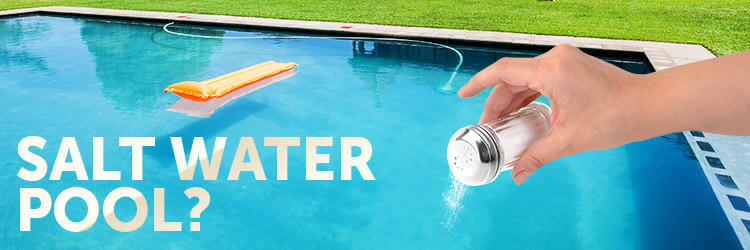
Most people hearing the words “saltwater” naturally think of ocean water, but in the world of swimming pools, “salt water” or “salt pool” refers to one that uses a salt chlorine generator for sanitization.

To be absolutely clear, there are sea water pools, meaning pools that are filled with ocean water.  These are not so common and are typically located right at the coast.  Sea water pools require special equipment and surfaces to withstand the very briny 35,000 parts per million (ppm) of salt found in the ocean.  There are also additional filtration and maintenance concerns as sea water contains many components (minerals, algae, and other organics) not found in the public tap or well water used to fill most pools.

How Much Salt?Blog Image - Pool Salt
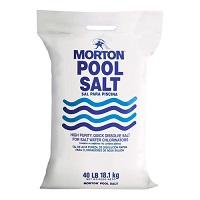
Salt water pools are quite different, with only about 3,000 ppm of salt.  This concentration is below the threshold detectable to human taste buds and will not leave any noticeable salty residue on skin and hair.  Liken it to the saline solution used for contact lenses.  So, while bathers may swim and relax oblivious to its presence, the salt is involved in some complex chemical reactions in order to create chlorine.
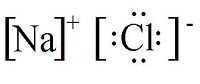
Blog Image - Salt NaClThe Science Behind the Salt

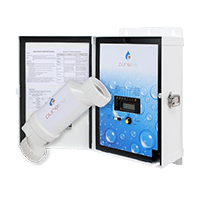
Salt is added to pool water in conjunction with the installation of a salt chlorine generator.  The generator is comprised of a power supply which is wired at the pool equipment pad and a salt cell which is plumbed inline with the pipe returning water to the pool.  Inside the salt cell are coated metal blades which receive a low voltage current.  As salt water passes through, electrolysis occurs, splitting the salt and water into hydrogen and hypochlorous acid.  This acid replaces the chlorine tablets or granules traditionally used to sanitize pools.

This process repeats indefinitely as the salt converts to acid and then the acid converts back to salt.  Salt does not evaporate.  Therefore, once the proper ppm of salt is reached, only small amounts of salt are required to adjust levels.  Some things that affect salt levels are heavy rain, which dilutes the concentration of salt, or heavy pool usage (think pool party), when a significant amount of water might be splashed out of the pool.

High Quality Chlorine

The chlorine produced by this electrolytic process is less harsh than the traditional “tri-chlor” chlorine used for pools.  Chlorine created from salt does not smell like bleach, and is very gentle to skin, hair and swim suits.  The water has a softer feel.  These are the more aesthetic benefits of using a salt chlorine generator.  Other pros include not having to buy, handle or store buckets of chlorine.  It is also considered to be a purer and therefore healthier form of chlorine, for those interested in limiting their exposure to this potent chemical.

Is Salt Right for You?Blog Image - Aqua Rite
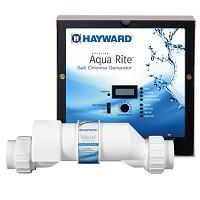
If you’re considering a salt pool, here are some factors to weigh.  First is the initial expense of the generator.  This generally ranges from about $999 – $1999 depending on your pool size, and how many bells and whistles you require.  Some salt systems include automation to control all of your pool equipment and these can cost considerably more.  Energy usage comes into play as well; a salt chlorinator only produces chlorine when the pool pump is running.  You will also have the initial expense of many pounds of salt to get the pool up to the proper ppm; once that is done, salt maintenance is typically minimal and not very expensive.

Second, you will need to replace the salt cell, generally every 3 – 5 years.  Replacement cell prices are in the neighborhood of $500 – $800.  If you live in a warmer region where your pool is open year round, you might need to replace the cell more frequently.

Third, it is important to remember that a salt system replaces chlorine only.  You still need to adjust for pH, alkalinity, calcium hardness, etc.  And shocking your pool is still a necessity when it is enduring summer’s heat and high bather loads (this can be done through the “super chlorinate” feature on most salt systems).  Some salt pool owners still do supplement with traditional granular shock as using the salt system to shock the pool does decrease cell life.

Fourth, salt can be corrosive to pool equipment and some types of stone decks.  It is important to maintain proper salt levels and consider “salt friendly” pool gear.  There are rails, ladders and diving boards designed to be resistant to corrosion.  Lights with plastic face rings instead of stainless steel are advisable as well as heaters with cupro nickel (instead of copper) heat exchangers.

All of the above considerations aside, water quality in a properly maintained salt pool is definitely superior in feel, smell and taste.  There are more and more pool owners opting for salt chlorine systems every year.  Because of this, we have created many Salt Chlorine How to Guides so be sure to delve in if you want to learn a whole lot more.

author avatar
Matthew Simmons Technical Writer & Pool Product Expert
Swimming pool expert at InyoPools and host of Poolside Chat, brings over a decade of experience in the pool industry.

Related Videos

36 responses to “What Is A Salt Water Pool?”

  1. Tom Avatar

    We are purchasing a house that is totally underground and yes it has an indoor pool and hot tub. The house was built in 1979 and been not been occupied for the last two years. The humidity and ventilation don’t appear to be working well, the “pool smell” of chlorine hits you when you walk into the house. In looking at the pool equipment, it looks to be a mix of very old and not so old, but never the less a piece meal approach. The pool is not a large pool or a lap pool, relatively small in size.

    We would like to change the pool to salt water, that said is it practical to use the some of the existing equipment or in the long run will it be more economical to replace the entire system and reduce overall maintenance?

    1. Matthew Simmons Avatar

      To change over to salt, the only equipment we suggest you replace are steel (non-marine grade) items like ladders, railings, and really old pumps. Also, you will want to treat the surfaces around the pool with a sealer meant for saltwater pool decks.

  2.  Avatar

    This is so helpful, I am planning on installing a pool, and considering on a salt pool.
    I have a reaction to chlorine, in that my heels crack when I go into a chlorinated pool, do you think i may have the same problem with the salted pool

    1. Matthew Simmons Avatar

      Salt pools still contain chlorine but just less of it. if your skin is simply sensitive to chlorine, the lower level of chlorine should hopefully lessen any negative effects.

  3. Kristin Avatar

    Hi I have a question- I plan to get a permanent above ground pool and was told at the pool store that a salt water system will corrode the walls of the pool and it will void he warranty. I have a salt water system right now with my temporary soft sided Intex pool but he said that was ok because it the walls are soft sided. Will it really corrode the walks or is this a scare tactic bc I really like the salt water system alot better than chlorine. I read what you said about getting a sacrificial annode and a nickel cuproheater (bc plan to get heater).. any other considerations?

    1. Matthew Simmons Avatar

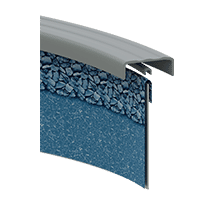
      In my experience, the walls hold up relatively well because they have several layers of protective coating. The inside of the wall is protected by the liner, and the outside is somewhat protected from spillover by the pool’s top ledge. The top rails, rims, and caps are the most likely to be affected by salt water the most because of splashing and swimmers getting in and out of the pool. If your pool has all steel parts, I would avoid salt, but a Hybrid is a little more expensive but will hold up better.

      A hybrid pool is made of a mix of steel and resin parts. There are various combinations of steel resin parts, depending on the pool model.But their purpose is to have the parts most susceptible to rusting to be made of the rust-proof resin material. These are more expensive but would last longer on a saltwater pool.

      1. Kristin Avatar

        Thank you so much! I called the pool store and they do make a steel/resin pool. Resin on the top shelf part.

  4. rdrew1000@gmail.com Avatar

    a couple of questions… First, you mentioned that salt can be corrosive to pool equipment. Is it any more corrosive than muriatic acid or chlorine? It seems to me that proper rinsing of decks, etc would prevent very much corrosion. Second, if the chlorine generator is working properly, would there be any reason for additional chlorine, aside from the ppm being reduced by replacement water, rain, etc.?

    1. Matthew Simmons Avatar

      Salt will eat away at metal railings, diving boards, and even decks. That is why manufacturers make Marine Grade railings, ladders and diving boards. There are also deck treatments that can be applied to the deck to protect it from salt. The application process is like adding Thompson sealer to a wood deck.

      The only additional need for chlorine that I can think of is after a big pool party. A bunch of people getting in and out of the pool, carrying dirt, body oils and who knows what else.

  5. Harry Richards Avatar

    When adapting this cell to my pool filter I noticed my salt cell (only 2 months of use) had degraded almost entirely. And the water drys leaving a white powder that irritates sensitive skin. My daughter’s eyes were nearly comprimised. I’m not sure what this machine is doing to the water… but it has an almost unnatural slippery feel.

    1.  Avatar

      Sounds like your generator is compromised and is producing NaOH and chlorine gas?

    2. Matthew Simmons Avatar

      Can you post your latest water chemistry results? We would need to see what else is going on in the water to get a better idea of the issue.

  6. Sheri Williams Avatar

    Our pool for the past 2 months has had a 0 chlorine level. The salt generator is working fine. We have added 8-9 lbs. of chlorine I a day with no results. Any suggestions?

    1. Matthew Simmons Avatar

      What is your CYA level? Is your water clear? And just to confirm, you are adding 8-9 pounds of chlorine tablets a day? Is this a commercial or residential pool?

  7. Forrest Avatar

    Any salt water pools in Utah? We live in northern Utah and don’t like the chlorine pools. This sounds interesting.

    1. Matthew Simmons Avatar

      I am sure there are salt pools in Utah, it is home to the nation’s largest salt lake afterall.

  8. tammy Avatar

    Can you connect a salt water system to your regular pool filter

    1. Matthew Simmons Avatar

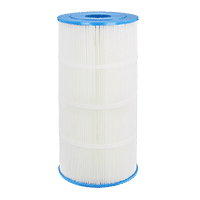
      Yes, you can. A salt water pool does not require a special pool filter. Feel free use a sand, cartridge or DE filter.

  9. Chase Wilson Avatar

    That sounds awesome! I feel like having a salt water pool would be a whole lot nicer just because you wouldn’t have to worry about how nasty chlorine is. Plus, you could probably open your eyes without it hurting a lot. Sounds nicer to me. Is there as much maintenance, or is it just the salt cells you have to replace?

  10. Paul Avatar

    My pool service recently reversed the compu pool salt system so that the intake is now connected to the pool. Is there a my good reason for this change. I want to be prepared for his answer before I question him.

    1. Matthew Simmons Avatar

      Hi Paul, The CPSC24 cell has to be installed with the water flowing from the input port to the output port for the cell to work properly. The orientation of the cell should be noted on the cell casing with a “flow arrow.” The cell should not be reversed.

Leave a Reply

Your email address will not be published. Required fields are marked *