
Home / Articles / The Underlying Truth Behind Why Ozonators aren’t That Great

The Underlying Truth Behind Why Ozonators aren’t That Great

Why Pool Ozonators are that great

Over the last few years, you may have heard all about the greatness that are ozonators. Ozone, in fact, is a great swimming pool oxidizer, sanitizer, and is a safe alternative to chlorine. It destroys trash and kills bacteria simultaneously. Ozone does almost everything chlorine does and can perform at a higher efficiency. With that being said, do we recommend you to run out and purchase an ozonator immediately?

Not necessarily. And here’s why.

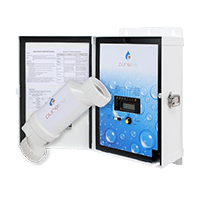
Before running out and buying an ozonator, there are a few things you might want to take into consideration. Did you know that despite the name, ozonators do not actually ozonate the water in your pool? Yup, you read that correctly. ozoneSwimming pool ozone systems only ozonate the water in your pipes. In fact, some only ozonate portions of the pipes. They are specifically designed to assure that no ozone ever reaches your swimming pool or the swimmers in it.
Why, you ask? Because ozone is poisonous. Yes, poisonous. Ozone is harmful to bacteria but also very harmful to humans as well. Like chlorine gas, ozone is poisonous, but neither are dangerous as long as they stay within the water. That’s where the problem arises. Unlike chlorine gas, ozone will not stay put in water. Therefore, the ozone must be removed before it reaches your pool.

Still, there are a lot of great benefits to ozonated swimming pools. There are incredible health benefits associated with ozone systems, but one of the main ones is the comfort of the water. Red eyes, rashes, faded swim suits, and other chlorine-related problems are no longer an issue. Ozone also eliminates pool odors common to traditional pools and oxidizes and destroys oils and other contaminants.

The underlying truth is that ozonators actually produce very little ozone. In an ideal pool environment, it takes approximately 3 to 4 days to completely ozonate a swimming pool. However, it will take weeks before a residential swimming pool is completely ozonated. This creates a tiny problem, unless you’re okay with swimming in last week’s flu water.
Onzonetreats
Onzonetreats

Because of this, you still must add chlorine or bromine to your pool so that there is an active ingredient killing germs where swimmers will be and not just in your pipes. When you chlorinate your pool, the chlorine is both in the swimming water and in your pipes.

Ozonators have the potential to perform really well, but are not ideal or practical for residential pool owners. Ozone has a very short half life. It cannot be stored, only used soon after it is produced. And although it is a lot stronger than chlorine, it alone is not a sufficient sanitization method for most swimming pools. It does not eliminate all swimming pool contaminants that are potentially dangerous to swimmers.

author avatar
Charlie Ramirez
Writer at InyoPools.com, brings a wealth of knowledge and expertise in pool care and equipment, helping pool owners make informed decisions for over a decade.

Related Videos

89 responses to “The Underlying Truth Behind Why Ozonators aren’t That Great”

  1. Pro Ozone Pools Avatar

    We had our pool installed as an Ozone/Chlorine pool almost 5 years ago. I did not understand how nice the system was until the ozone generator broke down late last year towards the end of the season as the weather was cooling down. Being the cheap person I am I decided to simply turn up the chlorine and not replace the ozone generator. Once the weather started warming up this year, I noticed that the chlorine was not doing its job. Algae was forming on the sides of the pool and my kids were complaining that the water was giving them rashes, red eyes, etc.. I went to the pool store and they recommended a slew of steps and procedures and chemicals to resolve the problems. All of these recommendations were the reason we went with a ozone pool to begin with. Needless to say I have ordered a new ozone generator. We can definitely tell the difference.

    1. Jimmy Avatar

      where did you order your ozone pump from, having trouble finding one, thanks,

  2. Ozone Newbie Avatar

    Hi, I just installed a new ozone pool. Just curious, I know I need to check chlorine, pH and alkalinity levels but do I need to balance the calcium and cyanuric acid levels? Can’t find anything online or in the manual about this. Thank you.

  3. Sean Avatar

    Charlie and many others are clueless! When the Ozone dissolves in water, it forms hydrogen peroxide, like the brown bottled hydrogen peroxide solution sold in the drug stores. There would be no free ozone. Hydrogen peroxide is not poisonous at low concentrations. Most of the highly pure water systems use UVC and Ozone generate to sterilize the water as nothing left behind.
    Ozone systems work perfectly for the swimming pool.
    I am not a salesman for ozone systems but a Ph.D. scientist in life science.

    1. Jim8888 Avatar

      Spot on. The above comments about adding chlorine or bromine to an ozone pool is a catastrophe in the making. Hydrogen peroxide and chlorine based products cancel each other out leaving your water unprotected from either. If you have an insufficient ozonator you can dose 35% food grade hydrogen peroxide to catch up to adequate levels.

  4. AlexS Avatar

    It seems to be really a massively misunderstood story. To start with I am using an ozonated indoor swimming pool since 20 years, the water is crystal clear, soft and the air around the pool smells tremendously fresh. I do have air ozone sensors installed just in case though. Plus we use a system which releases very small amounts of copper and silver into the water. Our bought in the shop standard 4 person spa is ozonated by default and you can smell the ozone quite well. Since the Barcelona Olympic Games all Olympic swimming pools must use Ozone instead of chlorine. The reason for it was that there has been the observation of increased risks of sigmoid colon cancer in people who train extensively in chlorinated water. In our house all tap water is ozonated. It disinfects foods faster and more efficiently than chlorine and is the best mouth rinse compared to the chemicals in mouth washes.
    Mixing generated Ozone efficiently into the water is the secret of all good ozone swimming pools. Bubbling ozone into water is a total waste of time. The Olympic swimming pools have separate mixing chambers were ozone is mixed by force into the water were it rapidly disinfects the water which is then pumped further into the pools. The residual Ozone in these pools is indeed very low, but definitely the best water you can ever swim in. Chlorinated pools are cheaper, but if you don’t change your pool water every second year you start to swim in a chemical concentrate you get from all the chemicals you put in there after each pool water test. If you talk pool water ozone, you must do it right, its expensive but the best water you can ever swim in.

    1. cotedazur Avatar

      Are you able to give some link of good installations of ozoned pool, because here in europe it is hard to find good systems. Most of them for residential pool they just put ozone via a venturi tube before the pump and after this there is air left in the circuit and potential ozone in the pool especially if it is a internal pool.

    2. Bib Avatar

      I too would love to know a maker or vendor of ozone pool, a good one.

  5. Other Iron Man Avatar

    I have a custom built 316 stainless steel pool that holds 18000 gallons that I finished this year

    I use a non-pool industry ozone generation system that injects 10 grams of ozone per hour into the pool using using a contact and mixing chamber. I have only used ozone and a clear blue copper/silver/zinc ionizer. There has been zero algae in my pool fo rthe last 3 months and not one drop of chlorine, bromine or other chemical agent. I do not agree with this article. Ozone is healh and safe unless it is inhaled in very large doses. The North American pool industry is backwards and very low tech compared to the European pool industry which has used ozone exclusively since the 1990s. Please do more reserach and actually swim in an ozone pool engineered properly before writing arricles like this.

    1. george gabler Avatar

      the copper ionize puts copper sulfate in the water …. thats even more dangerouse than chlorine …..
      you dont know what you are talking about ….i think the nirth amarican pool insutry is more kwnolegble about the pool senario

  6. GrandfatherOzone Avatar

    Ozone’s history spans more than 120yrs. 70yrs, of International Medical evaluation, and use. Including, Direct Injection into wounds, infections, and into our blood streams to cause a sterilization of our bodily fluids.
    Writing of Ozone in waters. A big drop of water, holds as much Ozone, as a big drop of blood. 03 reacts within 30min with our dirty blood. Then it’s gone.
    Clean water will allow the 03 to last longer in the fresh water. 56 degree water holds Ozone for 24 hrs with a cap on. 104 temp readily degrades the 03 gas.
    One more thing. If you can smell Ozone, (actually, Ultraviolet light your smelling) it’s in the pool.

    1. MJ Avatar

      Can’t smell light.
      You’re smelling the ozone produced by the light.
      PhD in laser spectroscopy.
      Those photons can’t get all the way up your nose.

  7. Joseph Avatar

    To suggest that ozonators “do not actually ozonate the water in your pool” is ludicrous. In a proper ozone system, you either have sufficient length of pipe, and/or a contact tank plumbed into the system. The fact ozone doesn’t leave a residual in your pool water doesn’t mean the water hasn’t been ozonated. The water had to run through the pipes, correct? You don’t need residual ozone in your pool if there was sufficient contact time in the pipes and/or a contact tank for it to do its thing. That’s one of the reasons ozone is better than chlorine, because it doesn’t leave a residual, and the chlorine residual is a carcinogen and bad for you. Your bottled water doesn’t contain ozone either, but it was purified with ozone before it was bottled, so there no longer being any ozone it it while true, is irrelevant.

  8. Rick Avatar

    So if i’me understanding this ozone thing correctly ,the water passes through the filter then goes through the ozone generator where the water is sanitized then out to the pool,then you add an additional sanitizer such as chlorine but in smaller amounts,in a nut shell is this correct ??

    1. Joseph Avatar

      That would be true if your ozonator was too small to handle the whole pool. In a properly sized ozone system, you won’t need any further sanitation other than maybe an occasional shock to control algae.

  9. Dan Avatar

    shock it hard and stay out for a week. then start again

  10.  Avatar

    Hi. We need advice. We just had an above ground pool installed with a sand filter and zone system and our water turned green immediately. It’s see thru but green. The water tests keep coming back fine but it’s still green. We have tried everything they have given us – metal out, shock, ph balance, etc. We are considering emptying the pool and possibly replacing the oxygen system but my children and I are extremely sensitive to chlorine. Any suggestions??

Leave a Reply

Your email address will not be published. Required fields are marked *