Home / Articles / 3 Things I Learned From Owning a Pool

3 Things I Learned From Owning a Pool

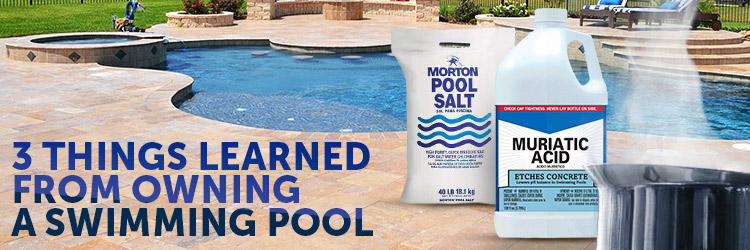
3 Things I Learned From Owning a Swimming Pool

After working in the pool business for years, my family and I finally decided to take the plunge and build our own pool. This was our first venture as pool owners. Now that I have had a pool for three years and after getting help from eXp Realty, I have learned several lessons that I did not know prior to owning a pool. You could say I went from book smarts to street smarts as a pool owner. The three biggest things I have learned from pool ownership are:

  1. A lot of Evaporation occurs
  2. You add a lot of Salt
  3. You add a lot of Acid

A lot of EvaporationSwimming Pool Evaporation

I was blown away by how much water is lost due to evaporation. Normally pools see ¼ – ½ inch loss of water per day due to evaporation. This is roughly 2 – 4 inches per week. For a normal sized pool you will loose 25,000 to 50,000 gallons of water per year due to evaporation. This means I was putting a hose in the pool every 7-10 days to fill the pool. On several occasions I went out to the pool and I was sure I had a leak. I ended up doing the bucket test. This is a test where you place a bucket on your deck and fill it with water. You then mark the water level in your skimmer. After a few days you check to see if the level drop in the bucket is the same for the pool. If it is the same then it is due to evaporation and not a leak. The bucket test confirmed my water loss was due to evaporation.

After a few times of forgetting to turn off the hose and flooding the pool deck, running the skimmers dry and just the hassle of pulling out the hose I decided to invest in an Automatic Pool Leveler. This is my favorite equipment that I have purchased for the pool. Common factors which cause increased evaporation are hot temperatures, pool heating and strong winds. One last item which can cause water loss is excessive filter backwashing.

You add a lot of SaltBlog Image - Pool Salt
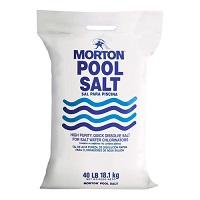
I have been really happy with my Pool Salt System, in fact, it is one of the favorite pieces of equipment I have on my pool. A Pool Salt System Works by Adding Salt to Your Pool and then the saltwater passes through an electrode where chlorine is produced and it is sent back to your pool. Since salt does not dissolve out of water you only need to add salt when you experience heavy rain, water is splashed out of the pool or you have water loss due to evaporation. My estimate was that I would add a “few bags” of salt at the beginning of the year and then add a few bags throughout the year.

Since evaporation in Florida occurs often because of our excessive heat this means I have added quite a bit more salt than I originally assumed. I have a pretty large pool (coming in at just under 40,000 gallons) and I would estimate I have added 30 bags of salt in the span of a year. This is quite a bit more than my original estimate of “a few bags”. Even with this larger amount of salt needed to maintain a pool I would still highly recommend a salt system. Just know that the cost savings over traditional chlorine may be a little less since you have the cost of adding salt to the pool throughout the year.

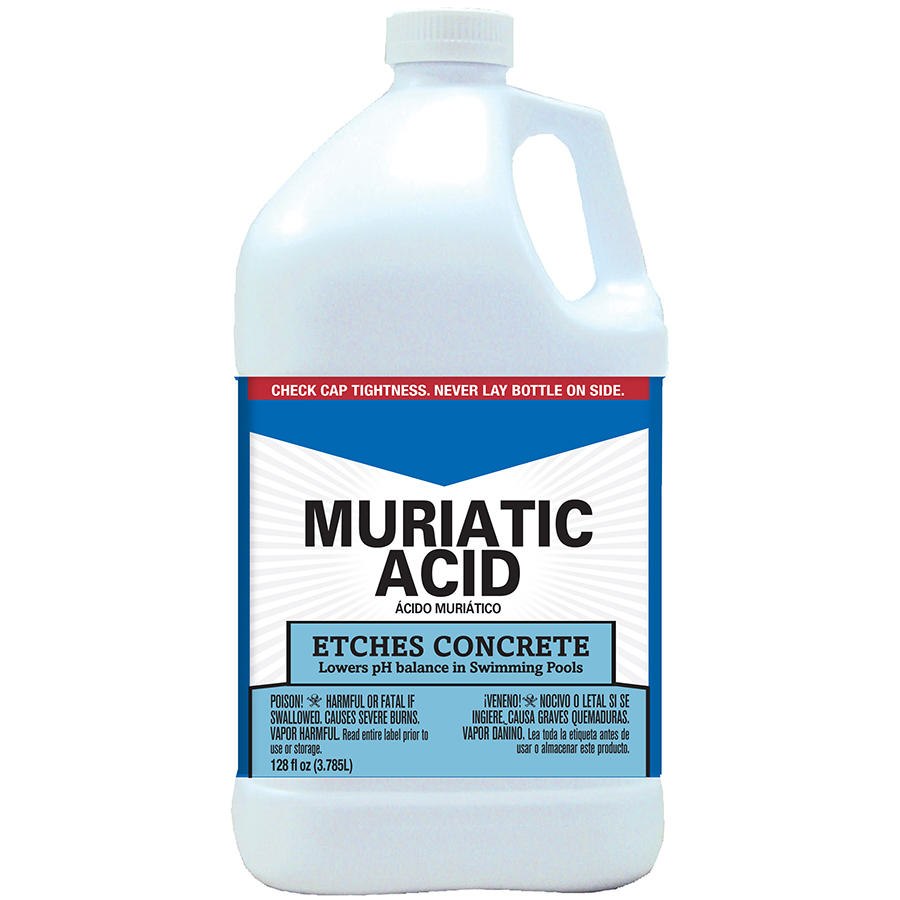
You add a lot of AcidPool Acid

When you have a salt system, your pool water’s pH levels will tend to increase. High pH levels lead to scaling on the pool tiles, pool equipment and pool walls. To combat this increase of pH you add muriatic acid to the pool to decrease your pH levels. To maintain the proper pH levels in my pool I need to add roughly one gallon of acid per week which is much higher than I anticipated. Normally I will test my pool water every Sunday and without fail my pH level is high. I then add acid to bring the pH level down to the ideal range of 7.2.

I did add an automatic acid dispenser to the pool to automate the process of adding acid to the pool, but it has not been without problems. The idea is good, but there are a few kinks that need to be worked out. The main issue I had is that the probe which measures the acid did not read accurately so the dispenser would not switch on to dispense acid. After many failed attempts to fix the acid dispenser, I have gone back to adding acid the old-fashioned way – by hand.

I truly believe the best way to learn the ins and outs of a product is by owning it and a pool has been no exception. I hope the lessons I have learned from owning a pool can help you in some way. If you have any lessons that you have learned from owning your pool we would love to hear from you, so feel free to post them to the comments section below.

author avatar
Patrick Paroline

Related Videos

81 responses to “3 Things I Learned From Owning a Pool”

  1. […] not in use. Otherwise, the water will evaporate off the top. An uncovered pool can lose two to four inches of water per […]

  2. IIturboman Avatar

    Question for anyone to reply, please!
    I have a 33 thousand gallon in ground pool, quite large, and just added a large spa for 10 to 12 people sitting comfortably on a bench or standing on the floor with water level to mid chest line. It is attached to the pool with over flowing cascade, daily on when the pool pump is running to clean the water of both features. When I had the spa added, I also had the pool redone adding new other steps, and other features, including a new resurface of granite composition that cost me a lot money. It has 20 years of warranty, that is if the pool contractor does not go out of business or dies. My question is, how much water should the pool and spa be loosing? I’m in Southern California, and it get hot during the summer, but these last 2 weeks of rain, cold and some windy days, the pool water dropped about 6 to 9 inches. I was surprised thinking that there would be less evaporation during cold, cloudy and rainy days. Sorry for my long explanation but wanted to be thorough by mentioning that every thing was new but the hole in the ground. Oh! All the filtration equipment and water heater brand new and efficient, and no evidence of leaks, not even the backwash pipe. Now, should I be worried and call the contractor to come a troubleshoot for leaks? It’s been three years ago when the construction took place.
    I also wanted to comment on about the salt system pools. I did do my investigation researching and talked to a lot of pool and spa builders when I was getting estimates of the remodeling of the pool and adding the spa. I concluded that the salt system is not too damaging for the skin, hair, eyes and even the swim suits. It also maybe saves money with the chemicals. But on the other hand, I learned that salt corrodes more and faster, the piping specially old pools made with metal pipes, the filtration system even the new ones, the pumps, valves, seals etc., but more so the finish of the pool wether is plain plaster which is what most people have done. Also the grout holding the tiles in place and is very damaging to the pebble finishes regardless of colors.
    I’m new to this site and find it very informative and friendly. Thanks to everyone and happy holidays.

    1. Kenneth Thompson Avatar

      How warm do you keep the water?

    2. John Avatar

      You need to test your chemicals. Certain readings will tell you if you have a leak. If your cya is constantly dropping then you may have a leak. Also look at tds levels. Check levels every three weeks and see what happens.

  3. HeidemanDave@gmail.com Avatar

    Is “Stabilizer” cost effective? Is the money you spend on it less than the cost of the chlorine that would have evaporated without it?

    1. Matthew Simmons Avatar

      Yes, the cost of stabilizer is far less than the amount of chlorine you would need to compensate. Stabilizer once diluted into water, can not be taken out of solution unless that water is drained. On the other hand, chlorine gets used by organic material or burned off by sunlight constantly.

      I’ve had a rash of these questions recently about trying to ditch stabilizer, not sure where this is coming from. If you have any type of chlorine sanitized pool, then you will need a stabilizing agent.

      1. Jerzy Kolodziej Avatar

        Cyanuric acid (stabilizer) loosely bonds with chlorine. The result is that there is a reduction of free chlorine in the pool available to react. Free chlorine is what reduces organic contaminants. Therefore, if you are able to produce adequate free chlorine during hot weather the need for stabilizer is limited. Reality is that during the summer months it is often very hard to maintain sufficient free chlorine.

        That is the reasoning that cause people to argue against stabilizer. Pool chemistry is a dark and magical art. Virtually no pool is the same. Often it takes years to get the optimal chemical balance that is best for your conditions and pool construction.

  4. Jim T. Avatar

    I am coming in late so I hope I am not repeating another comment. The hardest leak to find that I ever had in 25 years of pooling was a leak in the electrical conduit going to the wet nook light. It was slow but noticeable. I stopped up the conduit at the light. This worked for awhile, but, ultimately, I removed and covered up the light. FYI the leak was found using food coloring, which was attracted to the leak. Expensive high tech leak detection equipment did not find it

    1. Matthew Simmons Avatar

      Nice story. Thanks for sharing.

      Those little hidden places where a leak can sprout up, like the light conduit, can drive you mad.

    2. Chris Avatar

      Just had a leak fixed on my light housing caused by the electrical conduit. Drove me mad.

  5. Free Spirit Avatar

    When kids used to get in my pool every summer, I had to constantly put shock in it. Now that I’m the only one using my pool, I haven’t had to add ANYTHING, shock or otherwise since opening the pool in May. It’s now July 9 and the water is still clear. Yes I’ve had plenty of evaporation but that’s it. I just add water from the hose. I don’t use any salt or chemicals and the water stays CLEAR and CLEAN. The only reason I can think of why this is happening is because I never “pee” in the pool.

Leave a Reply

Your email address will not be published. Required fields are marked *