
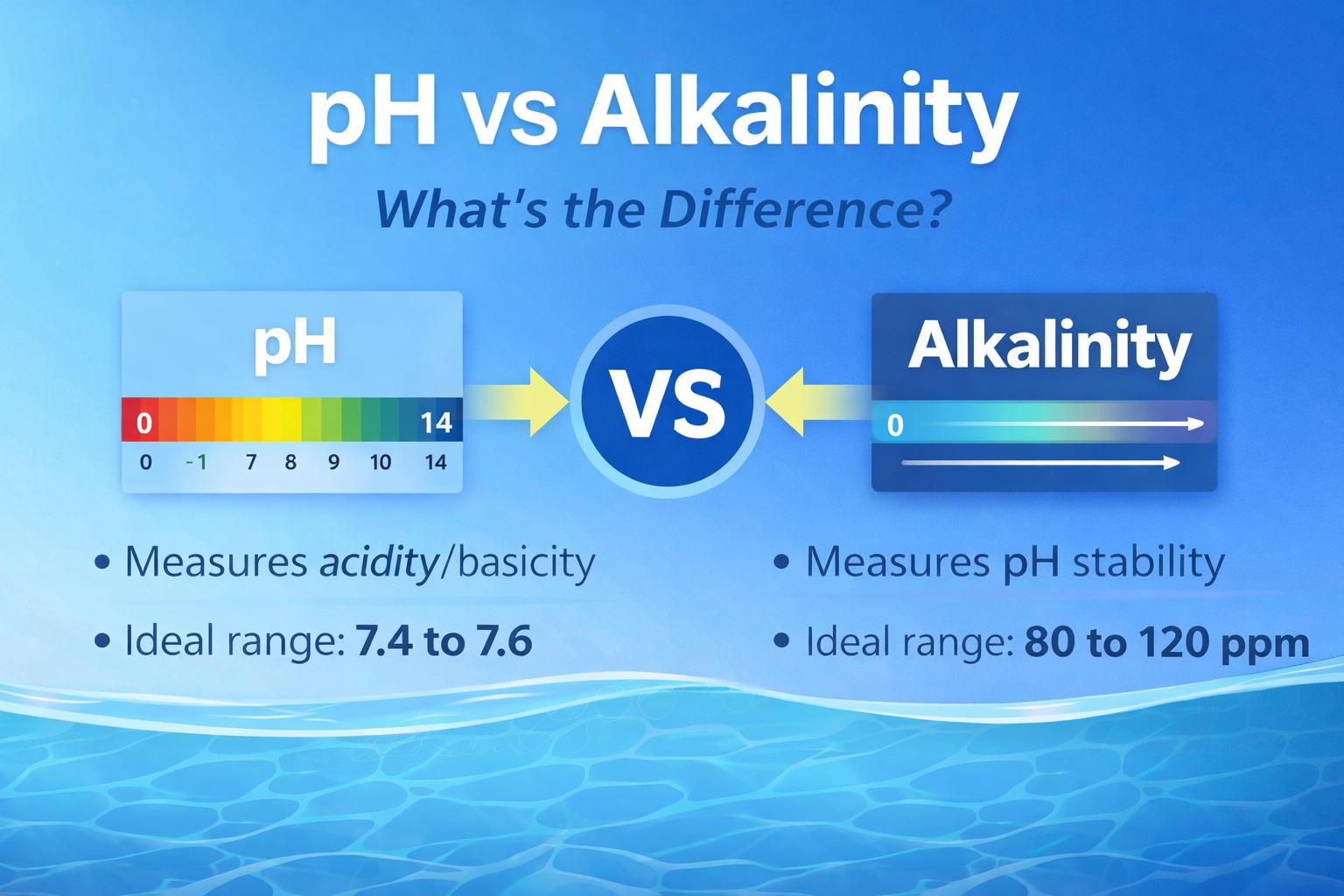
If you are trying to balance pool water, pH and total alkalinity are two of the most important readings to understand.
pH measures how acidic or basic your pool water is right now.
Total alkalinity measures how well your water resists pH changes.
In simple terms:
- pH = current water condition
- Alkalinity = pH stabilizer
That is why pool owners usually adjust alkalinity first and then fine-tune pH.
If your pool water keeps drifting out of balance, turns cloudy, irritates skin or eyes, or makes chlorine seem less effective, the issue may be related to pH, alkalinity, or both.
- Quick Answer: Alkalinity vs pH
- pH vs Alkalinity Comparison Table
- What Is pH in a Pool?
- What Is Total Alkalinity in a Pool?
- What Is the Difference Between pH and Alkalinity?
- Should You Adjust Alkalinity or pH First?
- Ideal Pool Ranges for pH and Alkalinity
- What Happens If pH Is Fine but Alkalinity Is Low?
- What Happens If Alkalinity Is High?
- How to Raise Total Alkalinity in a Pool
- How to Lower Total Alkalinity in a Pool
- How to Raise pH in a Pool
- How to Lower pH in a Pool
- Can You Have Good pH and Bad Alkalinity?
- Can You Have Good Alkalinity and Bad pH?
- Common Signs of a pH or Alkalinity Problem
- Best Way to Test pH and Alkalinity
- Alkalinity vs pH in Saltwater Pools
- Final Answer: pH vs Alkalinity in a Pool
- FAQ: Alkalinity vs pH
Quick Answer: Alkalinity vs pH
Here is the simple answer:
- pH tells you whether water is acidic, neutral, or basic
- Total alkalinity tells you how resistant the water is to pH swings
- Low alkalinity can make pH unstable
- High alkalinity can make pH stay high or keep rising
- In most cases, you should adjust alkalinity first, then pH
For most swimming pools, the usual target ranges are:
- pH: 7.4 to 7.6
- Total Alkalinity: 80 to 120 ppm
pH vs Alkalinity Comparison Table
| Factor | pH | Total Alkalinity |
|---|---|---|
| What it measures | Acidity or basicity | Buffering capacity |
| How it is measured | 0 to 14 scale | Parts per million (ppm) |
| What it affects | Comfort, chlorine effectiveness, corrosion, scaling | pH stability |
| If too low | Corrosive water, irritation | pH swings, unstable water balance |
| If too high | Cloudy water, scaling, weak chlorine | Upward pH drift, scaling, harder water balance |
| Typical pool target | 7.4 to 7.6 | 80 to 120 ppm |
| Which to adjust first | Usually second | Usually first |
What Is pH in a Pool?
pH is a measurement of how acidic or basic your pool water is.
- A pH of 7 is neutral
- Below 7 is acidic
- Above 7 is basic
For most pools, the ideal range is around 7.4 to 7.6.
Why pH matters
If pH is too low:
- water can become corrosive
- pool surfaces and equipment may be damaged
- swimmers may notice burning eyes or skin irritation
If pH is too high:
- chlorine works less effectively
- scale can form
- water may turn cloudy
- surfaces and equipment may collect buildup
If your chlorine level looks fine but the pool still seems hard to manage, pH may be part of the problem.
What Is Total Alkalinity in a Pool?
Total alkalinity measures the water’s ability to resist rapid pH changes.
It is often called a buffer because it helps keep pH from changing too quickly.
If total alkalinity is too low, pH can swing up and down unpredictably. If total alkalinity is too high, pH may stay high or keep drifting upward.
Why alkalinity matters
If alkalinity is too low:
- pH may become unstable
- water can become corrosive
- balancing the pool becomes harder
If alkalinity is too high:
- pH may keep rising
- water can become cloudy
- scale may form on surfaces and equipment
- it may become harder to lower pH and keep it down
What Is the Difference Between pH and Alkalinity?
The easiest way to understand the difference is this:
- pH tells you where the water is right now
- Alkalinity helps determine how easily that pH changes
Think of it this way:
- pH is the reading
- Alkalinity is the shock absorber
Or:
- pH is the temperature
- Alkalinity is the insulation
They are related, but they are not the same thing.
You can have:
- high pH with low alkalinity
- low pH with high alkalinity
- normal pH with bad alkalinity
- normal alkalinity with bad pH
That is why both numbers need to be tested.
Should You Adjust Alkalinity or pH First?
In most pools, you should adjust total alkalinity first.
That is because alkalinity helps stabilize pH. If alkalinity is out of range, any pH correction may be temporary.
Recommended order
- Test the water
- Adjust total alkalinity
- Adjust pH
- Recheck chlorine and the rest of your water balance
If your pH keeps moving after you correct it, high or low alkalinity is often the reason.
Ideal Pool Ranges for pH and Alkalinity
For most residential pools:
- pH: 7.4 to 7.6
- Total Alkalinity: 80 to 120 ppm
Some pool setups may perform better on the lower or middle part of that alkalinity range, especially if the pool has frequent pH rise. But for most pool owners, 80 to 120 ppm is the standard working range.
What Happens If pH Is Fine but Alkalinity Is Low?
This is a common and misleading situation.
A pool may test at a good pH today, but if alkalinity is too low, that pH may not stay there. Rain, refill water, chemical additions, swimmers, or aeration can quickly move it out of range.
Low alkalinity often leads to:
- unstable water balance
- repeated pH corrections
- corrosion risk
- ongoing frustration
So even if pH looks okay for the moment, alkalinity can still be the bigger issue.
What Happens If Alkalinity Is High?
When alkalinity is too high, pH often keeps drifting upward.
You lower it, test again later, and find that it rose back up. This can happen over and over.
High alkalinity may contribute to:
- rising pH
- cloudy water
- calcium scale
- reduced comfort
- difficult chemical control
This is especially common in pools with fill water that already has high alkalinity.
How to Raise Total Alkalinity in a Pool
To raise total alkalinity, pool owners usually use an alkalinity increaser, which is commonly sodium bicarbonate.
Basic process:
- test the water
- add the recommended amount gradually
- circulate the pool
- retest before adding more
Because alkalinity adjustment can also affect pH, retesting is important.
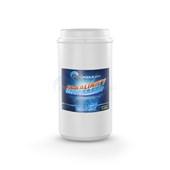
Need to raise total alkalinity?
Shop pool alkalinity increasers and water balancing chemicals at InyoPools.

Alkalinity Increaser
Need to raise total alkalinity?
• Helps balance pH levels
• 5, 10, 25, and 50lbs options.
• Keep your pool water balanced
How to Lower Total Alkalinity in a Pool
Lowering alkalinity is often more gradual.
It usually involves:
- adding acid in controlled amounts
- lowering pH intentionally
- allowing aeration to raise pH back up without raising alkalinity as much
- repeating until alkalinity reaches the proper range
Because both pH and alkalinity are involved, this can be one of the more confusing water balance issues for pool owners.
Trying to lower high alkalinity?
Find pH decreasers, muriatic acid alternatives, and pool water balancing supplies at InyoPools.
How to Raise pH in a Pool
If pH is too low, it is commonly raised with:
- soda ash
- in some cases, aeration may also help increase pH gradually
Be careful not to overcorrect, especially if total alkalinity is already high.
Need to raise low pool pH?
Shop pH increasers and pool balancing chemicals at InyoPools.
How to Lower pH in a Pool
If pH is too high, it is commonly lowered with:
- muriatic acid
- dry acid
But if alkalinity is also high, pH may continue to rise again after treatment. That is why high pH problems are not always solved by focusing on pH alone.
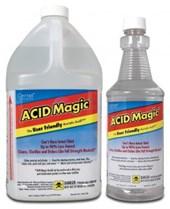
pH Decreaser / Acid
Lower pH and alkalinity
• Dry & liquid acid options
• Reduce eye irritation, cloudy water, and scaling
• Keep your water balanced
Can You Have Good pH and Bad Alkalinity?
Yes.
This happens all the time. A pool can test at a good pH in the moment, but still have alkalinity outside the ideal range. When that happens, the pH may not remain stable.
This is one reason pool water can seem “fine one day and off the next.”
Can You Have Good Alkalinity and Bad pH?
Yes.
A pool can have total alkalinity in range while pH is still too high or too low due to recent chemical changes, rain, swimmer load, source water, or aeration.
Both numbers matter. Neither one tells the whole story by itself.
Common Signs of a pH or Alkalinity Problem
You may have a pH or alkalinity issue if you notice:
- cloudy water
- pH that keeps rising
- pH that changes too quickly
- eye or skin irritation
- poor chlorine performance
- scale buildup
- staining or corrosion
- trouble keeping water balanced
These symptoms can overlap with other pool chemistry issues, but pH and total alkalinity are two of the first things to test.
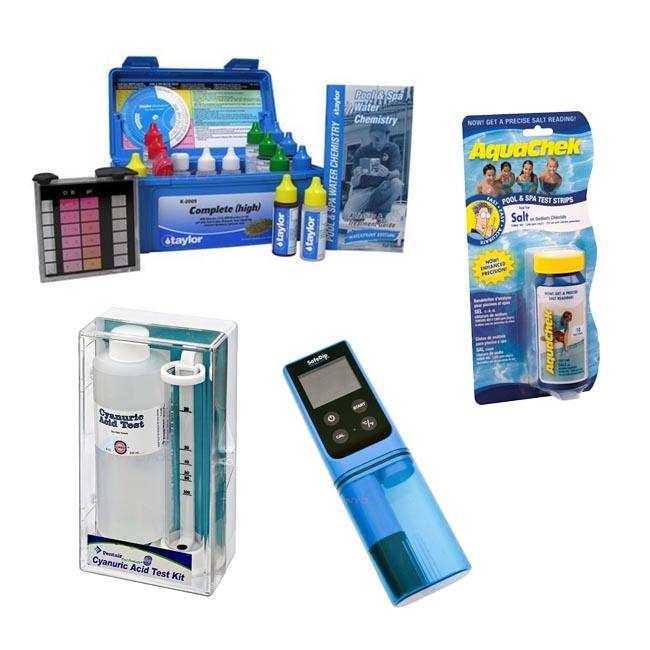
Best Way to Test pH and Alkalinity
The best way to manage pH and alkalinity is through regular water testing.
Common options include:
- test strips
- liquid test kits
- digital pool testers
- in-store water testing
For the most reliable home testing, many pool owners prefer a liquid test kit.
Need a better way to test your pool water?
Browse pool water test kits and water balancing supplies at InyoPools.
Alkalinity vs pH in Saltwater Pools
Saltwater pools follow the same basic rules, but pH drift is often more noticeable.
Salt systems can create conditions where pH tends to rise over time, which makes proper alkalinity control even more important.
If you have a saltwater pool and your pH keeps climbing, total alkalinity is one of the first things to check.
Final Answer: pH vs Alkalinity in a Pool
Here is the bottom line:
- pH tells you how acidic or basic your pool water is right now
- Total alkalinity helps keep pH from changing too quickly
- They work together, but they are not the same thing
- In most cases, you should adjust alkalinity first, then pH
If your pool water keeps going out of balance, the problem may not be pH alone. It may be that total alkalinity is making pH harder to control.
At InyoPools, we help pool owners troubleshoot water chemistry problems and find the right products to get their pool balanced again.
FAQ: Alkalinity vs pH
Is alkalinity the same as pH?
No. pH measures whether the water is acidic or basic. Total alkalinity measures the water’s ability to resist changes in pH.
Which is more important, pH or alkalinity?
Both matter, but alkalinity is often corrected first because it helps stabilize pH.
Should I adjust alkalinity before pH?
Usually, yes. If alkalinity is out of range, pH may continue drifting even after correction.
What should pool alkalinity be?
For most pools, total alkalinity should be between 80 and 120 ppm.
What should pool pH be?
For most pools, pH should be between 7.4 and 7.6.
Why does my pool pH keep rising?
High alkalinity, aeration, fill water, and salt systems can all contribute to rising pH.
Can low alkalinity make pH unstable?
Yes. Low alkalinity can cause pH to swing quickly and make the pool harder to balance.






Leave a Reply