
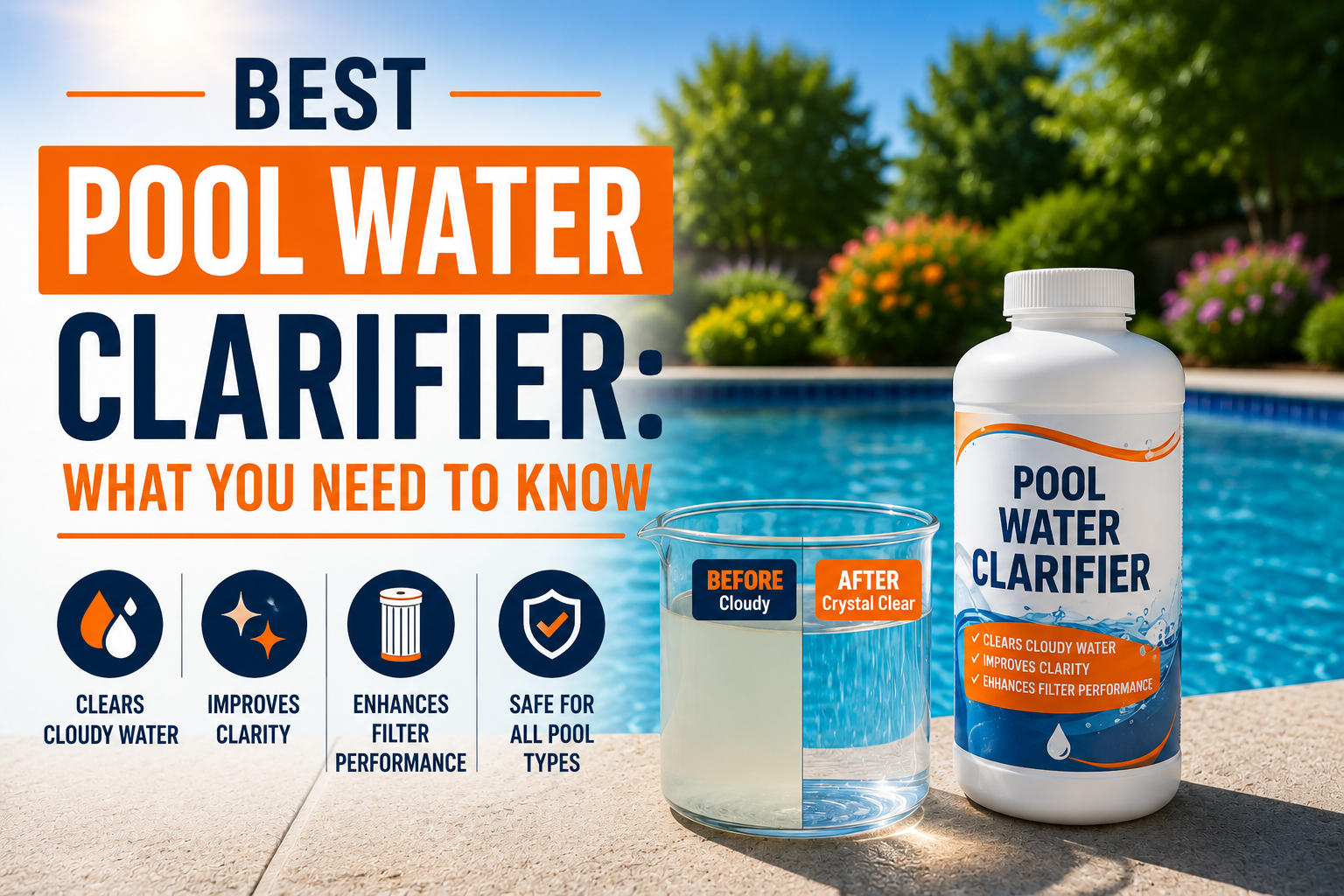
Pool clarifiers are one of those products where understanding how they work makes all the difference in choosing and using the right one. Here’s a complete breakdown:
What a Pool Clarifier Actually Does
Clarifiers work by coagulation; they introduce positively charged polymers into the water that attract the tiny negatively charged particles (dead algae, body oils, sunscreen, fine dirt, dust) that are too small for your filter to capture on its own. These particles clump together into larger masses that your filter can catch, clearing up cloudy or dull water.
Clarifiers don’t fix chemistry problems; they fix filtration problems. If your water is cloudy because of a chemistry imbalance, fix the chemistry first. Clarifier won’t solve that.
The Two Main Types
Liquid Clarifier (Coagulant)
The most common type. Pour it in, run the filter, and particles clump and get captured over 24–48 hours.
- Best for: Mild to moderate cloudiness, routine maintenance, ongoing use
- How it works: Slow and steady, your filter does the work over time
- Ease of use: Very easy dose and walk away
- Filter compatibility: Works with all filter types
Pool Flocculant (Floc)
A much more aggressive version. Floc causes particles to clump into heavy masses that sink to the bottom rather than getting captured by the filter. You then vacuum the settled material to waste.
- Best for: Severely cloudy or green water, fast results needed
- How it works: Fast water can clear in 8–24 hours
- Ease of use: More involved requires vacuuming to waste afterward
- Filter compatibility: Not suitable for cartridge filters; requires a sand or DE filter with a waste/drain setting
- Important: You will lose 1–2 inches of water vacuuming to waste. Plan to refill
Key Ingredients to Look For
Most clarifiers use one of these active ingredients:
Polyquaternium (Poly-DAD-MAC): The most common and versatile. Works across a wide pH range, is compatible with all sanitizer types, and is gentle on equipment and surfaces. The go-to for most situations.
Aluminum sulfate (alum): An older chemistry used primarily in pool flocculants. Very effective for severe cloudiness but can affect pH and alkalinity; retest and rebalance after use.
Chitosan (natural clarifier): Derived from crustacean shells. Highly effective, works at lower doses, compatible with saltwater pools and all filter types. A good choice for anyone wanting a more natural option. Also marketed as an enzyme-clarifier combo in some products.
Enzyme-based clarifiers: Break down non-living organic waste (oils, lotions, organics) rather than just coagulating particles. Better at addressing the source of some cloudiness rather than just clearing the symptom. Often sold in combination with a coagulant.
Best Clarifiers by Category
Best All-Around Liquid Clarifier
BioGuard Polysheen / Polysheen Blue A polyquaternium-based clarifier that works quickly, is compatible with all pool types and sanitizers, and has a long track record of reliability. Works at a low dose and doesn’t affect water chemistry. A consistent performer that pool professionals reach for regularly.
HTH Super Clarifier Widely available, affordable, and effective for routine cloudiness. Good choice for pool owners who want a straightforward, no-fuss product.
Clorox Pool & Spa Super Water Clarifier Another solid polyquaternium option, easy to find at most retail locations, performs well for mild to moderate cloudiness.
Best Flocculant
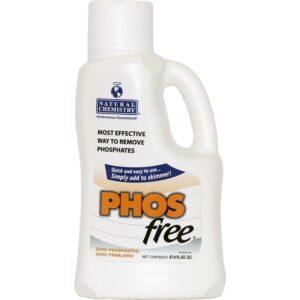
Natural Chemistry Pool Perfect + Phos Free Combines an enzyme clarifier with phosphate remover and addresses both cloudiness and the phosphate food source that feeds algae. More of a preventive maintenance product than an emergency fix, but excellent for ongoing water quality.
HTH Super Floc A traditional aluminum sulfate flocculant. Works fast and effectively for severe cloudiness. Requires vacuuming to waste afterward. Follow label directions carefully on pH impact.
Robarb Super Blue Clarifier A popular liquid clarifier that works as both a coagulant for mild cloudiness and can be dosed higher for more aggressive clearing. Has a strong following among pool DIYers.
Best Natural / Enzyme Option
Natural Chemistry Pool Perfect An enzyme-based product that breaks down oils, lotions, and organic waste rather than just coagulating them. Excellent for pools with heavy bather loads. Used regularly, it reduces the demand on your sanitizer and keeps water consistently clearer. Not a one-time fix product works best as a weekly maintenance addition.
SeaKlear Natural Clarifier Chitosan-based, highly effective, works at very low doses, and is compatible with saltwater pools. One of the most effective clarifiers per ounce on the market. Good choice for sensitive pools or anyone preferring a natural-derived chemistry.
How to Use Clarifier Correctly
For liquid clarifier:
- Test and balance your water chemistry first clarifier works better in balanced water
- Ensure your filter is clean. A dirty filter can’t capture the clumped particles effectively
- Dose according to label instructions based on your pool volume (this is why knowing your pool volume matters)
- Add by pouring slowly around the perimeter of the pool with the pump running
- Run the filter continuously for 24–48 hours
- Clean or backwash the filter after the water clears it will be loaded with captured particles
- Retest chemistry after clearing
For flocculant:
- Balance pH to 7.0–7.2 before adding (lower pH improves floc performance)
- Add floc per label instructions, circulate for 2 hours
- Turn the pump OFF and let water sit undisturbed for 8–24 hours
- Vacuum all settled material to WASTE. Do not filter it
- Refill pool to proper level
- Restart pump, retest, and rebalance chemistry
When Clarifier Won’t Help
Clarifier is not the right tool if:
- Chemistry is out of balance. Fix pH, alkalinity, and chlorine levels first. Cloudy water from chemistry imbalance won’t clear with a clarifier.
- Chlorine is very low or zero; you likely have a bacterial or algae bloom. Shock first, then clarify.
- Filter is dirty or undersized; clarifier creates particles for your filter to catch. A clogged or inadequate filter just recirculates them.
- You have a phosphate problem: high phosphates feed algae and contribute to chronic cloudiness. Use a phosphate remover alongside or instead of a clarifier.
- Water is green; that’s an algae bloom, not a filtration issue. Treat with shock and algaecide first, then clarify the dead algae aftermath.
Clarifier vs. Flocculant Quick Decision Guide
| Situation | Best Choice |
| Mildly dull or hazy water | Liquid clarifier |
| Moderately cloudy water | Liquid clarifier, higher dose |
| Severely cloudy, can’t see bottom | Flocculant |
| After algae treatment cleanup | Flocculant or heavy clarifier dose |
| Ongoing water quality maintenance | Enzyme clarifier weekly |
| Cartridge filter (no waste setting) | Liquid clarifier only no flocculant |
| Need results overnight | Flocculant |
| Want set-it-and-forget-it | Liquid clarifier |
Tips for Best Results
- Never overdose clarifier; too much actually reverses the coagulation effect and makes water cloudier. Follow label dosing carefully.
- Clean your filter before and after a clean filter makes clarifier far more effective; a loaded filter after clearing needs cleaning to restore flow
- Run the pump continuously while clarifier is working. Don’t run on a timer during treatment
- Retest chemistry after clearing the process can shift pH slightly, and balanced water is what keeps it clear going forward
- Use clarifier as maintenance, not just emergency treatment a small weekly dose of enzyme clarifier keeps water consistently polished and reduces the chance of sudden cloudiness
The best clarifier is ultimately the one matched to your specific situation: liquid polyquaternium for routine use, chitosan for a natural approach, enzymes for ongoing organic load management, and flocculant when you need fast, aggressive results and have a sand or DE filter to work with.






Leave a Reply