
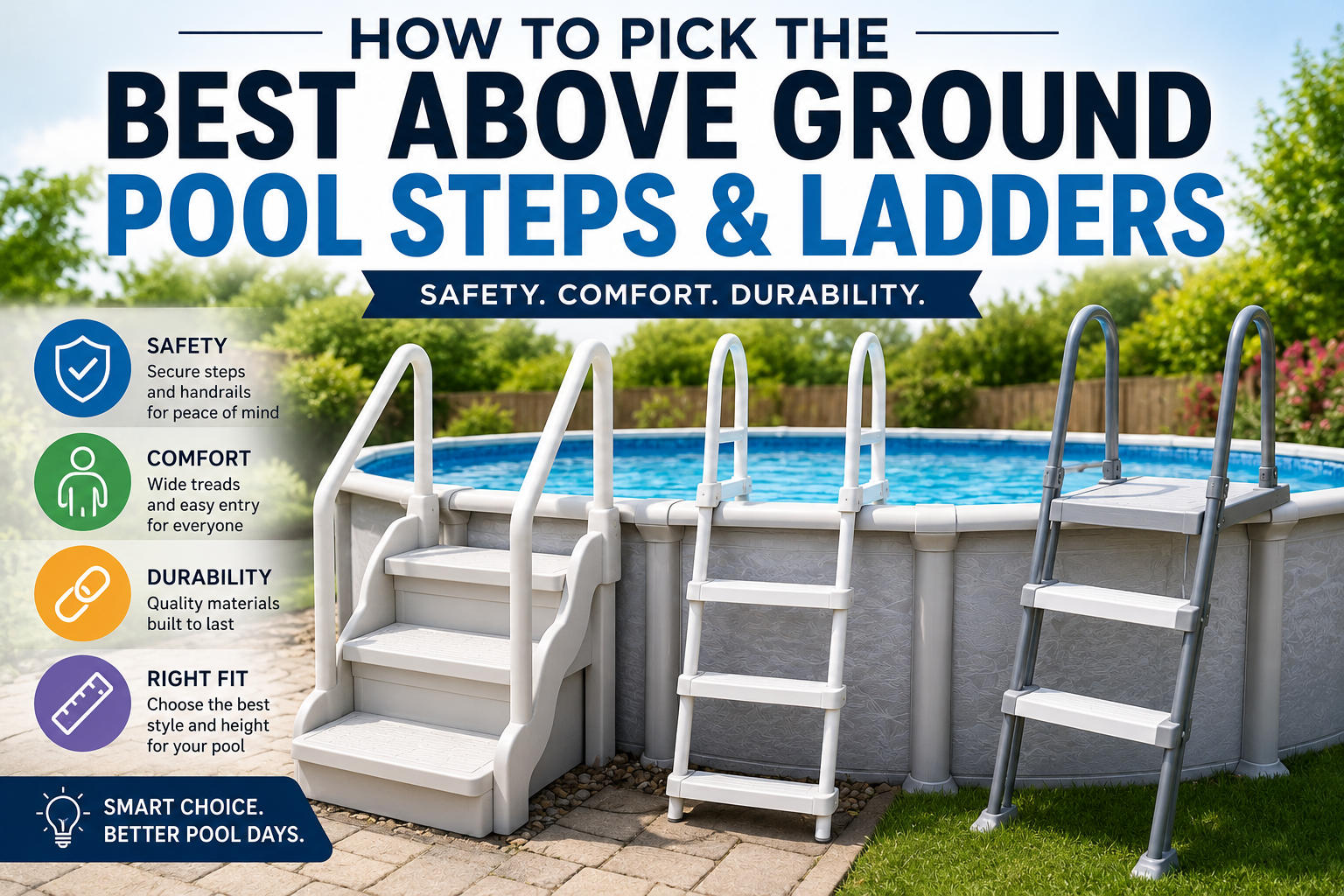
Choosing the right steps or ladder for an above ground pool comes down to a few key factors pool wall height, deck situation, user needs, and budget. Here’s a complete breakdown:
First: Ladder or Steps?
These terms get used interchangeably, but they’re actually different products with different use cases.
Ladders have rungs on both the inside and outside of the pool wall. You climb up the outside, swing over the wall, and climb down the inside. They’re the traditional solution for pools without a deck.
Step units (A-frame steps) work the same way but have wider, stair-like steps instead of narrow rungs more comfortable and safer, especially for kids and older adults.
Deck-mounted steps/ladders attach to an existing deck and only have steps on the inside of the pool, since you step directly from the deck into the pool.
Wedding cake steps / freestanding steps are large, wide stair units that sit inside the pool and connect to a small exterior platform. They’re the most comfortable and safest option but require more space and a higher budget.
Key Factors to Match to Your Pool
1. Pool Wall Height
This is the most critical measurement. Above ground pools typically come in these wall heights:
- 48 inches (4 feet)
- 52 inches (4’4″)
- 54 inches (4’6″)
- 60 inches (5 feet)
Every ladder and step unit is rated for a specific wall height range. Buy one rated for your exact wall height too short and it won’t reach properly, too tall and it will be unstable or sit awkwardly against the wall.
Measure your actual wall height, not the pool’s advertised size. Pool wall heights and overall pool depths aren’t always the same number, and real-world measurements sometimes vary slightly from spec.
2. Do You Have a Deck?
This is the second most important question because it determines which category of product you need entirely.
No deck: You need a freestanding A-frame ladder or step unit that supports itself on both sides of the wall.
With deck: You need deck-mounted steps or a deck ladder that attaches to the deck structure and only has interior steps. These are much more stable and comfortable since the deck does the anchoring work.
3. Pool Shape
Most ladders and steps are designed for round pools and fit along any straight section of wall. For oval or rectangular pools, make sure the product is compatible some step units are designed specifically for the straighter wall sections of oval pools.
Types in Detail
A-Frame Ladder
The most basic and affordable option. Two sets of rungs outside and inside are connected by a frame that straddles the pool wall.
- Good for: Budget buyers, simple pools without decks
- Watch for: Narrow rungs can be uncomfortable, less stable than step units, and not ideal for children or seniors
- Price range: $60–$150
A-Frame Step Unit
Same concept as the A-frame ladder, but with wide, flat steps instead of rungs. Much more comfortable and safer.
- Good for: Families with kids, anyone who finds ladders awkward
- Watch for: Takes up slightly more pool wall space than a ladder
- Price range: $100–$250
Wedding Cake / Freestanding Interior Steps
Large, wide, multi-step units that sit inside the pool. They connect to a small exterior step or platform outside the pool. The steps are wide and comfortable, the closest thing to in-ground pool steps for an above ground pool.
- Good for: Maximum comfort and safety, households with young children or elderly users
- Watch for: Takes up real pool floor space, higher cost, the exterior platform still needs to be stable
- Price range: $200–$600
Deck-Mounted Steps
Designed to attach directly to your pool deck. Only have interior steps since you access from the deck level. Much more stable and permanent-feeling than freestanding options.
- Good for: Anyone with an existing deck for a far superior experience
- Watch for: Must be properly secured to deck structure, deck height must match pool wall height
- Price range: $150–$400
Deck Ladder (Interior Only)
Similar to deck-mounted steps but ladder-style rather than stair-style. Hooks or mounts to the deck and drops into the pool.
- Good for: Smaller decks where a full step unit won’t fit
- Watch for: Less comfortable than full steps for frequent users
- Price range: $80–$200
Safety Features to Look For
Weight capacity: Check the stated weight limit and make sure it exceeds the heaviest user in your household with a safety margin. Most standard ladders handle 250–300 lbs; heavy-duty models go higher.
Non-slip steps: Look for textured, non-slip step surfaces. This matters especially when steps are wet.
Locking gate or removable steps: A critical safety feature if you have young children. The ability to remove the exterior steps or lock a gate prevents unsupervised pool access. Many A-frame models have a flip-up exterior step for this purpose.
Handrails: Wide, comfortable handrails on both sides make entry and exit significantly safer. Some budget ladders have minimal or flimsy rails worth upgrading for elderly users.
Bottom feet and bumpers: The feet that contact your pool liner on the inside should have large, flat pads to distribute weight and prevent liner damage. Check that the interior feet won’t puncture or stress your liner material.
Material Considerations
Resin/plastic: Most common, UV-resistant, won’t rust, lightweight. Quality varies significantly; look for thicker, reinforced resin rather than thin hollow plastic.
Stainless steel: More durable and stable than resin, but costs more and requires occasional attention to prevent surface corrosion in chlorinated water. Usually found on higher-end models.
Hybrid (resin steps, steel frame): A common middle-ground that gives you the corrosion resistance of resin where it contacts water and the strength of steel in the frame structure.
Avoid plain steel or aluminum that isn’t specifically rated for pool use chlorine and water will degrade it quickly.
Installation Tips
- Always use the included stabilizers and straps to secure the ladder to the pool wall. An unsecured ladder can shift or tip
- Place a ladder mat or pool pad under the interior feet to protect your liner from wear and pressure points
- Check and tighten all hardware at the start of each season, connections loosen over winter storage
- Remove and store the ladder during winter if you close the pool leaving it in place through freeze/thaw cycles stresses both the ladder and the pool wall
Quick Decision Guide
| Your Situation | Best Option |
| No deck, tight budget | A-frame step unit |
| No deck, kids or seniors | Wedding cake freestanding steps |
| Have a deck | Deck-mounted step unit |
| Small deck, limited space | Deck ladder (interior only) |
| Maximum safety for young children | Wedding cake steps + locking exterior gate |
| Rental or seasonal use | Basic A-frame ladder |
The single biggest mistake people make is buying based on price alone without checking wall height compatibility. Get that measurement right first, then match to your deck situation, and you’ll narrow the field quickly to the right product for your pool.




Leave a Reply