
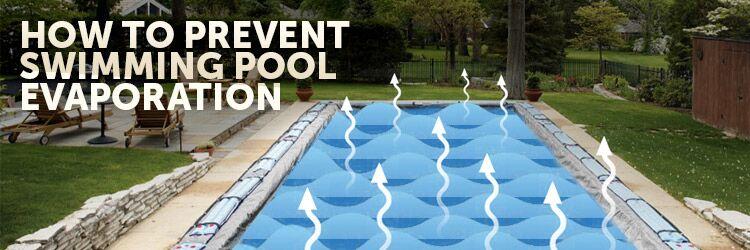
Did you know that the number one way swimming pools lose water is through evaporation? According to the Department of Energy, 70% of water loss in pools and spas is through evaporation. Of course, you also have leaks- which probably accounts for the second reason. But, how can you tell the difference? How do you prevent swimming pool evaporation?
Are you losing water because of everyday science or are you losing water because you have a leak somewhere? Honestly, both answers warrant an explanation, don’t you think? Let’s dig a little deeper.
Losing Water Through Evaporation
Everyone knows that evaporation is just the process of liquid forming into vapor. But, how does that fit in with our swimming pool? Evaporation occurs whenever you expose wind or air to the surface of your pool. So in short, this applies to every pool, all the time. Water molecules rise to the surface, form into a vapor and eventually get released into the air.
Heated pools on cool nights experience evaporation more rapidly. This is also why heated pools lose most of their heat overnight. Luckily for us, there are ways to fight evaporation.
Cover Your Pool and Spa
The best way to prevent evaporation is by purchasing a pool cover. According to a study by the National Pool Industry Research Center (NPIRC), pool owners can save a considerable amount in water savings by covering their outdoor swimming pools.
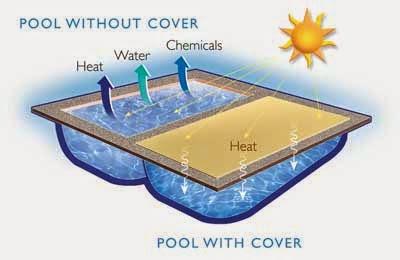
In fact, pool covers can reduce evaporation by 95%! Honestly, that alone is enough proof for me to consider purchasing a pool cover. However, there are other benefits to adding a cover to your pool.
In addition to preventing pool evaporation, pool covers also keep the warmth inside your pool. I mentioned earlier that when you’re losing water via evaporation, you’re also losing a lot of the heat generated by your heater or heat pump. The cover traps the heat inside the pool and reduces the energy demand on your pool equipment. Additionally, owning a pool cover reduces the number of chemicals you’re using, reduces the debris in your pool, and reduces the amount of time you operate your pump and filter.
Keep in mind, there are several different covers you can purchase for your swimming pool. Here is some more information on the types of covers and their benefits.
The 3 Cover Types for Above Ground Pools
Turn Your Pool Water Features OFF
I love pools that have extra cool features like waterfalls and jets. However, if you want to help prevent pool evaporation, we recommend turning them off from time to time. Waterfalls and jets increase the amount of water exposed to sun and air. As a result, they are also more prone to evaporation. Laminar jets or cascading waterfalls have the greatest chances of higher evaporation.
We recommend turning your water features off, especially when they are not in use. This can save you money on water and on chemicals. Of course, when you’re ready to entertain guests again, turn those babies on again.
Lower Your Water Temperature
As we know, warmer water evaporates at a faster rate than cooler water because the molecules are moving faster. As the temperatures drop, the warm water evaporates even faster. In warm water, molecules turn into mist, which evaporates quickly. This process accelerates when the temperature of the pool water is higher than the air’s temperature.
Cold water is more resistant to evaporation. Keep this in mind if you’re trying to prevent evaporation and save money on water.
How Can You Tell If You’re Losing Water From Evaporation?
One sure way to determine whether your pool is losing water from evaporation or from a leak is to perform a water bucket test. To perform a bucket test, complete the steps below.
- Fill your pool to its normal level. Using a standard bucket, fill it to 1 inch from the top with pool water.
- Place the bucket in the pool at about five inches. You can set it on the first or second step of your pool.
- Mark the water level inside the bucket and the water level outside the bucket. (You can use a marker or piece of tape)
- Return after 24 hours to compare the inside water level on the inside to the water outside.
If the water level outside of the bucket dropped more than the water level inside of the bucket, then you likely have a pool leak. At this point, we recommend calling a professional.
.
Make sure to check the bucket at the 24-hour mark to avoid inaccurate results. If it rains, wait until it stops to perform the test. It will obviously give you inaccurate results, as well.
Remember, losing water to evaporation is normal- until it isn’t. Purchasing a swimming pool cover is the ideal method to prevent swimming pool evaporation. Not only does it prevent water from escaping your pool, it also traps any heat your heater or heat pump generates.
If you’re losing more water than you think evaporation allows for, perform a water bucket test. The bucket test is the easiest and cheapest trick homeowners have available.






Leave a Reply