
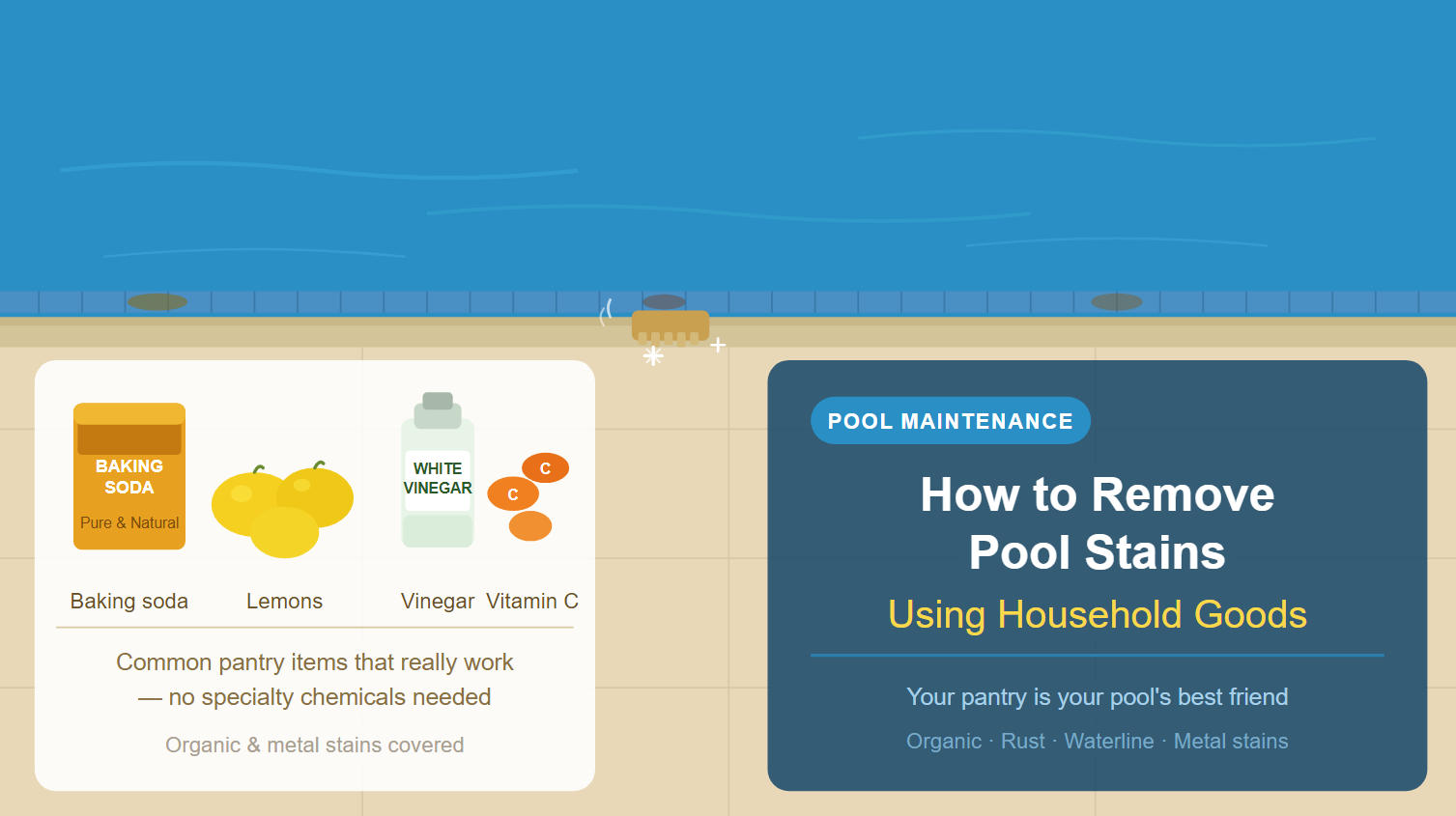
A sparkling pool is the centerpiece of any backyard so when stains appear on the walls or floor, it’s both an eyesore and a source of frustration. The good news is that many common pool stains respond well to ordinary household items before you ever need to reach for expensive specialty chemicals.
Identify the Stain First
Treatment depends entirely on stain type. Get this wrong, and you’ll waste time and money.
Organic stains (green, brown, or yellowish) come from leaves, algae, berries, insects, or other plant matter. They typically appear near steps, corners, and anywhere debris collects.
Metal stains are trickier. Iron leaves reddish-brown or rust-colored marks. Copper produces blue-green stains (often from corroding fixtures or algaecides). Manganese shows up as purple or black discoloration. Metal stains tend to follow the waterline or appear in patterns matching water circulation.
A simple test: hold a vitamin C tablet (ascorbic acid) against the stain for 30 seconds. If it lightens or disappears, you’re dealing with a metal stain. No change points to organic.
Removing Organic Stains
Chlorine and a scrub brush are your first line of attack. Granular pool shock (calcium hypochlorite) can be applied directly to a wet stain on plaster or concrete surfaces. Sprinkle a small amount on the spot, let it sit for a minute, and scrub firmly. For vinyl liners, dissolve the shock fully in water first, as undissolved granules can bleach and damage the liner.
Baking soda paste is gentler and works well on surface-level organic marks. Mix baking soda with just enough water to form a thick paste, apply it directly to the stain, and scrub in circular motions with a nylon brush. This works particularly well on steps and ledges you can access without getting in the water.
White vinegar can cut through light algae staining and general grime on pool tile and coping. Apply it undiluted to a sponge or cloth and scrub the affected area. It won’t work on deep stains, but it’s excellent for maintenance cleaning of the waterline tile where scum and light discoloration accumulate.
For stubborn organic stains on plaster, try placing a chlorine tablet directly on the stain and allowing it to sit (this works best when the pump is off and water is still). The concentrated contact can bleach the stain out over 30–60 minutes.
Removing Metal Stains
Vitamin C (ascorbic acid) is the household hero for metal stains. Crush several vitamin C tablets into powder and sprinkle directly onto the stain while the pump is running at low speed, or press a whole tablet firmly against the surface. The acid reacts with oxidized metals and visibly lifts the discoloration within minutes. This is temporary, it addresses the stain but not the underlying metal content in your water, but it confirms the diagnosis and buys you time to balance your water chemistry.
Lemon juice works on the same principle as vitamin C, since it contains citric acid. For accessible stains at the waterline or on steps, apply lemon juice directly and scrub with a stiff brush. It’s less concentrated than ascorbic acid powder but surprisingly effective on light rust marks.
Important Caveats
Test a small area first. Before attacking a large stain, try your chosen method on an inconspicuous spot. Vinyl liners, painted pools, and fiberglass surfaces are more sensitive than plaster or concrete.
Balance your water after treatment. Ascorbic acid and other acidic household products will lower your pool’s pH. Test and adjust pH, alkalinity, and sanitizer levels after any stain treatment to bring everything back into range.
Address the root cause. Stains are symptoms. Organic stains signal you need better circulation, brushing, and sanitizer levels. Metal stains mean metals are present in your source water or plumbing. A sequestering agent added regularly to your maintenance routine will keep them from precipitating out and staining again.
When to Call It
If household methods don’t move the stain after two or three attempts, you’re likely dealing with a deeply embedded stain or a surface issue beyond surface-level chemistry. At that point, a professional acid wash or specialized stain remover is the next step, but for most common pool stains, your pantry has more power than you might expect.







Leave a Reply