
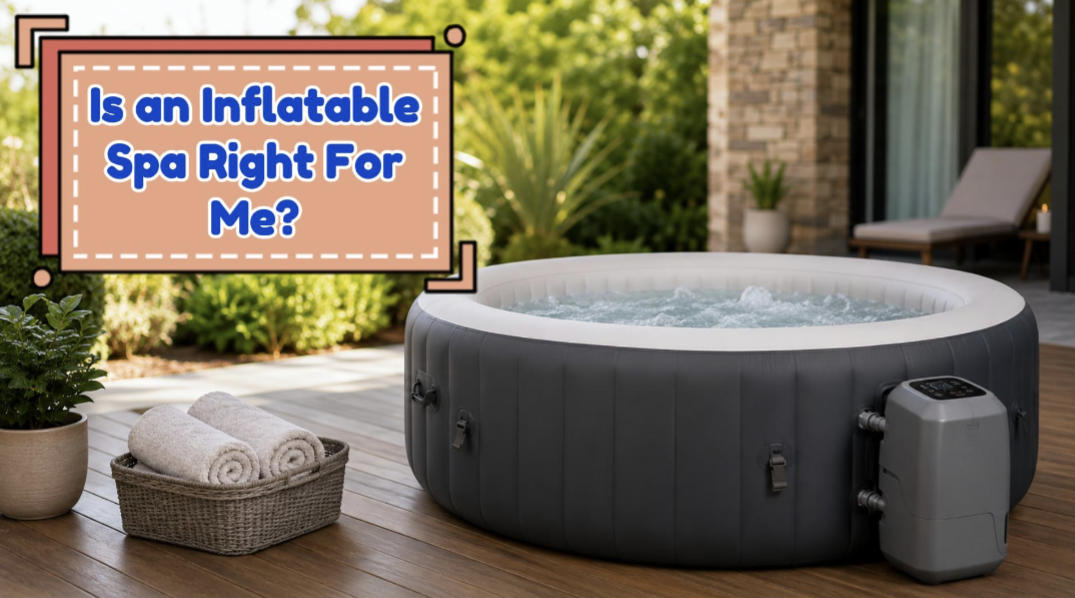
Inflatable pool spas (also called inflatable hot tubs) have exploded in popularity over the last several years, and it’s easy to see why the entry price is a fraction of a traditional hard-shell spa. But they come with real tradeoffs worth understanding before you buy.
Advantages
Low upfront cost
This is the big one. A quality inflatable spa runs $300–$800, compared to $5,000–$15,000+ for a traditional hard-shell hot tub. For someone who wants to try spa ownership without a major financial commitment, the barrier to entry is genuinely low.
Portability
You can deflate, pack, and move an inflatable spa, something you absolutely cannot do with a hard-shell unit. This makes them appealing for renters, people who move frequently, or anyone who wants to use it seasonally and store it in the off-season.
No permanent installation required
Hard-shell spas typically require a reinforced concrete pad, dedicated electrical work (usually 240V), and sometimes permits. Most inflatable spas run on a standard 110–120V household outlet and sit on any flat, stable surface, such as a deck, patio, or grass.
Easy setup
Most inflatable spas can be up and running in under an hour. Inflate, fill, plug in, and wait for the water to heat up. No plumber, no electrician, no contractor.
Decent hydrotherapy for the price
Modern inflatable spas produce genuine bubble massage through air jets. It’s not the targeted high-pressure hydrotherapy of a hard-shell spa, but for relaxation and general muscle relief, many users find it satisfying.
Storage flexibility
When winter comes, or you’re not using it, you can drain, dry, and pack it away, protecting it from freeze damage and freeing up your outdoor space.
Disadvantages
Air jets, not water jets
This is the most important functional difference most buyers don’t realize until after purchase. Inflatable spas use air bubble systems, not the pressurized water jets found in hard-shell spas. The experience is more like sitting in a warm, bubbly bath than receiving a targeted hydrotherapy massage. If jet pressure and muscle therapy are your primary goals, an inflatable will likely disappoint.
Heating is slow and expensive
Inflatable spas heat water slowly, typically 1–2°F per hour, and they lose heat quickly because the inflatable walls provide minimal insulation compared to hard-shell cabinet construction. In colder climates, your heater may run almost continuously just to maintain the temperature, leading to surprisingly high electricity bills. Many users find running an inflatable spa in winter impractical or cost-prohibitive.
Durability concerns
PVC and vinyl are not as durable as acrylic or fiberglass. Punctures, seam failures, and valve leaks are common complaints over time. Sun exposure degrades the material, and pets, sharp deck edges, or rough surfaces can damage the liner. Most inflatable spas have a realistic lifespan of 3–5 years, with good care, hard-shell spas can last 15–20 years.
Temperature limitations
Most inflatable spas max out at 104°F, which is standard, but they struggle to reach and hold that temperature in cold ambient conditions. In a mild climate, this is manageable; in a cold one, it becomes a real limitation.
Chemical maintenance is the same
Some buyers assume that because an inflatable spa is simpler, the water chemistry is simpler too. It’s not. You still need to manage pH, alkalinity, sanitizer levels, and shock on a smaller volume of water that fluctuates in temperature and gets heavy use relative to its size. Actually, small water volumes can be harder to keep balanced because chemistry swings happen faster.
No customization or upgrades
Hard-shell spas can be fitted with upgraded jets, lighting, waterfalls, ozone systems, and saltwater sanitation. Inflatable spas are essentially what they are out of the box; there’s very little room for customization or enhancement.
Comfort and aesthetics
Inflatable walls flex when you lean against them, the seating is flat rather than contoured, and the overall look is clearly temporary rather than a permanent backyard feature. For some people,e this doesn’t matter at all; for others, it’s a dealbreaker.
Liner and chemical compatibility
Standard pool and spa chemicals are generally safe for inflatable spas, but you need to be careful with concentrations. Adding chemicals directly to the small water volume without pre-diluting can bleach or degrade the liner. Always pre-dissolve and add slowly.
Who They’re Best For…
Inflatable spas make the most sense for:
- First-time spa owners who want to try the lifestyle before committing
- Renters or people in temporary living situations
- Seasonal use in mild climates
- Budget-conscious buyers with modest hydrotherapy expectations
- Anyone who needs portability or flexible placement
They’re probably not the right fit for:
- Anyone prioritizing jet pressure and targeted massage therapy
- Cold climate use as a year-round fixture
- Long-term ownership expectations
- Anyone wanting a permanent, aesthetically integrated backyard feature
The Bottom Line
An inflatable spa is a legitimate product for the right buyer; the expectations just need to match what it actually delivers. If you go in knowing it’s a warm, bubbly relaxation tool rather than a therapeutic spa substitute, you may love it. If you’re comparing the experience to a high-end hard-shell spa, you’ll likely be disappointed.
If budget is the primary constraint, but you want something more substantial, it’s also worth looking at the entry-level hard-shell spa market. Used or refurbished hard-shell spas can sometimes be found in the $1,500–$3,000 range and offer a significantly better experience than even the best inflatable models.


Leave a Reply