Home / Articles / Main Drains in Above Ground Pools

Main Drains in Above Ground Pools

Main Drains in Above Ground Pools

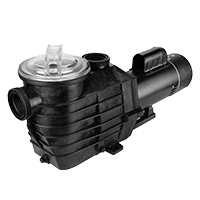
Fortunately for all of us, above ground swimming pools now mostly come with decent equipment at least. What I mean by “equipment” is a pump and filter. Many years back, above grounds only came with really crappy canister sand filters and undersized pumps.  They came with them to keep the cost down and who cared anyway. It was just an above ground pool. What do you expect?

Now, just about all the middle-of-the-road and higher end above grounds will have more than big enough pumps and filters and they are built to last many years. This is great, but there’s something that hasn’t changed with above ground pools and that is the skimmer and return openings in the wall. These openings are where the pump and filter hook up to the pool and they are both located high up and right next to each other.

This is not great for water circulation as the pool water is brought into the equipment by way of the skimmer box, gets filtered, and then the clean water returns to the pool through a fitting that is right next to the skimmer. So, you could have a 24’ round pool that is about four feet deep and have a great pump and filter, but it can only draw pool water in from the pool’s surface and then send it back to the pool right next to where it came from. What about the rest of the water in the pool especially the water at the bottom? How does that pool water get through the pump and filter?

With above grounds there is always the potential for all the water not to be making it evenly through the equipment and therefore causing chemical balance issues due to poor circulation. There are three ways an above ground pool can get better circulation.  You could get and use an automatic pool cleaner, add a return line or two, or you could have a center bottom main drain. Out of these three options, the main drain is clearly my favorite so that is what I’m going to go over in this blog post.

Main Drains (They’re Not Just for In-grounds)

When you consider getting an above ground pool, you’ll get a few upgrades or options to choose from to make the pool better or easier to take care of. A main drain won’t be one of them as they would be hard to sell as a kit and wouldn’t be profitable enough for retailers. As a result, many who get an above ground pool and are willing to spend more for extra things never even hear about a main drain.

Everyone seems to know that all in-ground pools have main drains, but it occurs to just a few that vinyl lined above grounds can have them too. And, they are great for keeping the pool cleaner and for much better circulation. It does take more than a screwdriver and duct tape to install one, so unless you have some plumbing knowledge, you do-it-yourselfers should maybe leave installing one to the pool installer.

Installing a Main Drain

As stated above, installing a main drain in an above ground pool on your own may not be the best idea as it takes some doing. First off, a main drain requires that the liner gets cut in order for the water to travel to the filter and that’s always a scary proposition. Though, it can be done fairly easily if you know how. Installing a main drain won’t be the hardest thing you’ve ever done that you didn’t know much about, but it’s that whole “cutting-a-hole-in-the-liner” thing that is spooky. And, it should be as having a leaking pool really sucks. So, if I didn’t deter you enough and you want to attempt it, here are  step-by-step instructions to help you hopefully get it right.

Materials needed:

  1. One main drain for vinyl pools. I say one, because they will come in packs of two as in some places, the code is to install two main drains.
  2. Approximately 20 feet of 1.5” schedule 40 PVC pipe.
  3. At least three 1.5” male threaded to slip, one 1.5” coupling, three 1.5” elbows, and one 1.5” tee PVC fitting.
  4. Medium PVC glue, 100% silicone, a hacksaw, a tape measure, a shovel, and a torpedo level (if you want it to look good).
  5. Two 1.5” PVC ball valves.
  6. A sharp utility blade, duct tape, and a #3 Phillips screwdriver.

I. Dig the trench

Measure in from the pool track or wall in three different places to determine the center of the pool. Example: For a 24’ round pool, measure in 12’. Mark the center and dig a trench toward the right side of where the pool skimmer is. You won’t want to dig too deep as the drain should be installed level which doesn’t allow you to bury the piping very deep.

II. Prepare the main drain

Silicone in the bottom threaded plug and silicone the threaded male to slip fitting and glue a full piece of pipe to it. Important: Duct tape the entire top opening of the main drain with the bottom gasket in place and lined up with all the screw holes. The duct tape should be one uniform layer. Doing this will completely cover the inside of the drain and its screw holes.

III. Set the main drain

Place the main drain with its attached pipe in place. Use a torpedo level and use your hands to pack the earth around it until it is firm. Use a patio block underneath it so that it has something firm to rest on.

IV. Continue with the piping

Once the main drain is set you’ll have the pipe it’s attached to in the trench you dug, but it won’t be complete. Continue plumbing by adding more of the pipe to go out of the pool’s bottom and then glue a piece upward toward the pool’s pump. Once all the piping in the trench is set and glued, go ahead and bury it. This will leave only the pipe that’s sticking up outside of the pool visible.

V. Plumb in the valve

Glue in one of the ball valves to the pipe that is now coming from your main drain. You can glue it vertically or for a nicer look, glue it horizontally. Now continue piping your line beyond the valve that you have just installed and head towards the pump.

VI. Connect the line to the pump and skimmer

You are almost done, but this is the hardest plumbing part. Locate the pool’s skimmer and plumb PVC piping from the bottom of it towards the pump and add the other ball valve to that line. You should now have two PVC lines, each with valves, heading toward the front of the pool pump. Using a “tee” fitting, connect the two lines to the pump with piping.

Try to make it look straight and nice, if you can. If you can’t, it’s no big deal. It’ll still work as long as you have glued every fitting well. Yeah, you want to make sure you glue everything properly. You can now finish installing the pool’s liner.

VII. Cutting in the main drain (Yikes!)

Now it’s time for the hard part. Just kidding. Cutting for the main drain is really easy. Stressful, but easy. Set your pool’s liner and get all the wrinkles out whatever way YouTube tells you and start filling with water. Let the pool fill at least a few inches or more. As the pool fills, you’ll start to see where the top of the main drain is at the bottom of the pool. The weight of the water will press down and the main drain’s screw holes will become visible.

ALERT: Don’t cut anything yet!  When you can see the screw holes, take the main drain ring and gasket and carefully screw the ring down onto the main drain. Screw directly through the liner. There are about 10 screws so get that ring screwed down tightly all the way around.

Once the ring is firmly screwed in place, cut the liner along the inside of the ring and remove. You should now see the inside of the drain. Now you can screw down the lid and you’re done. Congratulations, you did it! The only thing left to do is pray you have glued everything right.

author avatar
Dan Dougher

Related Videos

76 responses to “Main Drains in Above Ground Pools”

  1. Cheryl Avatar

    We have a 30ft round above ground pool about 1 and 1/2 years old. It was installed by the pool store we bought from and we had 2 drains installed which they recommended. We started losing a lot of water in our pool and couldn’t figure out why. The only thing that has stopped the loss of water was to close off the drains. No water loss since we closed them. I assume this mean we have a leak in the plumbing for the drains? I guess we will leave the drains closed off until the spring and figure out what to do then.

    1. Dan Dougher Avatar

      Hi Cheryl. Yes, I’d say you are right but you still should be losing some water as the line is only off at your equipment(valve). Make sure you are not leaking after that valve.

  2. Matt Avatar

    I have a question. We are having put in our first pool, in ground, 5 foot deep at its deepest (3 1/2 to 5 foot). It comes with two main drains but I am concerned as we will constantly be standing on them or walking over them. We chose a shallower pool so we can hang play volleyball, basketball, etc. I’m worried about stubbing toes or the annoyance of constantly walking over them. Any suggestions on this concern? The pool company said they would remove them and add an additional skimmer but didn’t recommend it for filtration reasons. Thank you in advance!!

    Matt

    1. Matt Avatar

      Additional mention, we were planning to get one of those pool robots to clean the pool, if that makes a difference at all. Thanks again!

    2. Dan Dougher Avatar

      Main drains don’t usually bother people. And you are in the water so it’s highly unlikely for any toes getting stubbed. Unless you are planning on having a fast wading competition. Some times auto cleaners will get caught on main drains so that may be an issue.

  3. Jeremy Avatar

    You mention that a main drain will help keep the pool cleaner and provide better circulation. So does that mean I should keep both ball values open when in normal filter mode? Does it hurt the pump/filter that water is being pulled in from the bottom of the pool which may have leaves and debris and is not being pre-filtered through the skimmer basket? I guess there is a filter basket attached to the inlet side of the pump. Or, should I keep the ball value from the main drain closed, and only have the skimmer open?

    1. Dan Dougher Avatar

      You definitely keep the main drain open if you want its benefits. The pump basket will have to be cleaned more often.

  4. Amber Richardson Avatar

    We are in the process of changing out our liner in our above ground pool we removed the old one and had about a foot of water under the liner which we removed all the water by the next evening it was full of water again. What could be causing this ? There is no water currently attached to the pool the filter and pump are not hooked up as well. We still have the main drain in the pool. Please help we want to get the new liner in but with the bottom of the area filling up we don’t want to ruin it:(

    1. Dan Dougher Avatar

      Mmmmm. I think you failed to mention that your pool is in the ground at least some. I know this because if the old liner were out and the pool was on top of the ground, it couldn’t hold any water. Sooo, the pool is in the ground and there is water that didn’t come from a pump or anything? What could it be? How about ground water? Yes. believe it or not, there is water in the ground. Sorry but you may have to wait until the dry season to get a new liner in it. And now since you have time, do a Google search on groundwater table.

  5. Jerry Shannon Avatar

    I have a 21×41 above ground doughboy pool that is cut into the side of a hill and have decking completely surrounding the the pool. would love a bottom drain. My solution in leu of cutting on in and having to drain the pool was to make a bottom drain on top of the liner. Instead of using the trick of turning the pool cleaner brush upside down on the bottom of the pool, I used 20′ of 1.5 inch pvc plumbed into the skimmer port used for the traditional flex hose vac brush. The 1.5″ pipe just uses couplings but not glued and on the end a 90 degree elbow. I cut in two T fitting with short pieces of pipe as stabilizers to keep the elbow from moving and then use it like a more stable bottom vac. It comes out vast, can’t tip over and suck the lining and I just hang it off the back of the deck out of site and put it in when I need it. Never in when the pool is in use.

    1. Dan Dougher Avatar

      Wow. Sounds over complicated. The things people do! If you get tired of dealing with all that mess, you can instead set up your vac hose like you are vacuuming and just leave it in the pool with the vac head at the bottom. Add a diverter valve to the hose end inside the skimmer if you want some skim action at the same time.

  6. Jack Avatar

    Jack again, do you have a preferred brand or type of drain box to use?

    1. Dan Dougher Avatar

      I use Hayward drains.

      1. Jude Avatar

        We have Hayward drains but how do you determine if they are working? There is no suction or pressure of any kind.

      2. Mandy meadows Avatar

        I have to tell you we have a vogue pool with a concrete bottom and a main drain that you can drain from the pump. We also are able to drain the pool from our Hayward pump. We just installed another liner after 10 years of heavy use. This pool has held up no rusts whatsoever. My pool installer said he had never seen another pool as good a shape as ours or never seen a main drain in an above ground pool. He said our pool is one of the best constructed pools he has ever seen.

  7. Jack Avatar

    Thanks so much for the write up. I’m about to do the bottom drain thing. I did it 30 yrs. ago but my process has eluded me after that much time. You made some great suggestions. Every one tells me, “oh you don’t want to do that.” And I tell them I did it before and all I get is, “ok good luck, buy some liner patch.” Most guys are afraid to step out beyond the norm. Thanks again for the tips. it is such a more efficient way to circulate water and disperse chemical and heat the pool…

    1. Dan Dougher Avatar
  8. Lloyd j Avatar

    What about using the 2 drain system for code , and set them in cement in the ground? Is that ok?

    1. Dan Dougher Avatar

      Yes that’s ok.

  9. kk Avatar

    can i install a bottom drain kit on an intex type pool?

    1. rory Avatar

      yes with care

  10. Alex Avatar

    I have a 22 x 52″ above ground pool with a main drain. I can’t open the main drain to drain the pool. I admit there is 10,000 gallons of water sitting on it, but I should still be able to open it. When I got it open for 3 seconds, the exiting water closed it again. REALLY???

    My preference is to open it from the outside and then connect the hose to drain the water properly. Now that the season is over the water is very cold. 52″ of ice water is a lot to stick your head under to pull the plug. I’m open to any suggestions.

    1. Dan Dougher Avatar

      I’m gonna guess you are referring to an Intex type pool and the main drain you are referring to is the drain plug on the bottom side of the pool? If so, you can maybe shove a stick or rod through and leave it in there to let the water drain out.

    2. Peter Avatar

      Hi Dan,
      I am hoping you may be able to answer my question pertaining to a center drain setup in a 21′ round above ground pool. We bought our house in the fall and had a company come winterize it. A month or two into the winter it turns out they did not correctly blow out the lines. So the water pressure built up and apparently one of the ball valves blew apart, pieces halfway across the yard. And the pool drained almost completely.

      I called another pool guy in and, in the interest of time during bad weather, he cut the PVC coming from the center drain so that he could plug it. But he cut the line low (it used to be at the same level of the skimmer); I guess he needed to do it that way to deal with gravity when blowing out the lines?

      A) I hope my explanation made any sense to you.
      B) Is there any way to salvage that center drain setup without having to tear everything apart?

      Thank you for your time.

Leave a Reply

Your email address will not be published. Required fields are marked *