

As fall approaches and the leaves on your trees begin to change colors, there is one question pool owners ask themselves every year, “Should I close my pool for winter or leave it open?” Sure, there are certainly benefits and drawbacks to both. However, closing your pool is a personal decision. What one pool owner decides may not be the best option for your pool.
If you’re unsure and at a loss at what to do with your pool this year, don’t worry. We are breaking down the pros and cons to keeping your pool open during the winter.
Keeping Your Pool Open
Winterizing your swimming pool is a personal decision. Your physical location may also play a role in your decision. However, there are some things you should take into consideration before you make the decision to keep your pool open for the winter.
Freezing Pool Lines
One of the main reasons a pool owner might close their pool is to protect their equipment and avoid any damage caused by freezing temperatures. So, how do you prevent your lines from freezing during the winter? It’s simple, keep your pump on. Running your pool pump keeps a constant flow of water and prevents your lines from freezing and pipes from bursting.
 As an extra precaution, we also recommend purchasing a pool timer with freeze protection. Freeze protection protects your pool/spa equipment and plumbing against freeze damage. The timer turns your pump and heater ON when the outdoor temperature drops below the set temperature. This is an excellent feature to have especially in areas of the US that are prone to freezing temperatures. You never want to wake up in the morning to frozen lines and a busted pump.
Maintaining Your Pool
Another responsibility for pool owners who keep their pools open is maintaining their pool. If you decide to keep your pool open, you have to maintain your pool throughout the winter. This includes balancing your water, cleaning your filter, and maintaining your pool equipment.
 Most pool owners might assume that this also means a lot more money for chemicals. However, this isn’t necessarily true. In most cases, pool owners use fewer chemicals during the winter than spring and summer.
The cooler temperatures preserve the chemicals in your water. That means you are losing less chlorine and water through evaporation. As a result, you might consider reducing your pump’s runtime because the demand for chlorine is not as high.
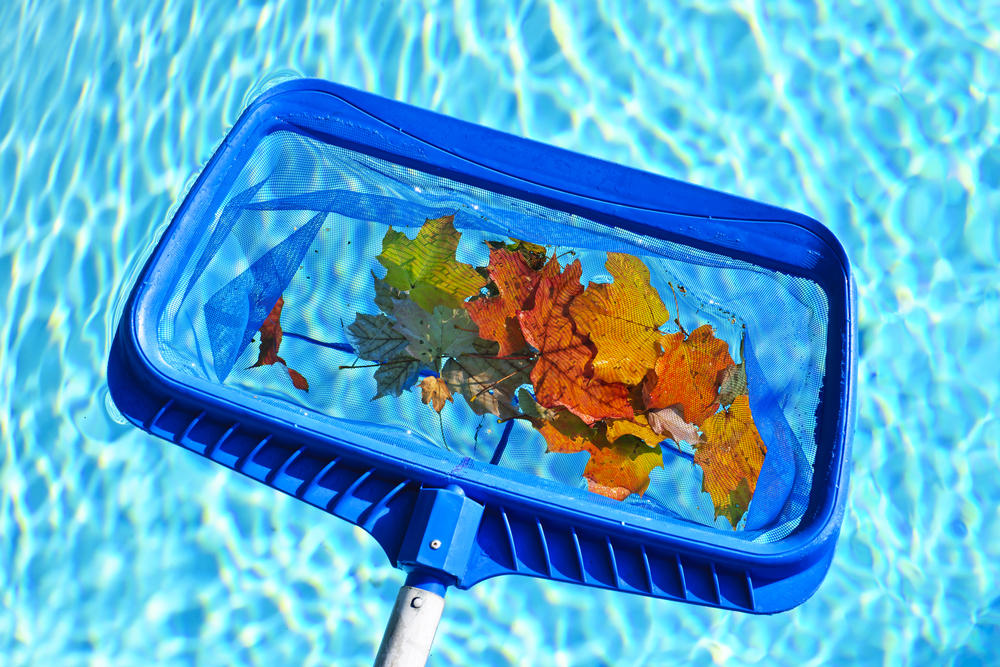
I’ll be honest, though, you might clean a little more during the fall season. Usually, for about three weeks or so, pool owners can expect to clean leaves and debris from the inside of their pools. It is called fall for a reason, right? For some, this may be the only reason they need to close their pool for winter. Depending on your location, the number of leaves that end up in your pool can produce a lot of unwanted labor.
Power Failure?
I’m from Florida, so we are very familiar with power outages and the costs it can have on your families, houses, and pools. In the case of power outages, you always want to be prepared.
- Immediately loosen all of the drain plugs on your pump, heater, and filter drain plugs.
- Turn OFF your breaker. (This protects your pump should the power return on.)
- Close pool lines valves
- Open the filter air bleeder
Other Things To Consider
Salt Systems
There are other things you should consider before keeping your pool open. First, if you are using a salt system on your pool, pay close attention to the temperature threshold. The majority of salt systems stop working once the temperature drops below a certain degree. (This is also true for heat pumps) Still, pool owners shouldn’t fret. As mentioned earlier, the colder temperatures make sanitation less of a problem. That means your pool should be fine without operating your salt system for a few months. Make sure you test your pool water and maintain the proper chemical levels on a regular basis.
Price
Pool owners also worry about the cost to keep their pool open for winter. Yes, you will purchase more chemicals and use more electricity during these months, however, keeping your pool open also forfeits you from purchasing a safety or winter cover. Depending on the quality, grade, and type of cover you purchase, it can easily outweigh the cost of chemicals. In most cases, it can be an even wash.
Pool owners who keep their pools open also spend less money on chemicals once spring comes. On top of that, they are usually the first ones enjoying their pools in spring, as well. Pool owners who close their pools for winter tend to have bouts with algal growth. If you’ve ever experienced algae in the beginning of spring, you understand the amount of time and money spent balancing your pool.
Closing Your Pool
If you’re looking forward to your freedom away from pool duties or simply want less responsibility for a few months, then closing your pool is probably the best option for you. Sure, it’s great to look (and listen) to your pool all year long, but it definitely comes with a price. 
Pool owners should follow our blog and read the how-to guide on winterizing their pool. We provide tips and insights for winterizing inground and aboveground pools.
CLOSING YOUR POOL FOR THE WINTER (blog)
HOW TO WINTERIZE AN ABOVEGROUND POOL (video)
HOW TO WINTERIZE AN IN-GROUND POOL (how to)






Leave a Reply