
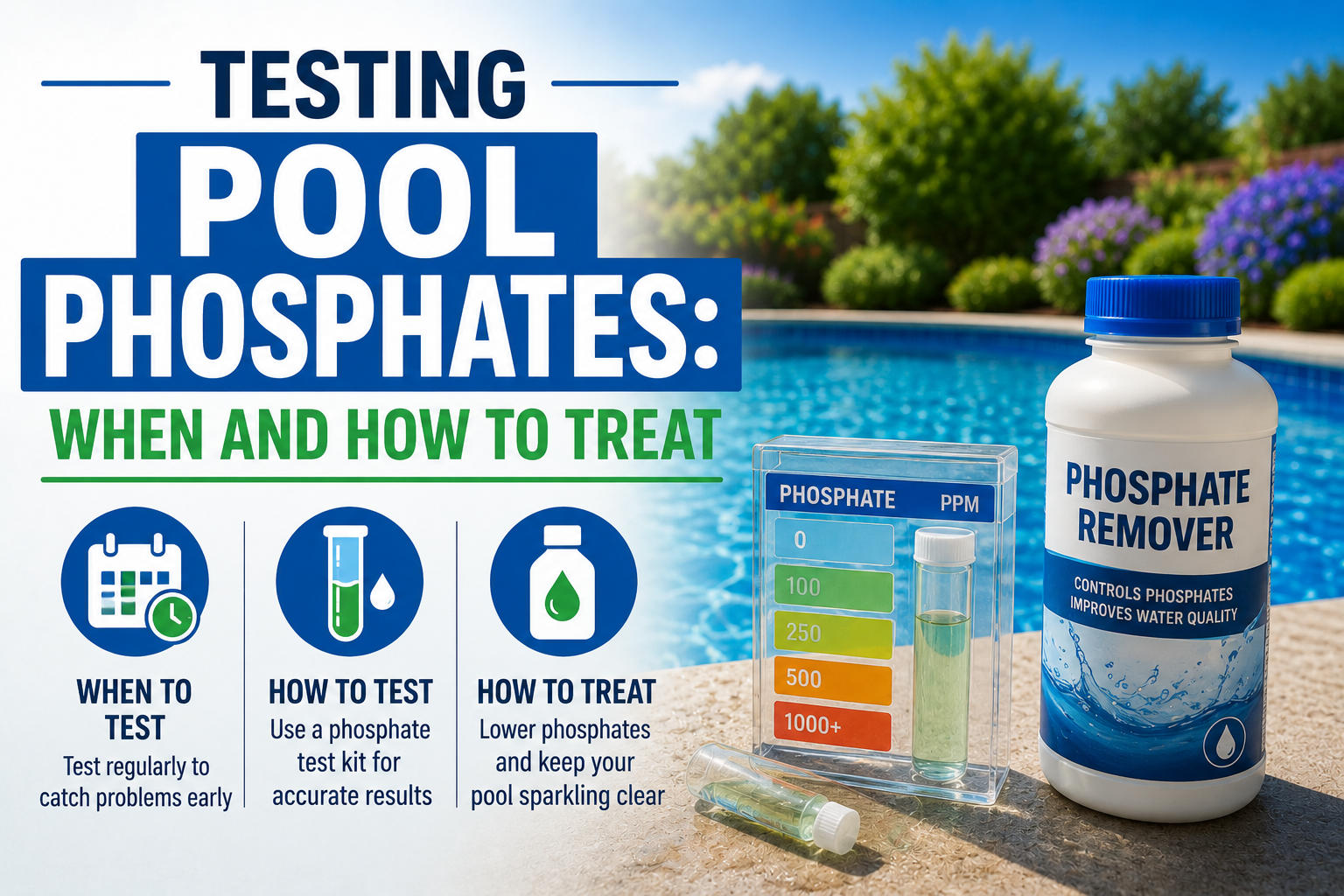
Phosphates are one of those pool topics that generate a lot of debate. Some pool professionals treat them as a critical issue; others dismiss them entirely. The truth sits somewhere in between, and understanding what phosphates actually do (and don’t do) helps you make smart decisions about testing and treatment.
What Are Phosphates and Where Do They Come From?
Phosphates are naturally occurring compounds containing phosphorus that enter your pool from a surprisingly wide range of sources:
Environmental sources:
- Rainwater and runoff carries phosphates from soil, fertilizers, and organic debris
- Wind-blown dust, pollen, and leaves
- Algae and organic debris decomposing in the water
- Fill water from your municipal supply or well many water sources contain measurable phosphate levels right out of the tap
Bather-introduced sources:
- Sunscreen and body lotion
- Sweat and body oils
- Cosmetics and hair products
- Urine (a significant phosphate source)
Chemical sources:
- Some pool chemicals actually contain phosphates. Certain stain removers (Jacks Magic Magenta Stuff), metal sequestering agents, and even some clarifiers introduce phosphates into the water
- Some pool algaecides and tile cleaners
- Certain fertilizers used near the pool area
Why Phosphates Matter and Why They Don’t
The case for treating phosphates
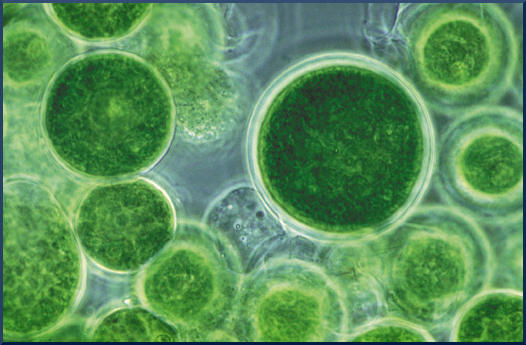
Phosphates are the primary nutrient that feeds algae. Algae can’t grow without a food source, and phosphorus is essential to algae metabolism. High phosphate levels create ideal conditions for algae blooms. Even when your sanitizer levels are correct, abundant phosphates give algae the fuel they need to establish and grow rapidly.
Pools with chronically high phosphates often experience:
- Persistent algae problems despite adequate chlorine
- Higher-than-expected chlorine consumption
- Water that never quite looks sparkling despite correct chemistry
- Frequent green or cloudy water after rain events
The case against obsessing over phosphates
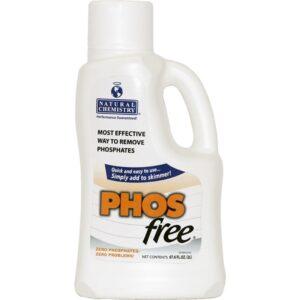
Chlorine kills algae. A properly sanitized pool with correct chemistry can resist algae growth even at elevated phosphate levels. Some pool professionals argue that phosphate removal is unnecessary if your sanitizer levels are well maintained.
The balanced view: Phosphate control is most valuable as a preventive strategy, particularly for pools that struggle with recurring algae or are in environments with heavy phosphate loading (near landscaping, heavy tree cover, or areas with high-phosphate fill water). It’s not a substitute for proper sanitization; it’s a complement to it.
What Level of Phosphates Is a Problem?
This is where you’ll find varying opinions:
- Below 100 ppb (parts per billion): Generally considered low and non-problematic
- 100–300 ppb: Moderate worth monitoring, manageable with good sanitization
- 300–500 ppb: Elevated algae risk increases; phosphate removal is recommended
- 500+ ppb: High treat promptly, especially before warm weather or heavy use periods
- 1,000+ ppb: Very high significant algae risk, immediate treatment warranted
Note that phosphates are measured in parts per billion (ppb), not parts per million (ppm) like most other pool chemistry parameters. This trips people up when reading test results.
How to Test for Phosphates
Test Strips (Phosphate-Specific)
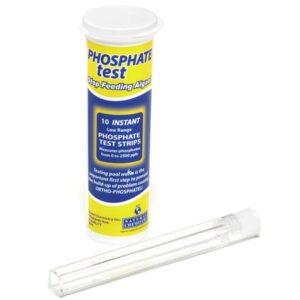
Standard pool test strips typically do not test for phosphates; you need phosphate-specific strips. These are available at pool supply stores and online.
- Pros: Fast, convenient, no equipment needed
- Cons: Less accurate than liquid tests, color matching can be subjective, limited range on some strips
- Best for: Routine monitoring to check whether phosphates are present and roughly how high
How to use:
- Dip the strip in pool water at elbow depth for the time specified on the package (usually 2–5 seconds)
- Hold it level, don’t shake
- Compare the color pad to the chart within the time window specified (usually 15–30 seconds)
- Read the result in ppb
Liquid Reagent Test Kits
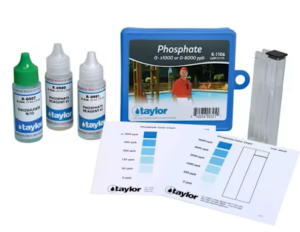
More accurate than strips. Taylor Technologies and LaMotte both make phosphate test kits that use a colorimetric reagent system.
- Pros: More precise readings, reliable across a wider range
- Cons: Takes more time, requires careful color matching
- Best for: Confirming strip results, troubleshooting persistent algae problems, getting accurate readings before treatment
How to use:
- Fill the test tube to the indicated line with pool water
- Add the specified number of reagent drops
- Cap and mix gently
- Compare the resulting color to the color chart
Digital Photometer
The most accurate option for home testing. Devices like the LaMotte ColorQ or Hanna Instruments photometers eliminate color-matching subjectivity by reading the sample electronically.
- Pros: Lab-quality accuracy, easy to read, eliminates human color perception error
- Cons: Higher upfront cost ($100–$300+)
- Best for: Pool owners who want precise readings, pools with recurring phosphate-related problems
Professional Water Testing
Your local pool supply store can test your water for phosphates, often for free or a nominal fee. This is the easiest way to get an accurate baseline reading without purchasing test equipment.
When to test:
- At pool opening as part of your start-up testing
- After heavy rain or runoff events
- When algae keep returning despite good chlorine levels
- When chlorine consumption seems unusually high
- Monthly during peak swimming season if you’ve had phosphate issues before
How to Remove Phosphates
Phosphate Removers (Lanthanum-Based)
The primary and most effective treatment. Commercial phosphate removers use lanthanum chloride or lanthanum carbonate, rare-earth compounds that react with phosphates in the water to form an insoluble precipitate (lanthanum phosphate) that your filter then captures.
How they work: Lanthanum ions bond with phosphate ions and fall out of solution as a fine white or cloudy precipitate. Your filter catches this material and removes it from the water. The reaction is fast you’ll often see water clarity change within hours.
Popular products:
- Natural Chemistry Phosfree – one of the most widely used, concentrated formulas, treats high phosphate levels effectively
- Lo-Chlor Lo-Phos Max Phosphate Remover – highly concentrated, requires smaller doses, popular with pool professionals
- SeaKlear Phosphate Remover – effective, widely available
How to use lanthanum-based phosphate removers:
- Test your phosphate level first. You need to know the starting concentration to dose correctly
- Clean your filter before treatment. The precipitate will load your filter, so start with a clean one
- Balance your chemistry correct pH (7.4–7.6) and alkalinity before treating
- Dose according to label instructions based on your pool volume and phosphate level
- Add slowly pour around the perimeter of the pool near the returns with the pump running. Do not dump it in one spot.
- Run the pump continuously for 24–48 hours
- The water may become temporarily cloudy; this is normal and is the precipitate forming. Don’t panic.
- Clean or backwash your filter after 24–48 hours; it will be heavily loaded with captured precipitate
- Retest phosphate levels after filtering clears. You may need a second treatment for very high levels
Important cautions:
- Do not overdose too much lanthanum chloride can cause severe water cloudiness that takes days to clear
- Some products are not compatible with certain algaecides. Read labels carefully
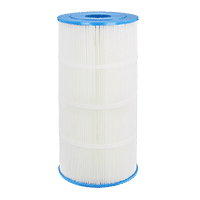
- If you have a cartridge filter, you’ll need to clean it more frequently during treatment, as precipitate loads quickly
- Lanthanum-based removers can affect water clarity temporarily. Don’t treat right before a pool party
Aluminum Sulfate (Alum)
An older treatment method that works similarly: aluminum ions bind with phosphates and precipitate out. Less commonly used now that lanthanum-based products are widely available, because alum also affects pH and alkalinity and requires careful handling.
Partial Drain and Refill
If phosphate levels are extremely high (1,000+ ppb) or if the water has very high TDS, a partial drain and refill with low-phosphate source water can quickly reduce levels before chemical treatment.
- Replace 25–50% of the water volume
- Test the source water for phosphates first. Some tap water sources are surprisingly high
- Follow with a phosphate remover treatment if levels are still elevated after refilling
Enzyme Products
Enzyme-based pool products (Natural Chemistry Pool Perfect, for example) break down the organic compounds that contribute to phosphate loading: body oils, sunscreen, and organic debris. They don’t remove existing phosphates directly but reduce the ongoing rate at which new phosphates enter the water.
Used consistently as a weekly maintenance product, enzymes help keep phosphate levels from climbing over the season.
Treating Very High Phosphate Levels
For levels above 1,000 ppb, a single treatment often isn’t enough. The approach:
- Start with a partial drain if levels are extremely high (2,000+ ppb). Dilution makes chemical treatment more effective and economical
- Apply phosphate remover at the label-recommended dose for your current level
- Run filter continuously, clean frequently
- Retest after 48 hours
- Repeat treatment if levels are still above 300 ppb
- Maintain with weekly enzyme product once levels are controlled
Some pool professionals do two back-to-back treatments spaced 48 hours apart for very high levels rather than one massive dose; this is gentler on the filter and water clarity.
Preventing Phosphate Buildup
The most cost-effective phosphate strategy is prevention:
Landscaping and environment:
- Avoid using phosphate-containing fertilizers near the pool or apply them when there’s no rain forecast, and the pool is covered
- Keep trees and shrubs near the pool trimmed to reduce leaf and debris fall
- Use a pool cover when the pool is not in use to keep organic debris and runoff out
Bather habits:
- Shower before swimming removes lotions, sunscreen, and body oils that contribute phosphates
- Encourage bathroom breaks; urine is a significant phosphate source
Chemical selection:
- Check labels on stain removers, sequestering agents, and specialty chemicals; choose phosphate-free formulations where available
- Test your fill water for phosphates. If your tap water is high, you’re starting every refill with a phosphate load
Maintenance:
- Use an enzyme product weekly to reduce organic phosphate precursors
- Clean the filter regularly a clean filter removes more phosphate precipitate
- Test monthly during swimming season and treat proactively rather than reactively
The Bottom Line on Phosphates
Phosphates won’t make your pool unsafe to swim in on their own, and they won’t cause problems if your sanitizer is dialed in and maintained consistently. But they are the underlying reason many pools struggle with chronic algae issues that don’t respond well to shocking and algaecide alone.
Think of phosphate control as removing algae’s food supply. Combined with proper sanitization, it’s one of the most effective long-term strategies for a consistently clear, algae-free pool especially in environments where phosphate loading is heavy. Test at opening, test when algae keeps coming back, and treat when levels climb above 300 ppb. That simple approach handles the vast majority of phosphate-related pool problems before they become expensive, frustrating algae battles.







Leave a Reply