
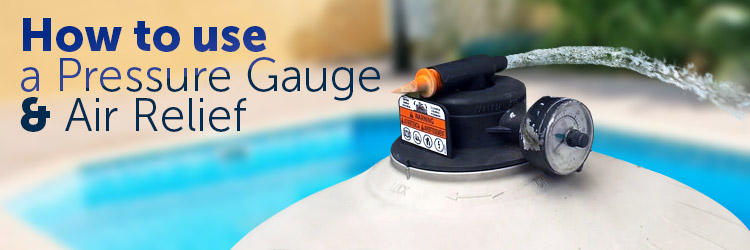
A pool filter is a rather passive piece of equipment. With no electrical components and no moving parts unless you include valve handles, it is mainly a tank that water flows through. But there is still a complex swirl of activity going on in there, and part of that is pressure.
Pressure Gauge
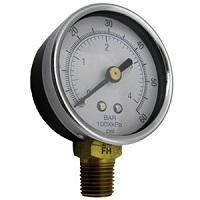
To get a read on this, your filter has a pressure gauge usually found on top of the tank. The gauge has a round face numbered 0 – 60, a needle that indicates the pressure in pounds per square inch (psi), and a clear protective lens. This small part is key to maintaining your filter and therefore your entire pool.
What’s Normal?
For your pressure gauge to be of any use at all, you first need to know the normal operating pressure of your filter. Ideally this is a number you should record upon installation of your filter so you have a benchmark for all subsequent pressure readings. If it’s not a new filter, then you want to note the starting pressure after your filter has been cleaned. This number is not the same for all filters as there are way too many variations from one pool to another.
Normal pressure means pool circulation is in good order, with the pump’s suction drawing water, passing it through the filter, and returning it to the pool at the correct gallons per minute. This is the sweet spot where pool owners can lean back in that lounge chair and relax, for a little while anyway.
Too High
Eventually the inevitable will occur – a higher than normal reading on that gauge. The rule of thumb is that a reading 10 psi over normal indicates it’s time to clean the filter. Cartridges that need to be cleaned, or sand or D.E. that needs to be backwashed are usually the cause of the higher reading. In this case, the pump is still doing its job but the dirty filter media is slowing down the return of water to the pool and raising pressure within the tank. In most cases, cleaning will decrease the pressure but sometimes replacement of the media is required. Consider replacing filter media if you clean repeatedly and still see high pressure readings.
Too Low
Of course, the other scenario is that your reading might be too low; 5 psi below normal should get your attention. This typically indicates that water going into the filter is somehow impeded. Pressure within the filter tank is created by water so a low reading means restricted flow. This comes from a source other than the filter itself; the problem is that the pump is sucking less water than normal. In this case, check for debris clogging the pump basket and impeller, and any air leaks at the pump (the pump lid and/or lid o-ring are common culprits). If the pump looks good, make sure the main drain covers aren’t blocked and check the pool water level to be sure enough water is reaching the skimmer. If you can’t resolve low pressure after checking and correcting these most common causes, then you might require a qualified pool tech to assess the problem.
The gauge should also be inspected periodically to be sure it is in good working condition. High or low readings could come from the gauge itself. Signs of needing a new one are cracked or foggy glass or a needle that sticks. If the gauge is questionable, it’s worth spending the average of $15 – $20 to replace it and ensure more accurate readings.
Air Relief Valve
Working alongside the pressure gauge is the air relief valve. Air builds up inside the filter tank when the pump has been off or has lost prime. Upon start-up, opening the air relief provides a vent for trapped air. This is vital for a couple reasons. First, when the pump starts, water starts rushing through the system. If trapped air is not released, it is compressed by this flow of water, increasing pressure and possibly compromising pool equipment i.e., causing the top of the filter or the pump lid to blow out. Second, trapped air competes with water for space inside the tank and can prevent water from flowing through the full filtration area available, reducing your filter’s efficiency.

There are quite a few ways air can get into the system so there will be different scenarios that require releasing it through the air relief valve. Some of the possible causes are opening the pump lid (typically to prime the pump, clean the strainer or replace parts), backwashing, vacuuming with a cracked hose, or a water level that has dropped below the skimmer.
Both the filter pressure gauge and air relief valve are important to the overall health of your pool’s circulation and filtration systems. Make sure yours are in good shape and if not, check with us for these easily replaceable and inexpensive parts. We have a huge selection of filter parts for filters both well-known and obscure.





Leave a Reply