
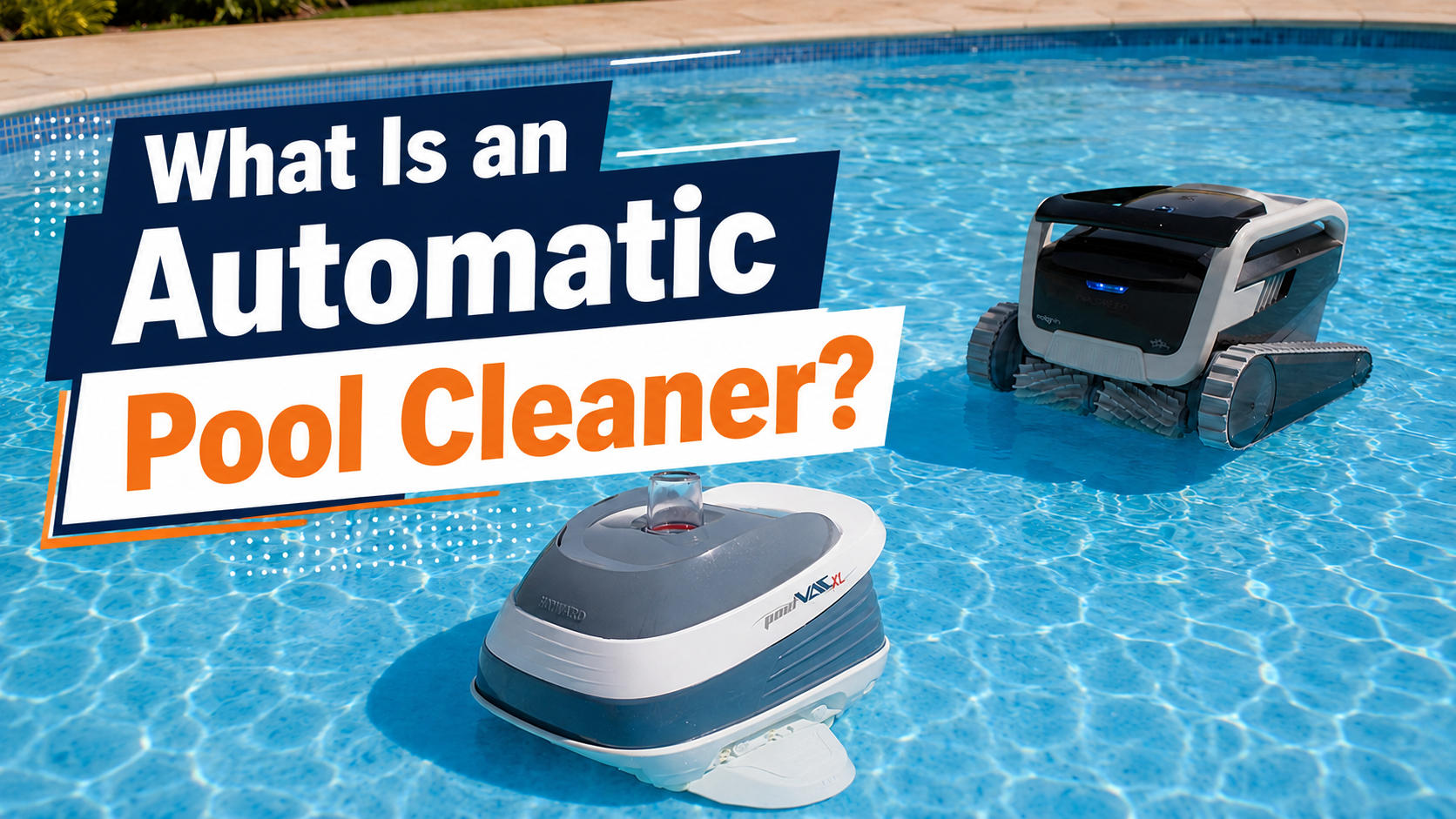
The 3 Main Types
1. Suction-Side Cleaners
These connect to your skimmer or a dedicated suction port and are powered by your existing pump. They crawl around the pool floor and walls, sucking debris through your filtration system.
- Pros: Inexpensive, simple, no separate booster pump needed
- Cons: Adds load to your pump and filter, can clog with large debris, less thorough on walls and waterline
- Best for: Budget-conscious owners with moderate debris (leaves, fine dirt)
- Popular brands: Pentair Kreepy Krauly, Hayward Navigator
2. Pressure-Side Cleaners
These connect to a return jet or dedicated pressure line and use water pressure to move around and collect debris into their own onboard bag, so debris bypasses your filter entirely.
- Pros: Collects debris in its own bag (protects your filter), handles larger debris well
- Cons: Many models require a separate booster pump (added cost and installation), more moving parts
- Best for: Pools with heavy leaf and debris loads
- Popular brands: Polaris 280, 380, 3900 Sport
3. Robotic Cleaners
Fully self-contained electric units that plug into a standard outlet. They have their own motor, pump, and filtration system, completely independent of your pool’s plumbing.
- Pros: Most thorough cleaning (floor, walls, and waterline), energy efficient, doesn’t stress your pump or filter, programmable
- Cons: Higher upfront cost, need to be stored out of the pool when not in use, occasional bag/cartridge cleaning required
- Best for: Pool owners who want the best results with the least effort
- Popular brands: Dolphin (Maytronics), Polaris, Hayward AquaVac
Which One Is Right for You?
Choose suction-side if: You’re on a budget, your pool is relatively clean, and you don’t mind your filter doing the work.
Choose pressure-side if: You have a lot of leaf debris, already have a booster pump, or want debris collected separately from your main filter.
Choose robotic if: You want the most thorough clean, the lowest long-term operating cost, and the greatest convenience, and you’re willing to pay more upfront.
Key Specs to Match Your Pool
Before buying any cleaner, know these things about your pool:
- Pool shape – Freeform and irregular shapes can challenge some cleaners’ navigation patterns
- Surface type – Vinyl, plaster, fiberglass, and tile all have different compatibility requirements. Check that the cleaner’s brushes and wheels are rated for your surface.
- Pool size – Larger pools need cleaners with longer cord/hose lengths and stronger coverage patterns
- Wall climbing ability – If you want walls and the waterline cleaned, not all models do this. Verify before buying.
- Debris type – Fine sand and dirt vs. large leaves require different filtration approaches
Robotic Cleaner Features Worth Paying For
If you go the robotic route, here are the upgrades that actually matter:
- Dual scrubbing brushes – more thorough than single-brush models
- Top-load filter access – much easier to clean than bottom-load designs
- Weekly scheduling/programming – set it and forget it
- Wall and waterline climbing – not all robots do this; it’s a significant upgrade
- App/remote control – useful for directing the cleaner to problem areas
- Swivel cable – prevents the cord from tangling during operation
Maintenance Tips for Any Automatic Cleaner
Regardless of type, these habits extend the life of your cleaner significantly:
- Remove it from the pool when not in use – UV exposure and constant water submersion degrade plastics and seals over time
- Clean the bag or filter after every use – a clogged collection system makes the cleaner work harder and clean worse
- Inspect wheels and brushes seasonally – these are wear items, and replacements are widely available
- Store it in the shade – heat and direct sun are hard on rubber components
- Check hoses and connections on suction/pressure models for cracks before each season
Common Problems and What They Usually Mean
| Problem | Likely Cause |
| Cleaner not moving | Clogged filter/bag, tangled hose, or pump issue (suction-side) |
| Only cleaning part of the pool | Hose length wrong, wheel wear, or navigation issue |
| Floating instead of sinking | Air trapped in the hose/body, let it sink before turning on |
| Leaving debris behind | Full bag/filter, worn brushes, or wrong speed setting |
| Robotic cleaner stopping mid-cycle | Overheating, tangled cord, or error code: check the manual |
The robotic category has come a long way in the last five years. Today’s mid-range robots do a genuinely impressive job and are far more reliable than early models. If you’re replacing an older suction-side cleaner and your budget allows, it’s worth at least considering the jump to robotic. The difference in thoroughness and convenience is significant.
Want a recommendation narrowed down to your specific pool size, surface type, or budget?



Leave a Reply