
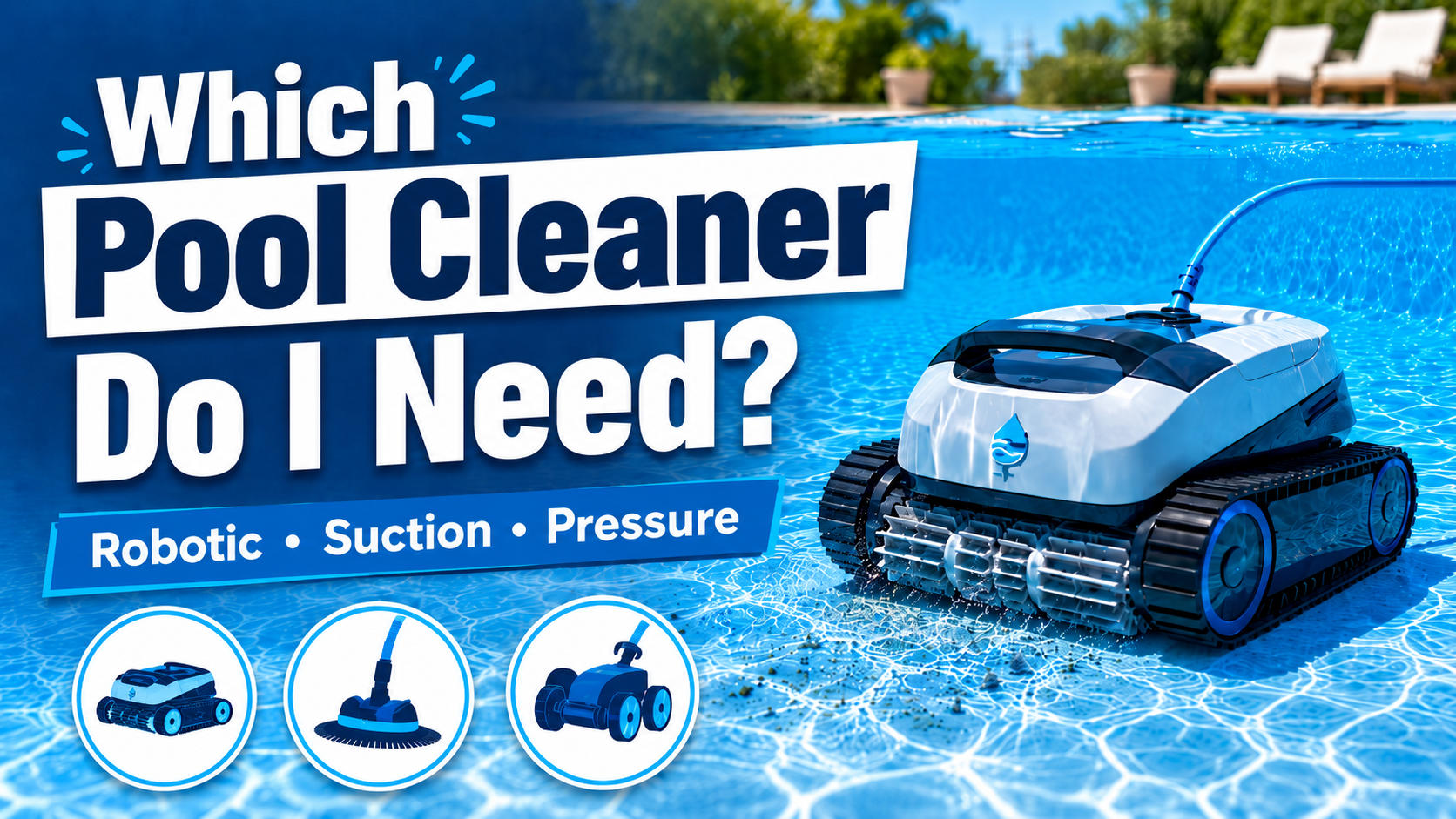
Keeping your swimming pool clean does not have to mean manually vacuuming every week. Today’s pool owners can choose from several types of pool cleaners, including robotic pool cleaners, suction-side cleaners, pressure-side cleaners, manual pool vacuums, and above ground pool cleaners.
The right choice depends on your pool type, surface, plumbing setup, debris load, budget, and how much hands-on cleaning you want to do.
At INYOPools.com, we help pool owners find the correct cleaner, replacement parts, hoses, bags, tracks, brushes, and accessories for their specific pool setup. This guide will walk you through the major pool cleaner types and help you decide which option makes the most sense for your pool.
Quick Answer: What Is the Best Type of Pool Cleaner?
For most pool owners, a robotic pool cleaner is the easiest and most convenient option because it operates independently from the pool pump and filtration system. Robotic cleaners are especially popular for in-ground pools because many models can clean the floor, walls, and waterline depending on the model.
However, robotic cleaners are not always the best choice for every pool. A suction-side pool cleaner may be better for pool owners who want a lower-cost automatic cleaner that connects to the skimmer or dedicated suction line. A pressure-side pool cleaner may be a good fit for pools that deal with heavier debris, especially leaves, because many pressure cleaners collect debris in their own bag.
For above ground pools, the best cleaner depends on the pool size, liner type, pump strength, and whether the cleaner is designed for above ground use.
Pool Vacuum vs Pool Cleaner: What’s the Difference?
The terms “pool vacuum” and “pool cleaner” are often used interchangeably, but they can mean different things.
A manual pool vacuum usually connects to a telescopic pole and vacuum hose. You move it by hand across the pool floor, similar to vacuuming carpet.
An automatic pool cleaner moves around the pool on its own. These cleaners may be robotic, suction-side, or pressure-side.
A robotic pool cleaner is a self-contained automatic cleaner with its own motor, filter, and power supply. It does not rely on your pool pump to move or collect debris.
So, when someone searches for a “self cleaning pool vacuum” or “pool automatic cleaner,” they are usually looking for an automatic cleaner rather than a manual vacuum head.
The 4 Main Types of Pool Cleaners
1. Robotic Pool Cleaners
Robotic pool cleaners are popular because they are easy to use and do not require the pool pump to be running. They plug into a power supply, move around the pool on their own, and collect debris in an internal filter basket or cartridge.
Many robotic cleaners can scrub the pool floor. Some models can also climb walls and clean the waterline.
Robotic pool cleaners are a strong choice for:
- In-ground pools
- Pool owners who want less manual cleaning
- Pools with fine dirt, sand, bugs, and everyday debris
- Homeowners who want a cleaner that does not depend on the pool’s suction or pressure system
They are usually more expensive than suction-side cleaners, but they are often the most convenient option.
Best for: Convenience, independent cleaning, energy efficiency, and in-ground pool owners who want a low-maintenance cleaning option.
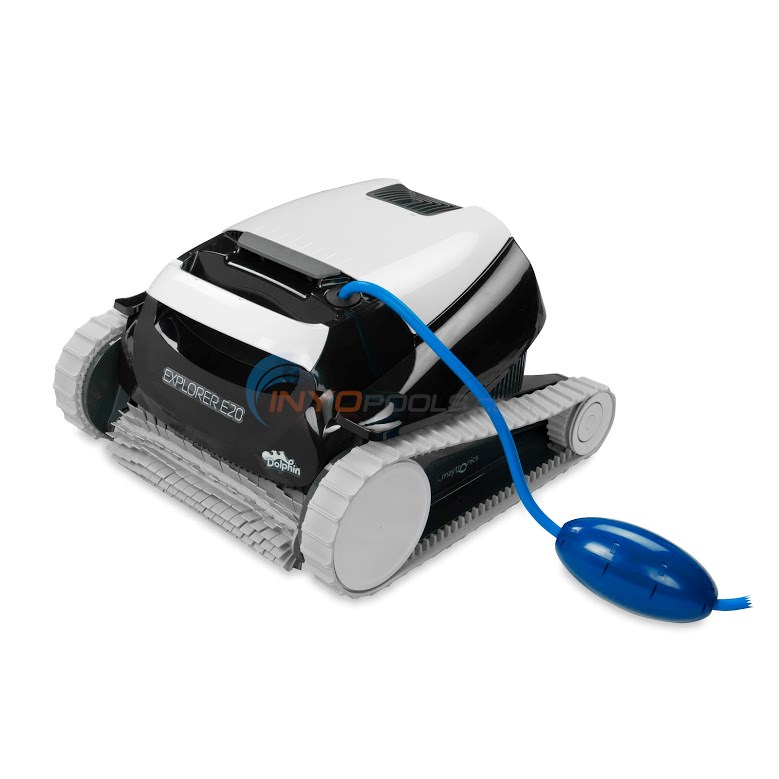
Maytronics · Model #99996148-XP
Dolphin E20 Robotic Pool Cleaner
- Pool Size
- Up to 32' Long
- Cleaning Cycle
- 2 Hours
- Cord Length
- 50 ft.
Shop Robotic Pool Cleaners at INYOPools.com
2. Suction-Side Pool Cleaners
Suction-side pool cleaners connect to the suction side of your pool system, usually through the skimmer or a dedicated suction line. They use the pool pump’s suction to move around the pool and pull debris into the pool’s filtration system.
These cleaners are often more affordable than robotic cleaners and can be a good choice for routine dirt and small debris.
Suction-side cleaners are a strong choice for:
- Pool owners looking for a budget-friendly automatic cleaner
- Pools with smaller debris
- Pools with a compatible skimmer or suction line
- Owners who do not mind the cleaner using the pool filter system
Because these cleaners send debris into the pool filter, you may need to clean your pump basket and filter more often.
Best for: Budget-friendly automatic cleaning and pools with light to moderate debris.

Hayward Pool Products · Model #W3925ADC
Hayward Navigator Pro Suction Cleaner
- Concrete or Vinyl Pool
- Concrete
- Cleaner Type
- Suction
- Manufacturer
- Hayward
Shop Suction-Side Pool Cleaners at INYOPools.com
3. Pressure-Side Pool Cleaners
Pressure-side pool cleaners connect to the return or pressure side of the pool system. Some models require a booster pump, while others work from the existing return pressure.
These cleaners move around the pool and collect debris in a separate bag, which helps prevent leaves and larger debris from filling the pool filter.
Pressure-side cleaners are a strong choice for:
- Pools with leaves, acorns, and larger debris
- Pool owners who want debris collected in a separate bag
- Pools already equipped with a booster pump line
- In-ground pools with compatible plumbing
The main drawback is that some pressure-side cleaners require a booster pump, which adds cost and energy use.
Best for: Larger debris and pools already set up for pressure-side cleaning.
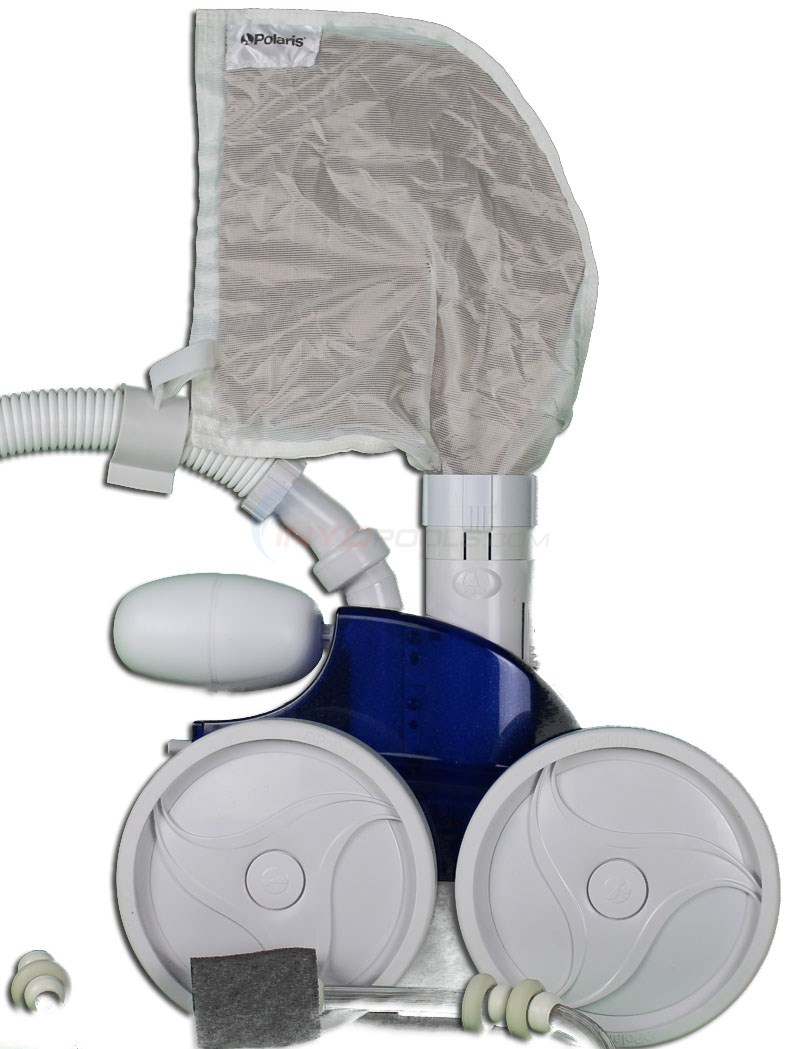
Polaris · Model #F1
Polaris 360 Pool Cleaner, No Booster Pump Required – F1
- Cleaner Type
- Pressure
- Pool Type
- In Ground
- Jets
- 3
Shop Pressure-Side Pool Cleaners at INYOPools.com
4. Manual Pool Vacuums
Manual pool vacuums are the simplest and often the least expensive option. They usually require a vacuum head, telescopic pole, vacuum hose, and connection to the skimmer or vacuum port.
Manual vacuums are useful even if you own an automatic cleaner because they give you direct control when spot-cleaning dirt, algae, or debris.
Manual pool vacuums are a strong choice for:
- Small pools
- Spot cleaning
- Pool owners on a tight budget
- Cleaning after storms or algae treatment
- Pools where an automatic cleaner is not practical
The downside is that manual vacuuming takes time and effort.
Best for: Spot cleaning, budget cleaning, and occasional deep cleaning.
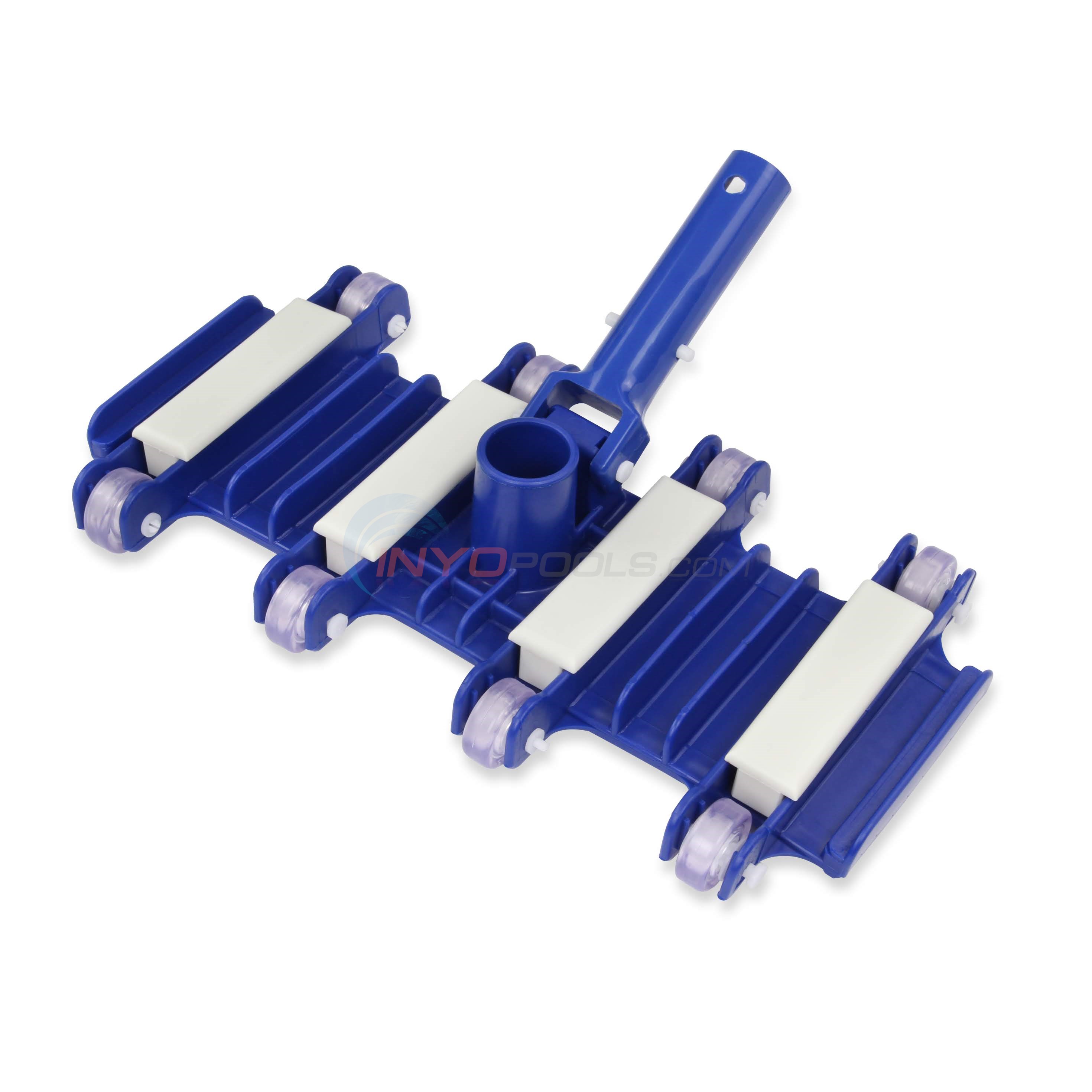
Shop Manual Pool Vacuum Parts at INYOPools.com
Best Pool Cleaners for In-Ground Pools
For in-ground pools, the best cleaner usually depends on your budget and expectations.
If you want the easiest option, choose a robotic in-ground pool cleaner. Robotic cleaners are popular because they operate independently and many models can clean the floor, walls, and waterline.
If you want a more affordable automatic option, choose a suction-side cleaner.
If your pool gets a lot of leaves or large debris, a pressure-side cleaner may be a better fit, especially if your pool already has a booster pump line.
In-Ground Pool Cleaner Comparison
| Cleaner Type | Best For | Main Advantage | Main Limitation |
|---|---|---|---|
| Robotic cleaner | Convenience and full-pool cleaning | Independent from pool pump | Higher upfront cost |
| Suction-side cleaner | Budget automatic cleaning | Lower cost | Uses pool filter system |
| Pressure-side cleaner | Larger debris | Separate debris bag | May require booster pump |
| Manual vacuum | Spot cleaning | Low cost and control | Requires manual work |
Recommended starting point: For most in-ground pool owners, start by comparing robotic cleaners first. Then consider suction-side or pressure-side cleaners if budget, plumbing, or debris type points you in that direction.
Best Pool Cleaners for Above Ground Pools
Above ground pools need cleaners that are specifically compatible with above ground pool construction, liners, flow rates, and wall and floor designs.
Do not assume every in-ground cleaner will work in an above ground pool. Some cleaners are too powerful, too heavy, or not designed for the shape and structure of an above ground pool.
For above ground pools, consider:
- Pool size
- Pool shape
- Vinyl liner compatibility
- Pump flow rate
- Hose length
- Debris type
- Whether the cleaner is rated for above ground pools
A small manual vacuum may work fine for a smaller above ground pool. For larger above ground pools, an automatic above ground cleaner can save time.
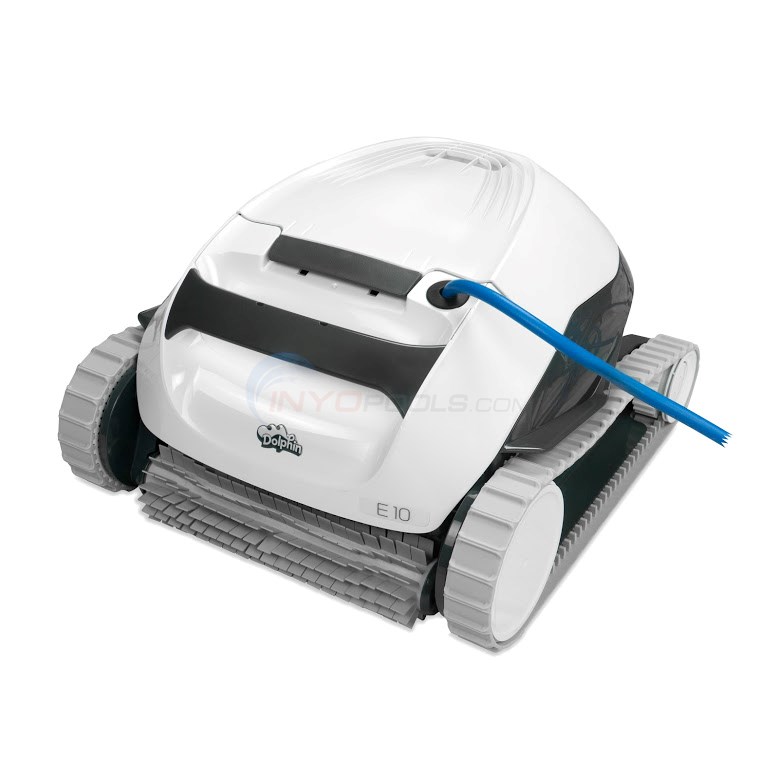
Maytronics · Model #99996133-USF
Dolphin E10 Above Ground Pool Cleaner, 40 Ft Cable, 2 Year Warranty
- Pool Size
- Up to 26' Long
- Cleaning Cycle
- 1.5 Hours
- Cord Length
- 40 ft.
Shop Above Ground Pool Vacuums and Cleaners
Robotic vs Suction vs Pressure Pool Cleaners
Choose a Robotic Pool Cleaner If:
You want the cleaner to work independently from your pool system. Robotic cleaners are usually the best choice for convenience, energy efficiency, and hands-off cleaning.
Choose a Suction-Side Cleaner If:
You want an affordable automatic pool cleaner and your pool has a compatible suction connection. (Skimmer or dedicated vacuum line). These are a good entry-level automatic option.
Choose a Pressure-Side Cleaner If:
Your pool collects excessive large debris, such as leaves, and you want debris captured in a separate bag instead of going directly into your filter.
Choose a Manual Vacuum If:
You want the lowest-cost option or need a tool for spot cleaning.
What to Check Before Buying a Pool Cleaner
Before buying a pool cleaner, check these details:
- Pool type: Is your pool in-ground or above ground?
- Pool surface: Is the pool vinyl, fiberglass, plaster, pebble, or another surface?
- Cleaner compatibility: Is the cleaner approved for your pool type and surface?
- Debris type: Are you cleaning fine dirt, sand, leaves, bugs, acorns, or heavy debris?
- Pool plumbing: Do you have a skimmer, suction port, pressure line, or booster pump?
- Pool size and shape: Make sure the cleaner can handle the pool dimensions and layout.
- Replacement parts availability: Check whether replacement tracks, tires, hoses, bags, brushes, cartridges, and other parts are available.
This is one reason buying from a pool supply specialist matters. INYOPools.com carries pool cleaners along with many of the replacement parts and accessories needed to keep them running.
Need Help Choosing the Right Pool Cleaner?
Not sure which cleaner works with your pool? INYOPools.com can help you compare robotic, suction-side, pressure-side, and above ground pool cleaners so you can find the right fit.
Why Buy Pool Cleaners from INYOPools.com?
Choosing the right pool cleaner can be confusing because not every cleaner works with every pool. INYOPools.com helps pool owners find the correct pool cleaner and the correct replacement parts for their system.
Pool owners shop INYOPools.com for:
- Robotic pool cleaners
- In-ground pool vacuums
- Above ground pool vacuums
- Automatic pool cleaners
- Suction-side cleaners
- Pressure-side cleaners
- Cleaner hoses
- Cleaner bags
- Tracks and tires
- Brushes and scrubbers
- Filter cartridges and debris baskets
- Replacement cleaner parts
Instead of guessing, pool owners can use INYOPools.com as a source for both the cleaner and the parts needed to maintain it.
Shop Pool Cleaners and Replacement Parts
Frequently Asked Questions About Pool Cleaners
What is the best automatic pool cleaner?
The best automatic pool cleaner depends on your pool type, debris load, and budget. Robotic cleaners are usually the most convenient because they operate independently from the pool pump. Suction-side cleaners are often more affordable. Pressure-side cleaners can be useful for larger debris.
Are robotic pool cleaners worth it?
Yes. Robotic pool cleaners are worth considering if you want a cleaner that does not rely on your pool pump and filter system. They are typically more expensive upfront, but they are easy to use and can reduce manual cleaning.
What is the best pool cleaner for an in-ground pool?
For many in-ground pools, a robotic pool cleaner is the best starting point because it offers convenient, independent cleaning. Suction-side and pressure-side cleaners may also be good options depending on your plumbing, debris type, and budget.
What is the best pool cleaner for an above ground pool?
The best pool cleaner for an above ground pool is one that is specifically rated for above ground use. Above ground pool owners should check cleaner compatibility with vinyl liners, pump flow rate, pool size, and hose length before buying.
Can I use an in-ground pool cleaner in an above ground pool?
Not always. Some in-ground cleaners are not designed for above ground pools. Always check the manufacturer’s compatibility before using a cleaner in an above ground pool.
What is the difference between a pool vacuum and a pool cleaner?
A pool vacuum may refer to a manual vacuum head and hose, while a pool cleaner often refers to an automatic device that moves around the pool on its own. Robotic, suction-side, and pressure-side cleaners are all types of automatic pool cleaners.
Do I still need to brush my pool if I have an automatic cleaner?
Yes. Even with an automatic cleaner, brushing the walls, steps, corners, and tight areas can help prevent dirt and algae buildup in areas the cleaner may miss.
How often should I run my pool cleaner?
Many pool owners run their cleaner several times per week during swim season. Pools with heavy debris, frequent use, or nearby trees may need more frequent cleaning.
Bottom-Line Recommendation
If you want the easiest cleaning experience, start with a robotic pool cleaner. If you want a lower-cost automatic option, compare suction-side pool cleaners. If your pool gets a lot of leaves or large debris, look at pressure-side pool cleaners. For above ground pools, make sure the cleaner is specifically designed for above ground use.
For pool owners who want help finding the right cleaner, INYOPools.com offers pool cleaners, parts, accessories, and expert support to help you keep your pool clean and ready to use.
Shop Pool Cleaners at INYOPools.com


Leave a Reply