
You pull back the cover or just walk outside after a few slow weeks and the water that was perfectly clear last fall is now looking like diluted milk. Here’s why it happens and exactly how to fix it.
Cloudy pool water in spring is one of the most common complaints pool owners have, and it’s also one of the most misunderstood. People assume it’s one thing, usually algae, and throw a bag of shock at it, and then wonder why the water is still hazy a week later. The truth is that cloudiness has several different causes, and the fix depends entirely on which one you’re dealing with.
The good news is that clearing a cloudy spring pool is a systematic process, not a guessing game. Work through it in the right order and your water will be clear within a few days. Skip steps or jump to the wrong solution, and you can spin your wheels for weeks.
Let’s start with the why, because understanding what’s making your water cloudy is half the battle.
Why Spring Is the Worst Time for Pool Water
Your pool sits through winter (or in Florida, through the slower, cooler months) with less sunlight, less use, less chemical attention, and often less circulation. Even if you closed it properly or kept it on a reduced maintenance schedule, a lot can happen while you weren’t paying close attention.
Here’s what’s been working against you:
Chlorine depletion. Chlorine breaks down constantly, sunlight destroys it, organic material consumes it, and time erodes it. A pool that wasn’t actively maintained through the off-season can have essentially zero effective chlorine by the time spring arrives. Without sanitizer, bacteria multiply and algae begins to establish.
Algae. Even if you don’t see green walls or visible slime, algae can be suspended in the water column as microscopic particles, making the water look milky, gray, or faintly green. Early-stage algae looks like cloudiness before it looks like algae.
Phosphates. Rain, debris, leaves, and runoff all introduce phosphates into your pool. Phosphates are essentially fertilizer for algae they don’t cause cloudiness directly, but high phosphate levels feed algae blooms and make water much harder to keep clear.
pH and chemistry drift. When nobody’s balancing the water regularly, pH drifts, alkalinity shifts, and calcium hardness changes. Water that’s out of balance can’t hold chlorine effectively, and high pH especially causes chlorine to become almost useless even when the reading looks fine on paper.
Fine particles and debris. Pollen, dust, dead algae, fine organic particles these are all small enough to pass through your filter but large enough to scatter light and make the water look hazy.
Filter neglect. A filter that wasn’t cleaned at the end of last season is starting this one already compromised. A dirty or channeled filter just circulates cloudy water instead of cleaning it.
Most spring pool problems involve several of these at once, which is why the step-by-step approach matters.
Step One: Test the Water Before You Do Anything Else
This is the step people skip, and it’s the reason so many cloudy pool projects drag on for two weeks instead of two days. You need to know what you’re working with before you add anything.
Get a reliable test either a good liquid test kit or a strip test, or better yet, take a water sample to your pool supply store for a full analysis. Most stores will test it for free and give you a printout. You want readings for:
- Free chlorine (how much active sanitizer is in the water)
- pH (should be 7.4–7.6)
- Total alkalinity (should be 80–120 ppm)
- Calcium hardness (should be 200–400 ppm)
- Cyanuric acid / stabilizer (should be 30–50 ppm for outdoor pools)
- Phosphates (ideally below 200 ppb)
Write down everything. These numbers tell you what order to fix things in and how much of each chemical you need. Guessing leads to over-treating, which creates its own problems.
Step Two: Balance the Chemistry First, Then Sanitize
Here’s a mistake that costs people days of frustration: shocking a pool that has severely imbalanced water. Chlorine works dramatically better in water that’s properly balanced specifically, at the right pH. If your pH is high (above 7.8), chlorine effectiveness drops by more than 50%. You can dump in a huge amount of shock and barely make a dent.
Get pH right first. If pH is high, add muriatic acid or dry acid to bring it down to the 7.4–7.6 range. If it’s low (rare in spring, but possible), add baking soda or a pH increaser. Make adjustments in small doses, retest, and repeat. Don’t rush this step.
Adjust total alkalinity. Alkalinity is what keeps your pH stable if it’s too low, pH will bounce around and your chemical work won’t hold. Low alkalinity is corrected with baking soda (sodium bicarbonate). High alkalinity is corrected with muriatic acid, though it takes more acid and more time than adjusting pH alone.
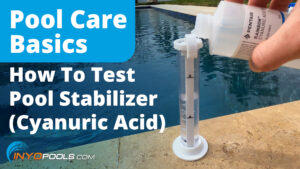
Check cyanuric acid levels. Cyanuric acid (CYA) is a stabilizer that protects chlorine from UV degradation. If it’s too low, chlorine burns off rapidly in the Florida sun sometimes within hours. If CYA has been diluted by heavy winter rain or the pool was partially drained, you may need to add stabilizer. If CYA is very high (above 80 ppm), chlorine becomes bound and ineffective this is a condition called chlorine lock, and the only real fix is partial water replacement to dilute it.
Once your chemistry is balanced, chlorine will actually do its job. Then you can sanitize effectively.
Step Three: Shock the Pool Properly
Shocking is the process of raising chlorine to a level high enough to kill bacteria, algae, and any other organic contaminants in one aggressive treatment. The key word is “enough” under-shocking a pool just stresses the algae and bacteria without killing them, which can make the situation worse.
A good rule of thumb for a cloudy spring pool: use a double or triple dose of shock rather than a standard maintenance dose. For a severely neglected pool with visible algae, triple shocking is appropriate.
Use calcium hypochlorite (cal-hypo) shock for the most powerful treatment. It’s sold as granular shock in bags (typically 1 lb per 10,000 gallons at standard dosing). For a spring opening, plan on at least 2 lbs per 10,000 gallons, or more if the water is very cloudy or green.
Always shock at night or in the evening. Sunlight destroys unstabilized chlorine rapidly if you shock at noon, a significant portion of the product breaks down before it can do its work. Adding shock after the sun goes down gives it the whole night to work.
Dissolve granular shock before adding it. Pre-dissolve it in a bucket of pool water, stirring to mix, then pour it around the perimeter of the pool. This prevents undissolved granules from sitting on the pool floor and bleaching or pitting the plaster.
Keep the pump running continuously for at least 24 hours after shocking ideally through the entire clearing process. Circulation is what carries the chlorine throughout the pool and pushes water through the filter.
After shocking, check the chlorine level the next morning. The water may look worse before it looks better cloudy or even a murky gray and that’s actually a good sign. It means the chlorine is killing things. Keep the pump running and stay patient.
Step Four: Clean Your Pool Filter
All those dead algae cells, fine particles, and organic debris that your shock just killed have to go somewhere, and that somewhere is your filter. This is where a lot of clearing jobs stall: the chemistry is fixed, the shock is in, but the water stays hazy because the filter can’t keep up.
For sand filters: Backwash the filter thoroughly, then backwash it again the next day. Sand filters are effective, but they lose efficiency over time, and in spring they’re often dealing with a higher-than-usual load. If your sand is more than 5 years old, this is a good season to replace it.
For DE (diatomaceous earth) filters: Backwash and recharge with fresh DE. DE filters are the most effective at trapping fine particles, which makes them the best tool for clearing a very cloudy pool. If the grids are old or torn, they’ll need to be inspected and potentially replaced.
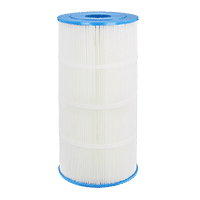
For cartridge filters: Remove the cartridge and clean it thoroughly with a hose, working from top to bottom and getting between every pleat. For a seriously dirty cartridge, soak it overnight in a filter cleaning solution. A spring-opening cartridge cleaning should be a full clean, not just a quick rinse.
Regardless of filter type, clean it at least once during the clearing process, ideally every day or two until the water clears. A clogged filter is a bottleneck that no amount of chemistry can overcome.
Step Five: Use a Clarifier or Flocculant If Needed
Once the chemistry is balanced, the shock is in, and the filter is clean, most pools will begin clearing on their own within 24–48 hours. If yours isn’t making progress after two days of good circulation and balanced water, it’s time to bring in some help.
Pool clarifier works by causing tiny suspended particles to clump together into larger particles that your filter can catch. Add it according to the package directions (usually about 4 oz per 10,000 gallons) with the pump running, and give it 24–48 hours. It’s a slow but gentle process that works well for mildly cloudy water. Clarifier is compatible with all filter types.
Pool flocculant (also called “floc”) is the aggressive option. It works by causing all the suspended particles in the water to fall out of suspension and sink to the bottom as a heavy, visible sediment. The downside is that you then have to vacuum that sediment to waste meaning you bypass the filter and send the dirty water out the backwash line. This wastes some water, but it clears the pool very quickly and is especially effective for very cloudy or green pools.
To use flocculant: add it to the pool with the pump circulating, then turn the pump off and let the pool sit for 8–12 hours (overnight works well). In the morning, you’ll see a layer of debris and dead algae on the bottom. Vacuum it very slowly to waste if you disturb it too much, it clouds back up and you have to wait for it to settle again.
Step Six: Deal with Phosphates If They’re High
If you’ve balanced your chemistry, shocked the pool, cleaned the filter, and the water clears but then gets cloudy again within a week or two, phosphates are often the culprit. Phosphates don’t cause cloudiness directly they fuel algae, and algae causes cloudiness.
A phosphate reading above 500 ppb is considered high, and above 1,000 ppb is a real problem. After a wet Florida winter with lots of organic debris in the water, levels this high are not unusual.
Phosphate removers are added to the pool water and work by binding to phosphate molecules and causing them to drop out of the water, where they get filtered out. They’re effective, but they can cause the water to cloud temporarily as they work run the filter continuously and clean it more frequently while the remover is active.
Once phosphates are reduced, maintaining low levels means removing debris promptly, rinsing off sunscreen and lawn chemicals before swimming, and keeping the area around the pool free of plants and mulch that introduce organic material.
A Quick Troubleshooting Reference
If you’re still stuck after working through the steps above, here’s a quick guide to what different types of cloudiness usually mean:
Milky white or grayish water is typically a chemistry issue pH or alkalinity is off, or calcium hardness is too high (a condition called calcium scaling). Check and balance those parameters first.
Green-tinted cloudiness is almost always algae, even if you can’t see visible growth yet. Shock aggressively and address phosphates.
Brown or yellowish cloudiness often points to metals in the water usually iron or manganese, which can enter from well water or certain chemical products. A metal sequestrant added to the water will bind the metals and allow them to be filtered out. Don’t shock the pool until metals are sequestered chlorine oxidizes metals and causes them to stain plaster and equipment.
Haze that clears for a day or two and comes back suggests either ongoing algae (phosphates), a filter that isn’t running long enough, or chlorine that’s burning off too fast due to low CYA levels.
How Long Should This Take?
With the right approach, most moderately cloudy spring pools clear within 3–5 days. Severely neglected pools green walls, visible algae, and essentially zero chlorine may take a week to ten days of sustained effort.
The things that speed up the process: continuous pump operation (at least 12 hours per day, ideally 24 while clearing), daily filter cleaning, and balanced chemistry before you start adding sanitizer.
The things that slow it down: adding chemicals in the wrong order, not cleaning the filter frequently enough, shocking during the day and losing chlorine to sunlight, and using the pool before it’s fully clear (swimmer waste consumes chlorine and sets you back).
Keeping It Clear Through the Season
Once you’ve got the water where you want it, a little consistency goes a long way. Test the water weekly not monthly, weekly and make small adjustments before they become big ones. Keep the filter on a regular cleaning schedule. Remove debris promptly. And maintain your chlorine levels rather than letting them crash and then shocking repeatedly.
In Florida’s heat and sunlight, a pool that sits even a few days without adequate chlorine can turn on you quickly. Staying on top of it takes less time than fixing it after the fact.
The Bottom Line
Cloudy spring pool water is almost always fixable, and the fix isn’t complicated it’s just methodical. Test first. Balance chemistry before sanitizing. Shock properly and at the right time. Keep the filter clean and the pump running. And give it the time it needs.
Work through it in order and your pool will be swim-ready before you know it.
When adding chemicals, always read the label and follow the manufacturer’s dosing instructions. Add chemicals to water never the other way around. Never mix different pool chemicals together before adding them to the pool.






Leave a Reply